
Talented athletes from Sparta who faced segregation because of the color of their skin, George and Robert Mitchell brought their unique talents to the world of Negro Leagues Baseball, challenging perceptions of race and ability and paving the way for the generation of players that followed on the national stage.
George Frederick and Robert Shedrick Mitchell were born in Sparta on March 31, 1900. The twins were the first children born to Charles Alonzo Mitchell and his wife, Hattie Green Mitchell. A pair of sisters, Fanny Mae and Bertha, would complete the small family by 1904. Charles and Hattie were part of the first generation of African-Americans born after the Civil War. Born in Cobden and Sparta, they were both children of men and women who had been enslaved in Missouri and Tennessee before the war and who had relocated to Illinois in the years immediately afterward.
The Mitchells were part of an established community of Black men and women living in Sparta, Eden, and Coulterville at the turn of the twentieth century. Their extended family tree includes the names of many familiar families from the area: Bardo, Menard, Alexander, and Penny, to name just a few. Charles Mitchell built a solid business in Sparta, working as a barber in his own shop for decades. Hattie worked outside the home as well, cleaning houses for other families. Through their hard work, they were able to purchase a home on North Miller Street in Sparta, and by 1920, they owned it freely with no mortgage. They raised their four children there and worshiped at the nearby First Freewill Baptist Church.
Other relatives were also sometimes offered a place to stay in the Mitchell home. For a time, Hattie’s mother, Amanda, resided with the family. Later, her brother John also lived with them on Miller Street. Like many members of George and Robert’s extended family, their uncle John was employed by one of the many coal companies that dotted the landscape along the border between Randolph and Perry Counties. After they graduated from high school, the twins followed in their family members’ footsteps. When they registered for the draft at the age of 18, they both indicated that they were employed by the Moffat Coal Company in Sparta.
The company’s mine, located south of Eden, employed hundreds of people from the region and produced an enormous amount of coal. In October 1919, the mine broke its daily record for the largest amount of coal hoisted: a remarkable 1516 tons. The work paid well, in part because it involved a great deal of personal risk. Numerous men were injured and killed in accidents at the mine during the same period, victims of falling slate and faulty explosives. Many of the workers at the mine also lived in tenements and small houses on company property, but George and Robert remained at home on Miller Street with their parents and sisters. They would have been able to journey to work alongside their uncle John, also working in the mine, and their father, who was employed as a weighman by the company.
Tall and slender, George and Robert were naturally gifted athletes. Their strength was an asset in the mines, but it was even more of a benefit during their favorite pastime: playing baseball. By the 1920s, teams had been formed in the small communities across the county. Some were associated with businesses, like the shoe factories in Chester and Steeleville, while others were formed from different community groups. The Sparta Stars, one of these local teams, was made up of young African-American men, including both of the Mitchell brothers. Robert, nicknamed “Pud,” was a catcher and an outfielder. George was nicknamed “Big” because, at 6’3”, he was three inches taller than his twin. He was a right-handed pitcher, but he could also play at first base or in the outfield.
The Mitchells played on an all-Black team, but baseball in Randolph County was not a fully segregated activity. The Stars frequently played against teams made up of white players from other parts of the county. In August 1922, for example, the Chester Tribune reported, “The ball game next Sunday will be between the Chester regular team and the Sparta All Stars, the colored ball team of Sparta which has been playing teams all over this section of the state during the season,” adding that the “All Stars have won for themselves an enviable reputation as ball players.” Later that summer, the Stars faced Baldwin’s team in the county championship game. Unfortunately, the title wasn’t awarded to either side. Both teams protested in the tenth inning when it was difficult to determine whether a Stars player’s hit had gone fair or foul, and the game was called a 2-2 tie.
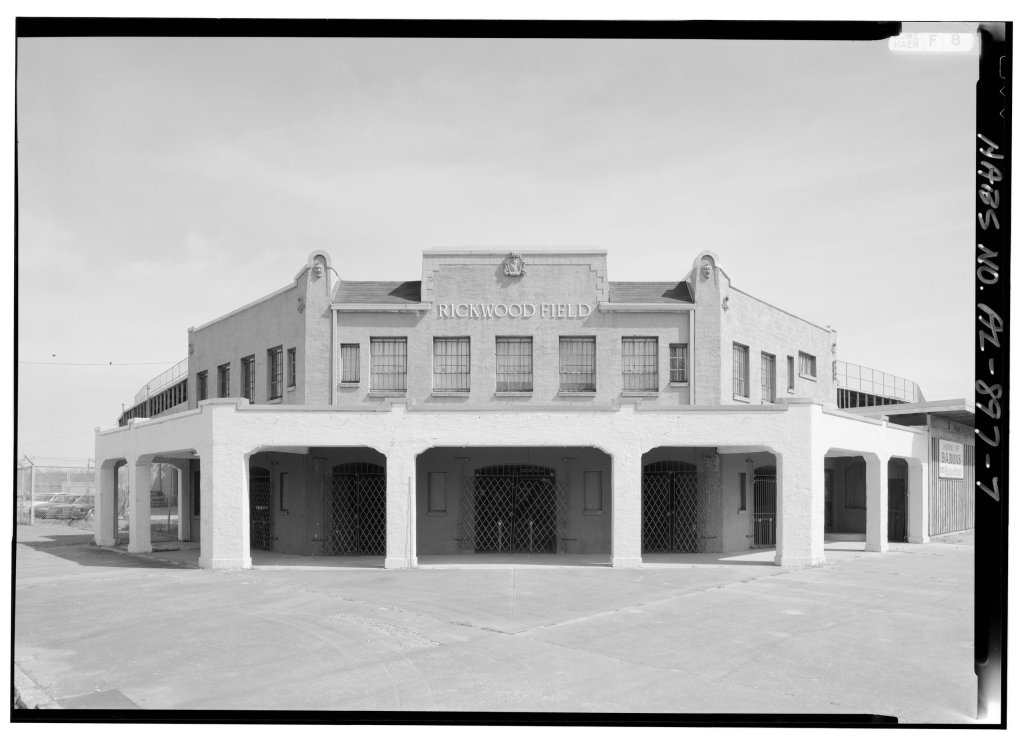
By the next summer, one of the Mitchell brothers was ready to play at the next level. Robert headed to Birmingham, where he’d been signed to play with the Black Barons. The team was part of Rube Foster’s Negro Southern League, one of several leagues established in the 1920s for Black baseball players and fans. The Black Barons played at Rickwood Field, now the oldest professional baseball stadium in America. They shared the facility with several other teams, including the all-white Birmingham Barons. In the 1920s, the stadium also served as a spring training facility for the Pittsburgh Pirates. Occasionally, the University of Alabama even used it for football games.
Robert Mitchell was 23 when he stepped on to the field in Birmingham for the first time. He played in 27 games for the Black Barons that summer, spending most of his time in right field. He also performed capably at the plate, with a .202 batting average in 99 plate appearances, including 20 hits and 12 RBIs. The Black Barons won the league pennant that year, and the season culminated in September with an exciting series against the Kansas City Monarchs. The Monarchs, who were the champions of the Negro National League that season, traveled to Birmingham for a three-game series at Rickwood Field. Led by future Hall of Fame pitcher “Bullet Joe” Rogan, the Monarchs won the series two games to one. The moment gave Robert his first taste of the highest level of competition available to Black baseball players in America–a level that, the following year, he would experience himself.
After the end of the 1923 baseball season, Robert returned to Sparta and his family’s home on Miller Street. For virtually all professional baseball players at the time, the game was a seasonal job. The Mitchells continued to work as laborers each winter in Sparta while preparing for the next baseball season to begin the following spring. When the first pitch was thrown in 1924, both Mitchell brothers had joined a professional roster, sharing a team and taking on a unique role in baseball history together.
In August 1923, as the season drew to a close, Robert and the Black Barons had hosted the St. Louis Stars for a series at Rickwood Field. During the games, Robert had the chance to play against some of the greats of the game, including a remarkable future Hall of Famer, Cool Papa Bell. He couldn’t have known then that, during the next season, he would join their ranks. The team, led by manager “Candy Jim” Taylor, was part of the Negro National League, the same organization as the Kansas City Monarchs. The league was one of the first for Black players to achieve a consistent level of stability and success, and it showcased some of the most impressive players of the era. In 1924, that included both Robert and George, who were often listed together simply as “the Mitchell Brothers” in promotional materials.
George and Robert reported to training camp on Market Street in St. Louis on March 24, 1924. After a week spent working with Taylor and their teammates, the entire Stars squad headed to French Lick, Indiana, to play spring training games against another NNL team, the Indianapolis ABCs. From the start, the Mitchell Brothers gained notice from the press. In April, the St. Louis Argus reported, “St. Louis fans will welcome a speedy aggregation of ball players on Easter, April 20. The Mitchell Brothers, George and Robert, are showing fine form. Both are hitters in the clean up style.” Robert Mitchell was also working as the battery mate for the team’s other fraternal pair, catching for both Cool Papa Bell and his brother, Fred Bell.
By May, box scores from Stars contests reveal that the Mitchell Brothers had formed a battery of their own. In the box score from a game in Indianapolis on May 5, the Stars battery was listed as “G. Mitchell and R. Mitchell.” Having brothers form a battery in a baseball game is rare enough–there are only 19 recorded examples in baseball history, including George and Robert–but the Mitchells’ situation was made even more unique by the fact that they were twins. They were paired up numerous times over the course of the season, usually with George coming in from the bullpen as a relief pitcher.
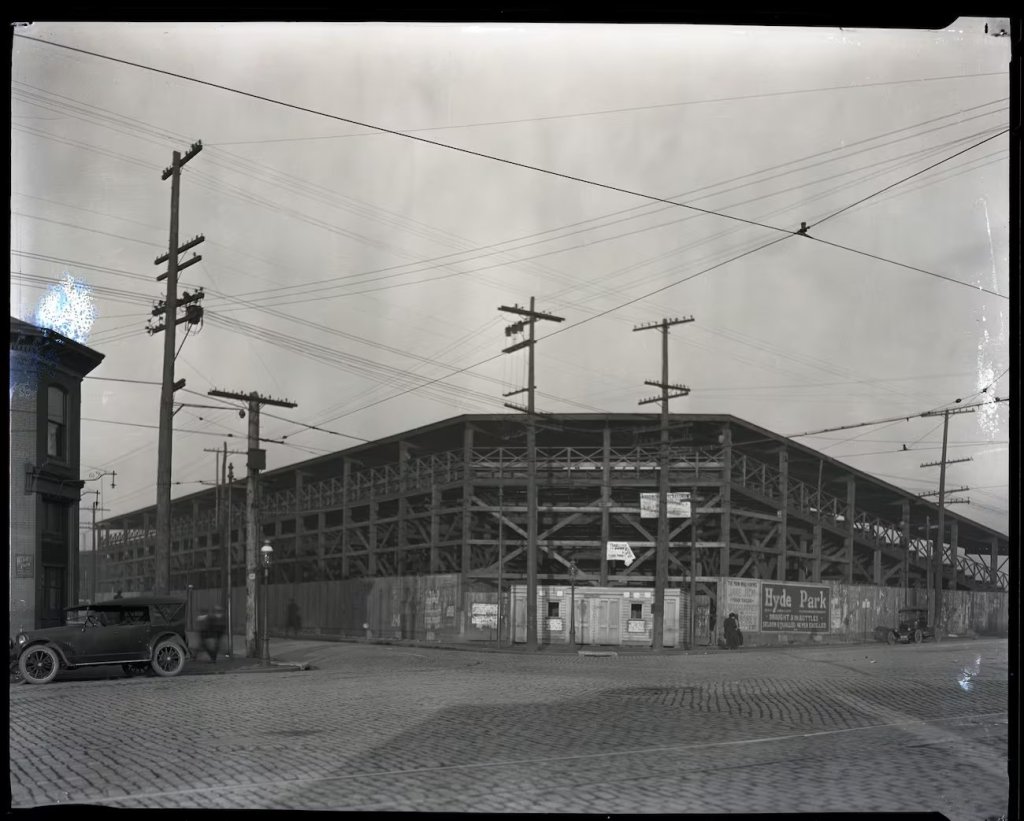
Back in St. Louis, the Stars were playing their season in a brand-new ballpark. Stars Park, built in 1922 at the corner of Compton and Market, was a rarity: a stadium built specifically for the use of a Black baseball team. Most other teams were competing for stadium space with white teams. Crucially, the park was also located in the heart of St. Louis’s Black community, giving fans easy access to watch baseball played by Black athletes in an environment where they didn’t face the same segregated seating as they did at Sportsman’s Park on North Grand. When the 1924 season opened, Mayor Henry W. Kiel was on hand to throw out the ceremonial first pitch.
Over their season together with the Stars, the Mitchell Brothers made frequent appearances together on the mound and behind the plate against opponents the Monarchs, the ABCs, the Chicago Giants, and the Memphis Red Sox, as well as local teams like the Brooklyn Illinois Stars and the Belleville Clerks. George ended the season with a 5.40 ERA. Robert was also a strong offensive contributor to the team, finishing the season with a .290 batting average.
Though he was a solid member of the team, with ample playing time, Robert Mitchell decided that one season of baseball with the Stars was enough. He retired from professional baseball after the 1924 season. But he didn’t go far. Robert settled in St. Louis permanently, living a few blocks from the Stars ballpark on Compton Avenue. He established a home there with his wife, Rebecca, whom he married not long after his retirement. They both worked outside the home to support their extended family, which included Rebecca’s mother and sister. Robert found employment at a local power plant, while Rebecca worked as a maid in a private home.
For George, though, the baseball bug continued to bite. Over the next decade, he played with six different Negro National League teams. In 1925, he pitched for the Chicago American Giants and the Indianapolis ABCs. He had standout seasons with the Kansas City Monarchs in 1927 and the Detroit Stars in 1928. He pitched in a career-high 30 games for Detroit, winning 13 of them and ending the season with a 3.57 ERA. He stayed with the Stars for a second season before returning to the Giants in 1930 and the ABCs in 1931. There, he led the league with 7 wins and finished with a career-best 2.27 ERA.
At the end of each season, no matter where he was playing, George packed his bags and returned home to Sparta. After the 1929 season ended, he found work as a farmhand in rural Randolph County. He continued to make his home at the little house on Miller Street each winter, but by 1930, the family had changed enormously. George and Robert’s mother, Hattie, passed away in 1927. Not long after that, his sister Fanny had married Pete Alexander, a track layer at a local coal mine, and started a family of her own. She and Pete stayed on Miller Street with her father after their marriage, and a few months after George’s return to Sparta in the autumn of 1929, Fanny gave birth to George and Robert’s first niece, a little girl named Syvalla Mae. George and Robert’s youngest sister, Bertha, married another familiar face from Sparta, Arthur Penny, around the same time.
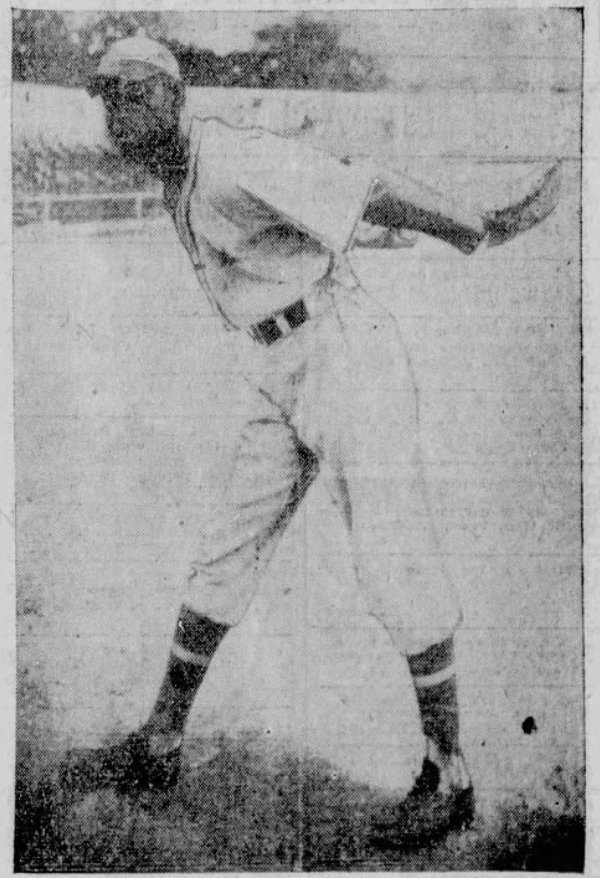
George’s mind continued to be focused on baseball, but troubling times were ahead for the Negro National League and other Black baseball leagues in America. The Great Depression dealt an enormous blow to the organizations, and by 1931, the league folded entirely under economic pressures. Initially, George remained at home in Sparta without any professional baseball prospects. Soon enough, though, he was recruited to play for the Cleveland Stars, a club that formed part of Cumberland Posey’s newly-established East-West League in 1932. Unfortunately, the league soon succumbed to the financial strains of the period as well, with play only lasting for a month before it too closed down. The following season, though, a Pennsylvania businessman, Gus Greenlee, founded a second Negro National League. With seven teams on the league roster and numerous veteran managers and players, the league would last until the year after Major League Baseball’s integration. In 1933, George Mitchell was one of the players featured in the league’s inaugural season, pitching for a new iteration of the Detroit Stars. Now 33, George’s best pitching days were behind him. He threw only 19 innings during the season, which would be his last as a professional player.
But George’s baseball career was destined to continue along another path. When the new Negro National League was formed, he was chosen to serve as Cleveland’s representative at the official meetings in Indianapolis. His leadership skills on the field had been noticed. In 1938, he was hired as the manager of a revived Indianapolis ABCs franchise, now part of the Negro American League. He also filled in as a utility player, taking on a player-manager role that would continue on and off for the rest of his career. The league, which had formed in 1937, featured new iterations of familiar Black baseball clubs like the Kansas City Monarchs and the Birmingham Black Barons. In his first season as manager, George’s nine struggled. They finished with a 4-19 record, dropping to fifth place in the league standings. But financial troubles were, once again, an even bigger issue than the team’s play on the field.
Instead of folding altogether, it was decided to move the team to a new location. In March 1939, the St. Louis Argus reported, “With the visit of George ‘Big’ Mitchell here Tuesday, it was definitely established that the former Mounds Blues and Indianapolis ABCs will be representatives of St. Louis in the Negro American League in the coming season. The team will play under the name of St. Louis Stars.” George was retained as the team manager, and financing was provided by a new owner, Allen Johnson of Mounds, Illinois. George almost immediate headed south to Florida for spring training after the relocation decision was officially announced.
When the team returned to St. Louis to start its home season, players took the field on Sunday and Monday evenings at the newly-opened South End Park, located at Kingshighway and Juniata, just south of Tower Grove Park. In the years that had passed since Robert and George played together as a battery for the Stars, the team’s field, Stars Park, had ceased to exist. Even after lighting was built for night games, the park’s future was bleak. By 1931, the city of St. Louis had decided to purchase the park from its owners so that they could develop a segregated playground for Black children on the property, which was situated next to Vashon High School. (Today, the original Vashon building and the site of the original Stars Park both belong to Harris-Stowe State University.) The demolition of the grandstand at the corner of Compton and Market was also necessary for the widening of Market Street, a project happening at the same time.
The white owners of South End Park were willing to host a Black baseball team for games as long as it was a financially prosperous arrangement, but the stadium was located far from the homes of many African-American fans, and its stands were segregated. The struggle for a suitable place to play would become an ongoing problem for Black athletes in St. Louis. Even so, hopes were high for the 1939 team’s success. The Argus wrote that the Stars were “built around several stellar youngsters who learned their baseball on the sand lots of St. Louis.” Drumming up fan support for the team in St. Louis was a challenge at first, which also translated to challenges on the field. In June, an Argus reporter noted that “Manager George Mitchell has been working to get his Stars clicking for the second half. They proved good crowd pleasers on the road despite their setbacks and ‘Big’ Mitch is hoping to win 100 percent home team support.”
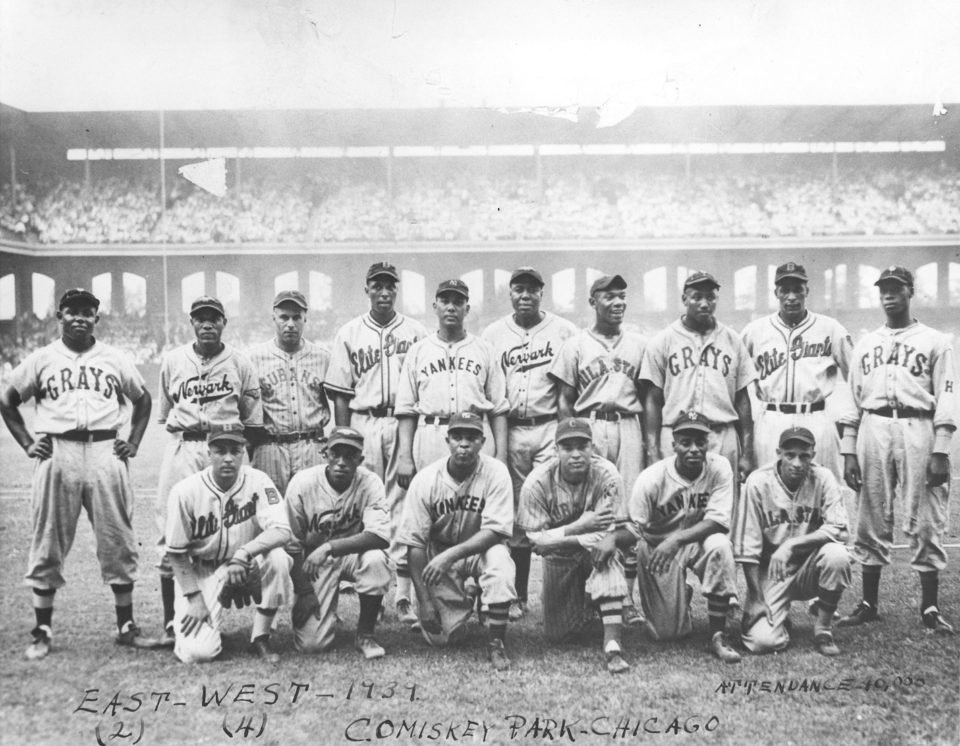
In the same column, there was also a hint of something exciting on the horizon for George: “It is rumored that the Stars’ manager is among the leading candidates for manager of the West in the East-West game in Chicago on August 6.” The rumors were true. George was selected to serve as the manager of the West team in the league’s All-Star Game, held at Comiskey Park in Chicago. Readers of Black newspapers across the nation cast 300,000 votes to select the players for each squad. Forty thousand fans filled the stands at Comiskey to watch George’s team take on the all-star players from the East. Heavyweight champion boxer Joe Louis threw out the first pitch. The skillful throwing of the West pitchers, Theolic Smith, Hilton Smith (a future Hall of Famer), and Theodore Roosevelt Radcliffe, helped the team bring home a 4-2 victory against an East roster that included four more future Hall of Famers: the remarkable Josh Gibson, Willie Wells, Mule Suttles, and Buck Leonard. George would go on to manage the West team in the all-star game in 1940 and served as an assistant coach for the game in 1941.
Buzzing from his success in Chicago, George immediately faced more dire news back home in St. Louis. His team was quickly running out of options for places to play in the city. A home series against the Toledo Crawfords, and an accompanying track exhibition by the Olympic gold medalist Jesse Owens, had to be canceled when South End Park became suddenly unavailable. The games would have to be played in Cairo, Illinois, instead. Segregation in the city of St. Louis, combined with the private ownership of most fields large enough to host professional games, was a growing issue for Black athletes. Proximity of sports fields to Black neighborhoods, to give fans easy access to the park to attend games, was also an issue. Sports editor Richard A. Jackson outlined the problem in the Argus that August: “Outlook on the baseball park situation for colored teams in St. Louis has been one of the most discouraging problems facing the sport here. Instead of moving toward alleviation the condition is growing more hopeless. The South End Park, which opened its doors to Negro League teams, apparently has fallen to leadership that is only interested in colored teams from a purely mercenary standpoint.”
Other facilities that were open for Black teams to use, like Metropolitan Park on North Broadway, were often leased out to higher-paying white organizations instead. And those spaces too were far from the community that would make up the core of support for a Black team. There were some potential options for the future, but those too were limited by finances and by racial inequality. The Cardinals had purchased an open lot in Midtown at Grand and Chouteau, with the hopes of eventually building their own new stadium there, but ultimately the land remained vacant. Jackson wrote in April 1940, “The one available spot in the city for a real ball park for Negroes that is located within close proximity to a colored neighborhood is the large lot at Grand Boulevard and Laclede Avenue. This is out, however, due to a clause in the will of its late owner, Hanley, which prohibits heirs from selling, leasing or renting it to Negroes.” The open land, known at one time as Handlan Field, had hosted sporting events over the years, from Federal League baseball games and high school football contests to soccer matches. Traveling circuses frequently set up tents on the open lot. At one point, the possibility of moving an airport landing field there was even discussed.
Ultimately, Jackson was not optimistic that there would be another opportunity for Black entrepreneurs to own a ballpark in St. Louis. “Of course, this park question is an old story to most fans, but maybe someday a millionaire will be found who would like to invest in an enterprise of this sort in a good-paying community of 100,000 Negroes. Maybe the Hanley Estate will become burdened down so with taxes on this unused lot that could be making thousands that something will be done about it. Then–Negro league baseball will come back in St. Louis.” Much of the Black community described by Jackson was part of the Mill Creek Valley neighborhood, which was decimated in the 1950s to make way for the construction of Highway 40, the expansion of the Saint Louis University campus, and other industrial projects. More than 20,000 African-American residents were displaced when their residences, businesses, and churches were demolished.
“Where will semi-pro baseball go in St. Louis next year?” Jackson wondered. The answer came at the end of the season. After a December 1939 league meeting in Indianapolis, where George attended as the representative of the Stars organization, it was decided that the 1940 season would be a split one. Half of the home games would be played in St. Louis, and the other half would be held elsewhere. It was a compromise. Initially, there were plans to move the entire club to Evansville, Indiana. After another league meeting in Chicago in February 1940, though, it was decided to play some home games in St. Louis and the rest in New Orleans. George remained manager of the team, still called the Stars. Through all the changes, he worked hard to provide his players with the best leadership possible. In 1940, Hayward Jackson of the Kansas City Call noted that “Manager Mitchell is one of the best managers, win or lose, in baseball and usually takes his ‘bitters’ with the same stride he takes his long winning streaks.”
The St. Louis-New Orleans Stars finished with an even .500 record in 1940, earning them fourth place in the league standings. Another split season followed in 1941. Increasing financial troubles mirrored inconsistencies on the field. The team finished with a disappointing 17-24 record for the season. Back home in Sparta, even with his prominent place in the world of the Negro Leagues, George was still working in the winter in a local coal mine. He was now the sole owner of the house on Miller Street, following the death of his father in October 1939. With all of his siblings married, it was time for George to establish a family of his own as well.
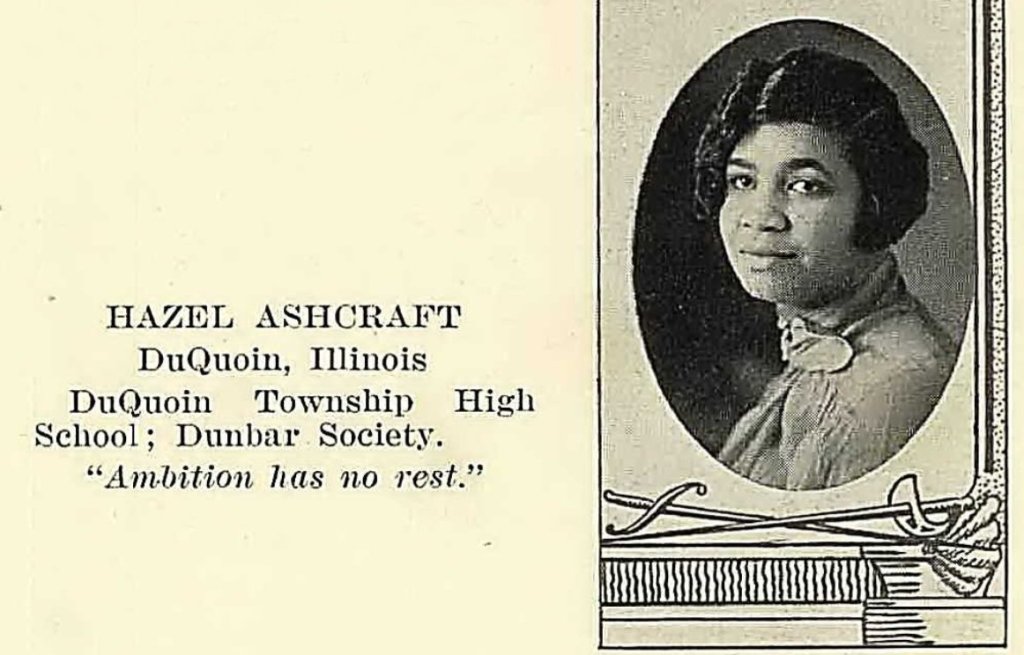
In October 1941, at the age of 41, George took out a marriage license in Missouri. His bride was Hazel Froner Ashcraft, a native of Du Quoin. Beautiful and highly educated, Hazel had graduated with a degree from Southern Illinois Normal University in Carbondale in 1927. (Her chosen yearbook quote, “Ambition has no rest,” demonstrates one reason why she and George were such a good match.) Hazel’s first husband, a coal miner, had died in an unfortunate accident before the birth of their first child. Now 35, Hazel was the mother of a bright young son named George, who was a promising student with a burgeoning talent for mechanics and engineering at the Lincoln School in Du Quoin. After his mother’s marriage in St. Louis on October 22, 12-year-old George became so close to his new stepfather that he began to go by the name “George Mitchell Junior.” As newlyweds, George and Hazel became the proprietors of Main Street Restaurant at 110 E. Main in downtown Sparta. The family business also employed his sisters, Fanny Alexander and Bertha Penny, as waitresses.
Big changes were on the horizon for George Mitchell Sr.’s baseball career, too. Allen Johnson, who had provided financial backing for the Stars for several seasons, was dissatisfied with the status of the team. At league meetings during the winter of 1941-42, George wasn’t able to provide a clear answer about the future of the franchise. Ultimately, Johnson decided to purchase a half interest in a different team: the New York Black Yankees. He hired George to come along as business manager. In May 1942, George’s St. Louis connections helped to put on a special Memorial Day game at Sportsman’s Park between the Black Yankees and the Birmingham Black Barons. Eleven thousand spectators were on hand to watch the game, emphasizing that Negro League baseball was still an attractive product for St. Louis fans.
By 1942, though, World War II had compounded the challenges for Black baseball organizations. Numerous players were called up for military service. Even so, George was part of one more attempt to bring Black baseball back for St. Louis athletes. He and Allen Johnson collaborated again in 1943 on the establishment of a new Negro National League team known as the St. Louis-Harrisburg Stars. Though the team played its home games in Harrisburg, Pennsylvania, the team added “St. Louis” to their name because their squad was largely made up of players who had previously been on St. Louis Stars rosters. The success of the endeavor was mixed, with ongoing conflict with the league about the transfer of players to the team from the Black Yankees. By the summer of 1943 the team had received league permission to become “Bond Barnstormers” instead of playing a regular schedule, traveling to play exhibition games and raise money for war bonds.
George and Allen Johnson continued to pursue a path with the Negro American League to return Black baseball to St. Louis in 1944. George attended league meetings on behalf of a prospective revived Stars franchise in March, just a few weeks before D-Day. By June, their hopes had become reality. The Argus reported, “Echoes from yesterday and voices from today will be heard at Belleville Athletic Field this Friday night, when the orphan team of Big League Baseball, yet one of the most powerful, the St. Louis Stars, make their stand against the Negro American League sensations, the Ethiopian Clowns. Still wearing the name that they bore through the depression period–and proudly–the team that would rather play in St. Louis than any other city in the country will consider themselves on a Home Coming.”
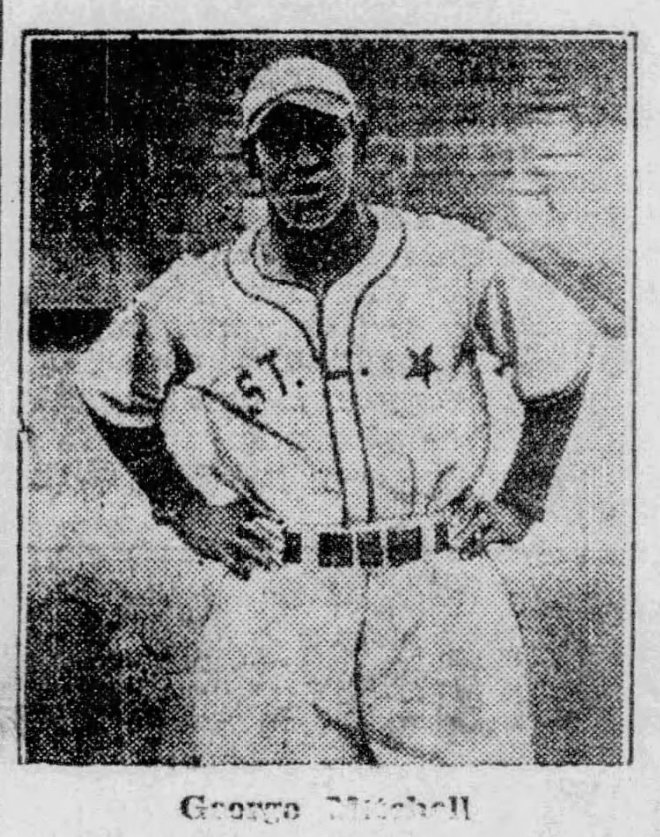
The column added that the Stars “will aspire to again set themselves as favorites with St. Louis fans,” led by “Big George Mitchell, manager, who some will remember as pitcher for the famous old St. Louis Stars.” Unfortunately, poor financial management and continued conflicts with the league over player rosters and debt settlements contributed to the team’s ultimate lack of success, though the play on the field was more than adequate. They played as a road team throughout the season, including stops along the West Coast and in Canada. In October 1944, the Argus wrote a profile on George when he returned to St. Louis for a visit with his brother, Robert. “George Mitchell has been manager of the Stars for ten years and has been rated as tops among Negro Managers for developing youngsters,” they noted, adding, “Each year, despite all odds, he has kept this name going in baseball with a team.”
Indeed, in 1945, George was able to revive the Stars once more–but this time with an interesting new twist. The team was added to the new United States League, purportedly organized to play a regular schedule by Negro National League founder Gus Greenlee. In fact, Greenlee was working quietly on the endeavor with Brooklyn Dodgers president and general manager Branch Rickey. Anticipating the coming integration of Major League Baseball, Rickey and Greenlee wanted to use the USL as a way to scout Black players who could be signed to MLB contracts. It seems likely that the USL never fielded a full schedule, and indeed, by May 1945, George was also again working with the Negro American League. The Argus reported that, during NAL meetings in Chicago, “George Mitchell, owner of the St. Louis Stars, made it known that he would have a ball club this summer and would play independent baseball. He declared that he would tamper with no players under contract. He was given a vote of confidence by the league club owners.”
In October 1945, Branch Rickey officially ended the policy of segregation in Major League Baseball when he signed Jackie Robinson to a contract with the Dodgers. The integration of professional baseball did not immediately end Negro Leagues play, but with the most talented Black players now offered chances to play on some MLB teams, the talent pool available for Negro Leagues teams to sign became smaller. Even as the leagues began to fade away, George continued to manage Black teams both in St. Louis and back home in Sparta.
Now approaching his 50th birthday, George also surely nurtured hopes that his son would follow in his footsteps as a player. George Mitchell Jr. had grown to become a tall young man, but soon after his graduation from Sparta High School, it became clear that he was dealing with serious health problems. In August 1949, George and Hazel took George Jr. to Barnes Hospital in St. Louis. The diagnosis was rheumatic heart disease. After staying in the hospital for more than a month, 20-year-old George passed away on October 6 after suffering from a pulmonary embolism.
Broken-hearted, George and Hazel returned to their home in Sparta. They focused their energies on their restaurant, supported by caring members of their family. But for George, the tragic loss of his son was difficult to overcome. After years of entertaining the public as a professional athlete, and then mentoring the next generation of Black baseball players, George passed away on November 14, 1953, at the age of 53. Hazel followed him just five years later.
In St. Louis, Robert Mitchell lived on for almost two more decades. After the end of his first marriage, he had found love again with his second wife, Elsie. They settled in Midtown, not far from where the Mitchell twins had played together decades earlier at Stars Park, and Robert found work as a streetcar molder at the Green Foundry Co. on Bircher Boulevard. Interestingly, the foundry employees formed their own Black baseball team during Robert’s time there, but it’s not clear whether he revealed his prodigious baseball talents to his coworkers and joined in. Robert lived to the age of 71, passing away in St. Louis on May 17, 1971.
When we consider the remarkable lives of Black baseball players from the early twentieth century, so many questions focus on the possibilities that could have been if society had been different. What could they have accomplished if they had not been prevented from playing alongside the white athletes of their generation because of racist attitudes and policies? What could they have achieved if they had been afforded a stable income and a regular, non-segregated place to play and live?
The legacy of George and Robert Mitchell also teaches us to appreciate the tenacity and drive of men who worked, against all odds, to organize opportunities for Black players when few were available. Both Robert and George bravely stepped forward from their tight-knit community into the challenging world of national baseball, at a time when Black men and women faced indignities and difficulties at every turn. And George, after his own playing career was finished, worked tirelessly to mentor younger players and provide them with opportunities to develop and showcase their talents. The Mitchell Brothers are an important piece of the history of the great American pastime, one that deserves a more prominent place in our understanding of the game of baseball today.
George and Robert Mitchell were inducted into The Randolph Society in 2024.
 The Randolph Society