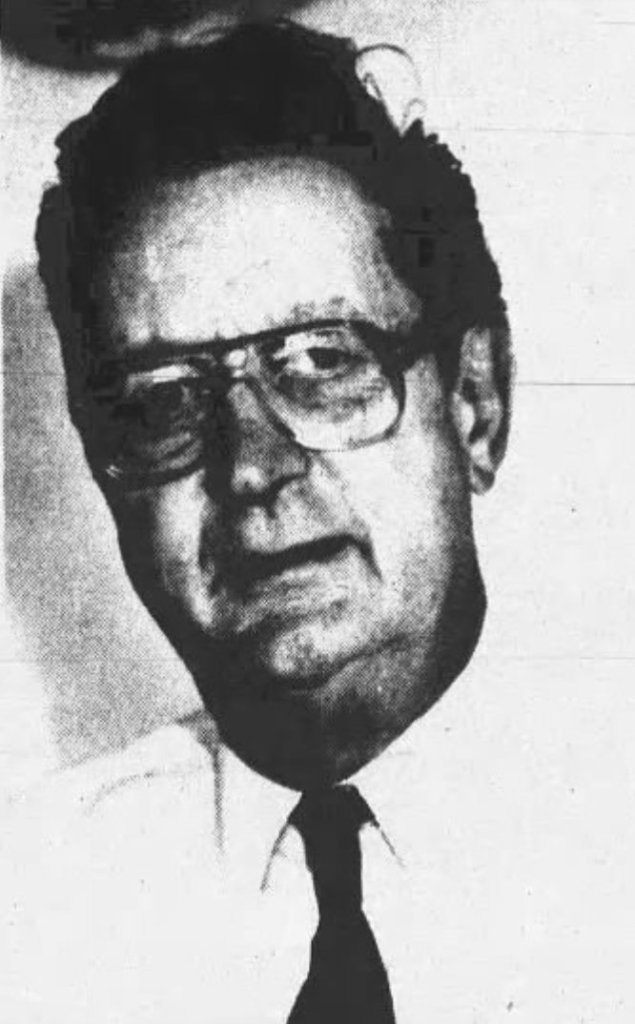
A dedicated businessman who used his organizational skills to lift up the educational and medical needs of his community, Glenn Horrell invested in projects for the citizens of Red Bud and Randolph County that had lasting impacts on generations of local families.
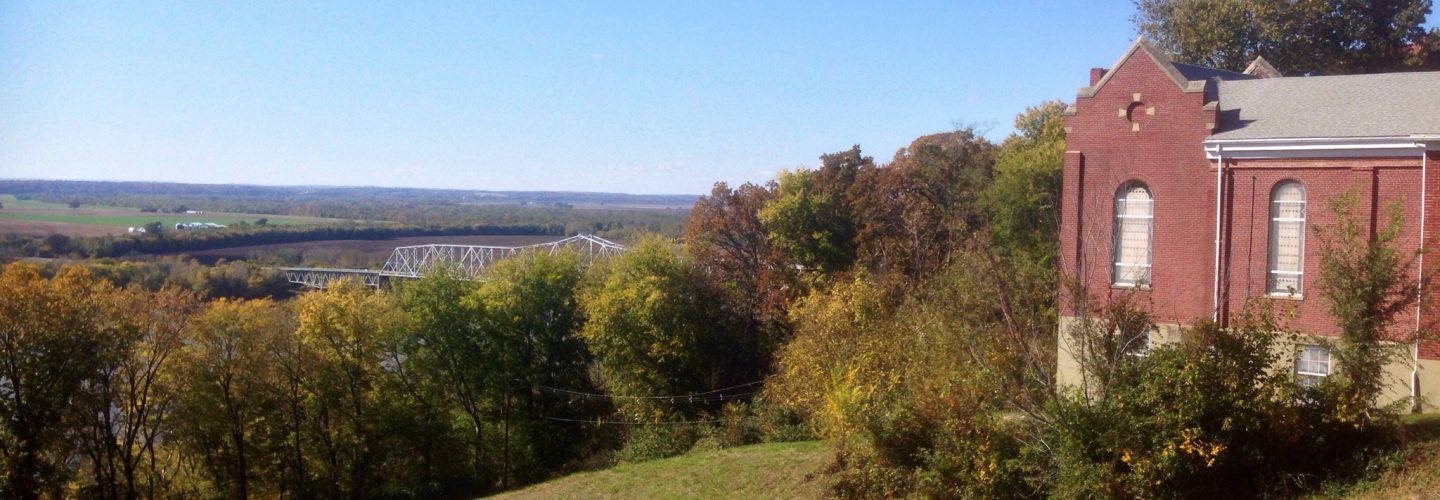
Glenn Anthony Horrell was born on October 26, 1916, in the tiny hamlet of Modoc along Randolph County’s Mississippi River bluffs. He was the second son of Henry Edward Horrell and Josephine Mary Lavery, who both came from families with deep roots in the nearby communities of Prairie du Rocher, Ruma, and Brewerville. Henry and Josephine raised Glenn with his brothers, Sylvester, Gerald, and Lloyd, and sister, Geneva, on a family farm, surrounded by grandparents, aunts, and cousins.
With his siblings, Glenn spent his childhood helping out on the farm and attending the Marigold School between Evansville and Modoc. Like many boys of his generation, he left school after finishing the eighth grade and went out to work. Early on, Glenn was hired by a young local farmer, Claud Simpson, to help break horses, but eventually, he followed in the footsteps of many other young people from the area and headed north to look for work. In his early 20s, he was hired by the Continental Can Company, working at their plant in the stockyards of East St. Louis. The company produced cans for food and beverage producers across the nation, including Anheuser-Busch in St. Louis. He also found work as a truck driver and a machinist, operating a punch press in a factory in St. Louis, where he also signed up for a night course in salesmanship at a nearby YMCA.
But soon, the outbreak of war changed things for local manufacturing plants and for Glenn. Machinery used to make items for everyday life was repurposed in wartime to produce munitions, tanks, and airplane parts. Glenn enlisted in the army on May 13, 1941, several months before the Japanese attack on Pearl Harbor brought the United States fully into World War II. He was sent to Coast Artillery Basic Training, and soon he was promoted to Technical Sergeant and assigned as a supply officer to the 752nd Antiaircraft Artillery Gun Battalion. There, he served for four years, including two as the chief supply clerk for his regiment.
Coordinating the needs of as many as 2800 men–keeping track of their clothing and medical needs, as well as rations and equipment–must have been a daunting task. But Glenn’s keen head for business helped him to master the organization required, keeping meticulous records of every transaction, dispatching shipments in a timely manner, and managing a staff of thirty. When his unit deployed to the Pacific, he was one of the key figures supervising the movements of necessary equipment and supplies overseas, and ensuring that those supplies moved along with the regiment at each phase of the operation.
On December 27, 1941, just a few weeks after the United States entered the war, Glenn was sent with his regiment to the Pacific Theater. He would spend the next three years of his life in the region with his battalion, which provided front-line antiaircraft support on islands that had been secured by Allied forces. After a brief return to the United States in the autumn of 1944, he was back in the Pacific that December, providing support during the Philippines campaign. He was present for the Battle of Okinawa in the spring of 1945, one of the fiercest and bloodiest conflicts of the war.
Even though he was nominally present in a supporting role, Glenn shared that he, as well as all of the men in his unit, were assigned rifleman duties out of necessity on both Iwo Jima and Okinawa. Later, Glenn’s son would reflect that he thought his father’s experiences in the war made him “fearless.” For his service, which included ground combat, Glenn was recognized with a series of medals. He was decorated with the Good Conduct Medal, the American Defense Service Medal, the Asiatic-Pacific Campaign Medal, and the World War II Victory Medal before he was honorably discharged from the army in November 1945.
Back in the States, Glenn headed back to Randolph County, where he spent the next several years readjusting to civilian life and exploring a range of business opportunities. In the late 1940s, he became the owner and operator of the Royal Tavern at 106 South Main Street in Red Bud. As part of the business, he came into the orbit of Fred Husemann, who ran a successful beer and liquor distribution company in town. Fred had been the proprietor of a bottling works in Red Bud since 1919. He had successfully endured the challenges of Prohibition by pivoting to soda production–and carefully advertising “packages of good cheer” that contained juice concentrates in flavors like port, sherry, and burgundy.
In advertisements in newspapers across Illinois, Fred carefully noted that the concentrates he sold were not violations of the Volstead Act and had twice survived federal court cases. Because the concentrates were advertised for use in the home and at church socials–and “not intended for wine making”–he was able to carefully skirt the edge of prohibition laws and keep his bottling and distribution business running.
After Prohibition ended in 1933, Fred was able to return to alcohol distribution. That December, he began running advertisements again as a distributor of Griesedeck Beer, and later for Anheuser-Busch’s Budweiser brand. By the time Glenn Horrell was running the Royal Tavern, Fred was able to sell him a full range of products. In the meantime, Glenn also struck up a relationship with Fred’s elder daughter, Lucille Dinges. She was a widow whose husband had died fighting in France in 1944, and she had a young son, Rodney.
Glenn and Lucille fell in love, and they were married on June 10, 1952. Their family quickly grew, as they welcomed a son, Kevin, in 1954, and a daughter, Andrea, three years later. At the same time, his father-in-law asked him to join the family distribution business. In the 1950s, Husemann Distributing Co. shifted to selling Anheuser-Busch products exclusively, and after Fred handed over the reins of the business to Glenn in 1956, the name was changed to Horrell Distributing Company. Glenn operated the distributorship for a remarkable forty-two years, bringing on his son and daughter as partners. They continued to run the family business for several years after Glenn’s passing, finally selling the distributorship in 2006.
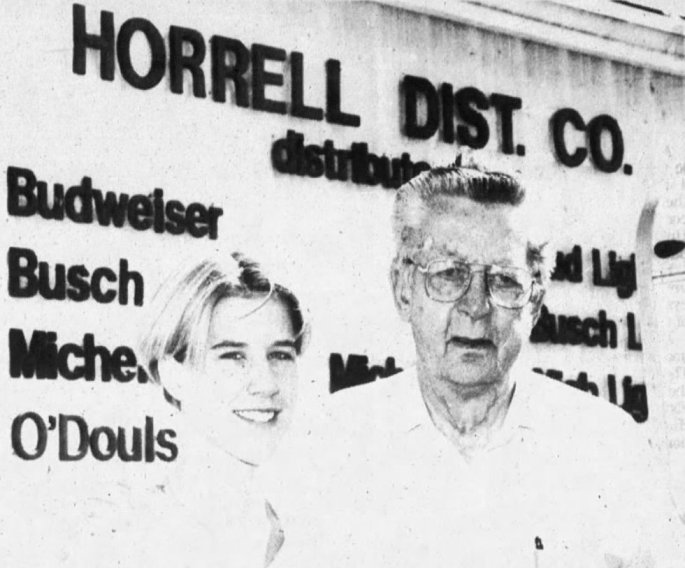
The distributing company wasn’t the only enterprise that Glenn was involved with in his post-war years. He was interested in technology, which led him to a side business as an appliance dealer. His son remembers that his father owned one of the first television sets in Red Bud, which he installed in the Royal. Soon, Glenn’s appliance business began offering Capehart televisions and HotPoint refrigerators and freezers. Glenn also established Community Motors, selling used automobiles in Red Bud. He ultimately sold the property to his older brother, Vess, who established Hi-Way Motors on the site.
But Glenn didn’t leave the car business behind. In 1952, he was contacted by executives from the Buick Corporation who were looking to open a dealership in the area. Glenn purchased the franchise, locating the new business on East Market Street in Red Bud. As the dealership evolved, Glenn also added Pontiac and GMC vehicles to the lineup. He increased the product variety and sales volume steadily until he finally sold the business in 1981 after twenty-nine years of ownership.
Though his entrepreneurial ventures kept him plenty busy, Glenn also worked to find ways to make a difference in his community. He was elected to serve as an alderman in Red Bud, and he also served as President of the Board of Directors of the First State Bank of Red Bud. He was active in local veterans’ organizations, including the American Legion and the VFW. He was also an active member of St. John’s Catholic Church.
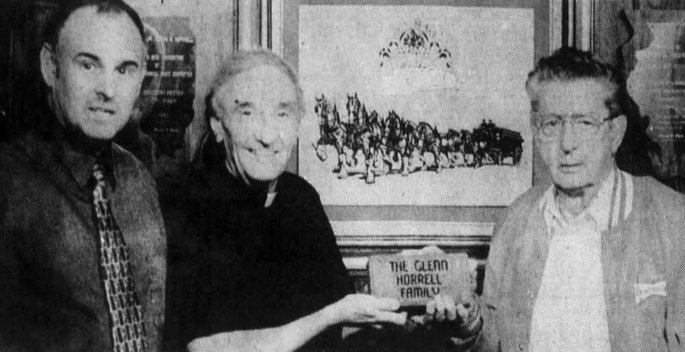
But most of all, Glenn had a knack for connecting projects with people who could move them forward, and he used that talent to build a lasting legacy in Red Bud. Two of his most focused, dedicated projects stand and serve residents of Red Bud and the surrounding communities daily.
The first of these projects transformed and advanced an important local institution. Glenn understood that good, quality healthcare was a key component of community success and a true necessity for people of all ages. Having a local hospital, especially one with good emergency care, could literally be the difference between life and death for our loved ones.
St. Clement Hospital opened in Red Bud in 1900, with a pair of additions built in the late 1940s. By 1965, the community realized that Red Bud needed improved health facilities, a notion that was confirmed by an Illinois Department of Health survey a year later. Ultimately, it was decided that the best course of action would be building a new hospital, and fundraising to that end was divided into two stages. The first segment was dedicated to securing a matching grant, and the second focused on raising millions for a capital campaign.
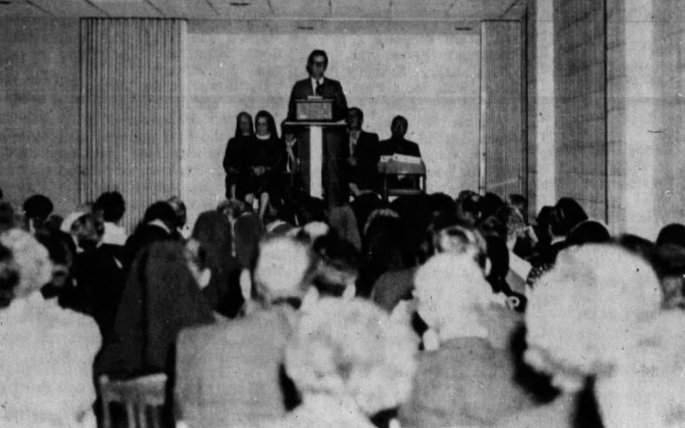
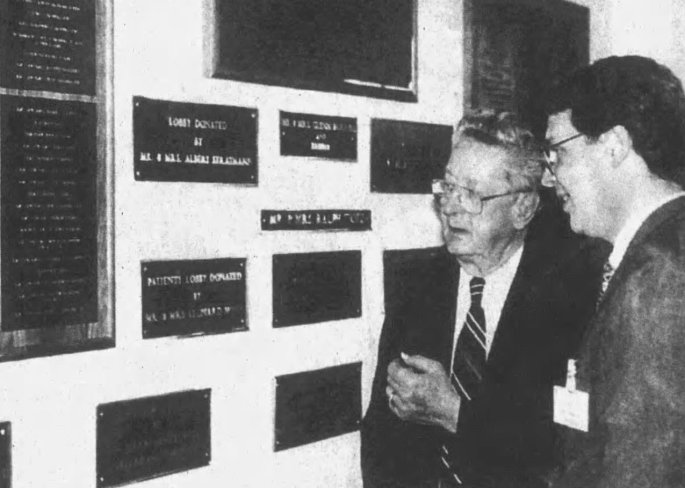
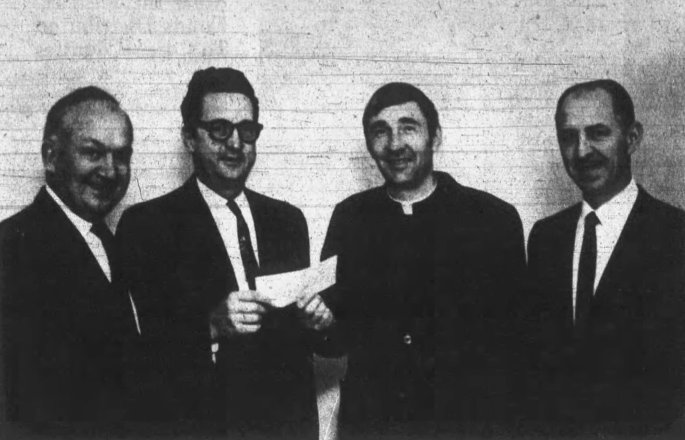
Glenn was serving as president of the hospital’s Lay Advisory Board at the time, and the job of shepherding the capital campaign fell to him. With his fellow board members, Glenn embarked on a vigorous fundraising campaign in 1968, pulling together a total of $4.8 million in funds, including matching grants, by 1969. Glenn’s leadership, influence, and steady persistence were all vital in ensuring the success of the program and the new hospital. Today, through several name and ownership changes, Red Bud Regional Hospital continues to serve and meet the healthcare needs of Red Bud and surrounding communities in Randolph, Monroe, and St. Clair counties.
Soon, Glenn and other leaders in Red Bud realized that the community still had an outstanding need for adequate care facilities for Red Bud’s aging population. An additional $1.25 million was raised and invested in the construction of a state-of-the-art nursing healthcare facility, which connected physically to the hospital to facilitate quality patient care. The new nursing home was sold by its original owners in 1982, but it remained an important part of the community’s healthcare system until its recent closure.
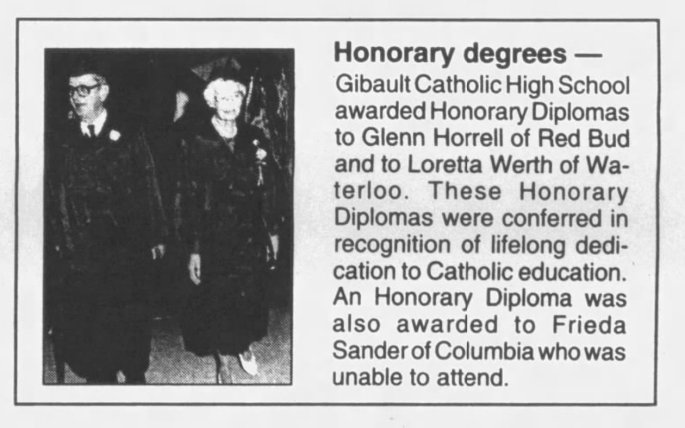
Having helped to revitalize medical and nursing care for his neighbors, Glenn turned his attention next to another important civic function: continuing education. He believed strongly that, for a region to thrive and grow, all children and residents needed to have access to quality educational opportunities. For years, he had advocated for those ideas as a member of the board of education at Gibault High School in Waterloo, where he was so instrumental to appeals over the decades that the school awarded him an honorary diploma in 1995.
Soon, Glenn took on a project that helped to extend those values throughout the community. In the early 1980s, Belleville Area College (now Southwestern Illinois College) had expanded, adding a campus in Granite City. With a district that encompassed Randolph, Monroe, and southern St. Clair counties, the college’s trustees began to explore additional potential campus sites in southern district communities, including Waterloo, Red Bud, Sparta, and Chester. A group of citizens from Red Bud met with college officials in the winter of 1983, and that meeting led to a series of evolving proposals and, ultimately, the selection of Red Bud as the future campus location in January 1984.
To secure the campus site selection, the city of Red Bud pledged a million dollars toward the campus facility, in the form of ten acres of land. Sixty-eight local investors, all businesses and individuals, contributed funds of at least $5,000 each. Behind the scenes, Glenn applied his leadership and influence to support and help the citizens’ group achieve its goals. The group was divided into four committees, each chaired by a prominent, energetic business leader from the community. Glenn worked to inspire and motivate each of them, advising and counseling committee leadership and personally reaching out to many eventual investors on his own.
A groundbreaking ceremony for the new Red Bud campus was held on June 25, 1984, with the campus officially opening its doors to the first 300 students the following January. The success of the fundraising campaign that drove the creation of the new campus became a story that has been shared at community college conferences in Illinois and in other states.
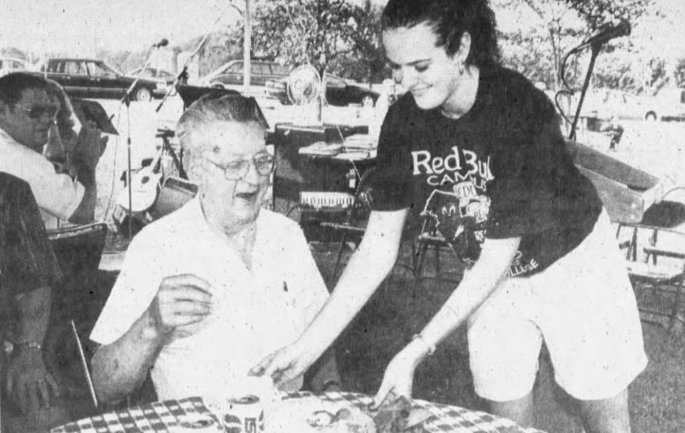
Glenn was particularly proud of the success of the Red Bud campus, but he refused to take credit for the project. Instead, he would always insist on praising all of the people who had contributed their time and talents to the campaign. Still, his influence, his persistence, and his confidence that the proposal and the project would succeed were vital. Those qualities were recognized by his neighbors time and again, with the Red Bud Chamber of Commerce even choosing him as their first recipient of the Red Bud Achievement Award in 1985. Two years later, the trustees of Belleville Area College honored him with their Special Recognition Award, which recognized outstanding service to the college or to community college education.
Glenn passed away in May 1998 in Red Bud, at the local hospital he had helped to maintain and grow. He left behind his wife, children, grandchildren, and great-grandchildren, but more than that, he left a legacy of community involvement that laid the groundwork for generations of people in the area to thrive. His selflessness in using his talents to build resources to improve the lives of all reminds us all that investment in our communities can improve our own lives and the lives of those who come after us.
Glenn Horrell was inducted into The Randolph Society in 2026.
 The Randolph Society