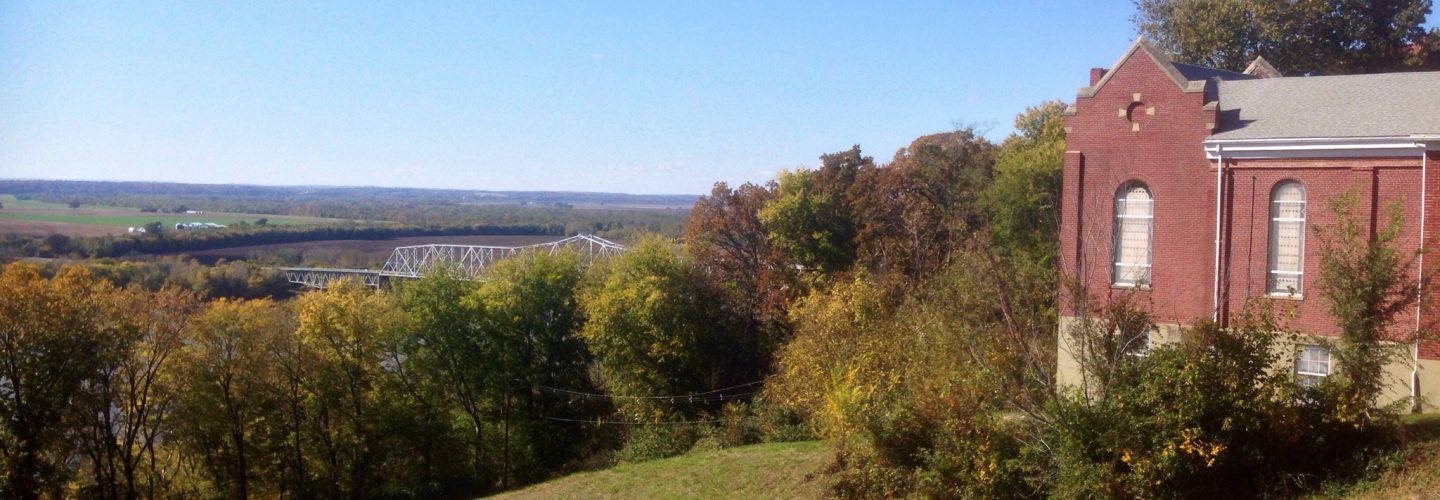

A priest and teacher who ministered to the people of Kaskaskia as part of its Catholic mission, Father Gabriel Richard was a pioneer who laid the groundwork for early educational systems in America and helped to found one of the nation’s first research universities.
Gabriel Richard was born on October 15, 1767 in the historic town of Saintes in the southwest of France. Once the Roman capital of Aquitaine, Saintes remained a provincial capital in the eighteenth century. There, Gabriel’s parents, François Richard and Marie Geneviève Bossuet, raised their six children. François worked in a government post at the nearby port of Rochefort, offering the family sold stability, while Marie Geneviève’s family links to a renowned seventeenth-century Bishop of Meaux, Jacques-Bénigne Bossuet, gave young Gabriel connections within the Catholic Church.
When he was just eleven years old, Gabriel was enrolled as a student at the local college, where he quickly distinguished himself as a talented scholar. He also, though, demonstrated an adventurous streak, which nearly cost him his life. During his time at the school, the college was building a new chapel, and the exterior of the building was covered in scaffolding. The students were told not to scale the tempting construction site, but Gabriel found the prospect irresistible. He fell from the scaffolding and suffered a serious head wound that would leave his face scarred for life, but thankfully he escaped without any lingering internal damage.
As he matured, Gabriel decided to enter the seminary. Education had proved to be an essential part of his life. In a letter to his father, the young academic wrote, “I esteem education a hundred times more than the succession you could leave us, for an accident can deprive us of our possessions, but knowledge and good education remain with us forever.” The philosophy would go on to shape both his own education and the vocation he would seek as an adult.
At the age of seventeen, he headed north to the city of Angers, then the capital of the province of Anjou, in 1784, to study with the Sulpicians, an order founded in seventeenth-century France to prepare young men for the priesthood. One of his biographers, Paul M. Judson, writes that Gabriel “followed a course in philosophy and theology with characteristic eagerness, spending his vacations for the most part at the seminary in pursuit of his studies, or in teaching young men who sought his assistance.” One of his most important mentors during this period of his life was his theology professor, Father Benedict Joseph Flaget.
Gabriel was ordained as a priest on October 15, 1790. His lengthy education at the seminary is a reflection of the young age in which he entered the institution: his ordination ceremony took place on his 23rd birthday. Soon, he was assigned to teach mathematics at a new minor seminary founded in Issy-les-Moulineaux, a suburb of Paris, by Father Louis-Guillaume-Valentin DuBourg, who had been ordained just a few months before Gabriel.
Soon, though, political upheaval in France led to changes that put Gabriel’s career and life in jeopardy. The revolutionaries who toppled the monarchy also targeted the Catholic Church, seizing their property and abolishing laws that required citizens to tithe. In the summer of 1790, just weeks before Gabriel was ordained, the new National Constituent Assembly published a new constitution that required all priests to swear an oath of fidelity to the new revolutionary government. Those who chose not to take the oath faced serious consequences, including deportation or even death.
The Sulpicians decided to prepare for the worst. Conscious that many of their seminaries in France would soon be shut down by the government, they reached out to John Carroll, the Jesuit Bishop of Baltimore. He urged the Sulpician Superior General, Jacques-André Emery, to send some of the priests of his order abroad to start a seminary in America as a refuge for French priests who needed to flee the country. The first group of nine priests and seminarians of the order sailed for Baltimore in April 1791. They were received there by Bishop Carroll, who wrote, “While I cannot but thank Divine Providence for opening upon us such a project, I feel great sorrow in the reflection that we owe such a benefit to the distressed state of religion in France.”
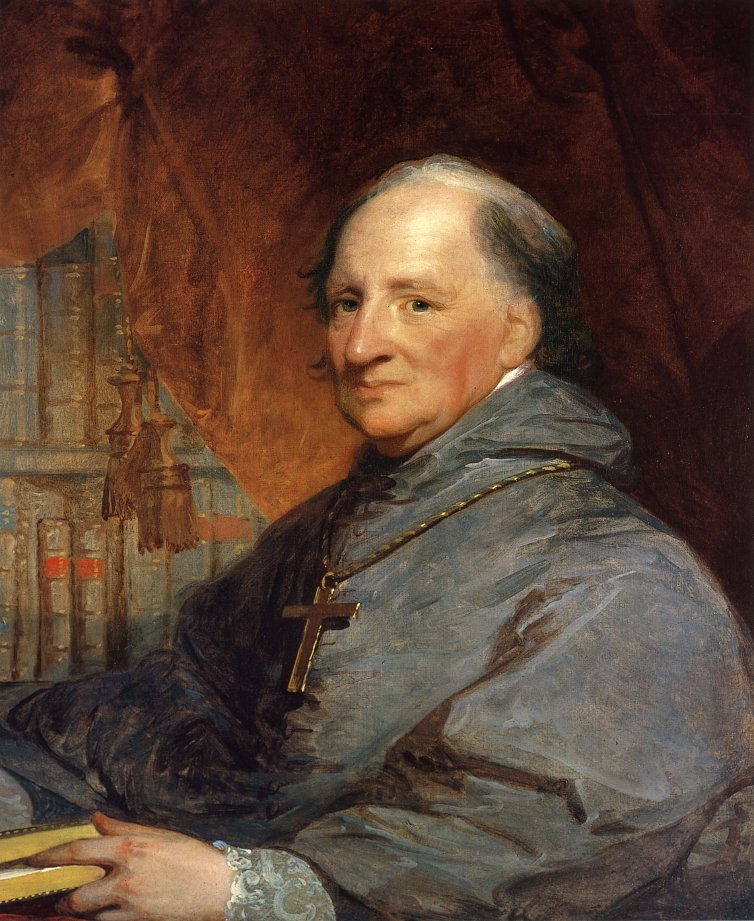
Meanwhile, the situation for priests like Gabriel who remained in France was becoming increasingly dire. Pope Pius VI had publicly denounced the new French constitution, and the church in France suffered an internal schism as a result. Gabriel was one of the priests who remained loyal to the Pope and the Sulpicians, refusing to take an oath of loyalty to the French government. In January 1792, his mentor, Father Flaget, sailed with another group of Sulpicians from Bordeau, arriving in America two months later. As tensions heightened in France, Gabriel was also sent to America. He boarded a ship in Le Havre on April 2, 1792. His exit from his native country was organized so quickly that he was not able to say goodbye to his family.
Gabriel’s ship, the Reine des Coeurs, arrived in Baltimore on June 24, 1792. Gabriel had escaped just in time. Father Dubourg’s seminary in Issy, where Gabriel had been teaching mathematics, was closed by the revolutionaries, and Dubourg was forced to flee into exile in Spain in August 1792. Five days after Dubourg left, the four priests who had remained behind at the school were killed by a mob. The following month, more than 200 priests and nuns were killed in a period of chaos that would become known as the September Massacres. Dubourg would later also emigrate to America, where he became a bishop and notably served as the president of Georgetown University and the founder of Saint Louis University.
Gabriel and his fellow Sulpician priests were in Baltimore when they received the terrible news from home. On their arrival in Maryland, they had been assigned by Bishop Carroll to teach at St. Mary’s Seminary, a newly-founded institution of Catholic learning. Though he was now in America, Gabriel found himself in the familiar world of a French-language seminary, once again teaching mathematics to the young men enrolled at the school. He was part of a faculty of fifteen priests, all of whom had fled France to safety in America.
In France, where the church had been part of the fabric of society for so many centuries, there had been a steady supply of students to enroll at seminaries. But in America, Gabriel and his fellow educators soon found seminarians in shorter supply. By 1795, all of the men who had been enrolled at St. Mary’s had been ordained. Judson notes that it “became clear as time went on that without any students to teach, all these priests could not be kept” at the school. In consultation with the Sulpician leaders, Bishop Carroll decided to send the young men, including Gabriel, out “as missionaries to various parts of his diocese where priests were especially needed.”
The territory of Bishop Carroll’s diocese was vast. In 1789, the newly-created diocese covered the entire country of the United States of America. After considering where Gabriel could best be used to support the church, Carroll assigned him to the French settlements of southern Illinois, which had previously been part of the diocese of Quebec. The territory in which Gabriel would minister centered on Kaskaskia and also included Prairie du Rocher, Fort des Chartes, Ste. Genevieve, New Madrid, and, eventually, Cahokia.
Gabriel’s adventurous spirit and commitment to education were key attributes as he embarked on his new journey. In December 1792, he left Baltimore to head to Pittsburgh and Louisville and then on to Illinois. He wasn’t alone on the trip: he was accompanied by his mentor, Father Flaget, who was being dispatched to serve at the church at Fort Vincennes, Indiana, and by an old friend, Bishop Carroll’s vicar-general, Father Michael Levadoux, who would be accompanying Gabriel to Illinois.
When Gabriel and Michael arrived in Kaskaskia, they found a parish in disarray. Judson writes that “the two missionaries found about eight hundred Catholics, for the most part French Canadians, who had been nearly a generation without any priest to administer to their spiritual needs.” For the next five years, Father Richard guided parishioners across the area, holding regular masses, baptizing their children, performing their marriages, and burying their dead. Church records from Immaculate Conception in Kaskaskia alone indicate that he performed at least eighty baptisms after arriving in Illinois. The first child he christened, interestingly, shared his last name: little Pelagie Richard, whom he baptized on January 9, 1793.
The multi-racial makeup of society in Kaskaskia is evident from the records of Father Richard’s work in Kaskaskia. He ministered to white parishioners, both Francophone and Anglophone, as well as to black and mixed-race residents, some of whom were enslaved. Numerous records from his time at the parish are marked with the words sauvage and sauvagesse—indicators that he also baptized, married, and performed funerals for members of the Kaskaskia tribe who had converted to Catholicism. In September 1794, he conducted a funeral service for a child of the tribe’s chief, Jean-Baptiste Ducoigne.

While serving as a priest for the mission churches, Gabriel longed to return to the classroom. With Father Levadoux, he dreamed and planned for the educational future of the area. Together, they worked to build a new church in Cahokia, and they looked forward to a time in the future when a growing population would require new parishes and clergy sufficient to serve them. As Sulpicians, they both remained focused on education. They soon began to discuss founding an academy, which they hoped might one day be expanded into a proper seminary.
On March 1, 1793, only a few weeks after his arrival in Kaskaskia, Gabriel mentioned the future project in a letter, stating that funds were already being collected toward the creation of the school. One local resident had even promised a remarkable donation of 2,500 pounds. Gabriel himself took steps to secure the land needed for an academy, acquiring a two-hundred-acre tract near Kaskaskia in his own name. But, despite his best efforts, the project did not materialize.
With hopes of founding a school dashed, Gabriel found himself particularly challenged by the men and women of his congregation in Randolph County. On January 24, 1796, he wrote to Bishop Carroll from his desk in Kaskaskia: “The people of this post,” he complained, “are the worst of all Illinois. There is no religion among them, scarcely anyone attending Mass even on Sunday.” He added, “Intemperance, idleness and debauchery reign supreme.” He had kinder things to say about the small parish emerging in nearby Prairie du Rocher. “I am tolerably well satisfied with my little village at Prairie du Rocher, although grave scandals are occasionally witnessed here.”
Ultimately, Gabriel took some of the blame for his difficulties, in part because he was unable to comfortable communicate in any languages other than French or Latin. “My chief consolation is derived from five or six English families who live ten or fifteen miles from this place,” he told Carroll. “They are surrounded by others who are Protestants, but who would easily be led into the Church if I could speak the English language with greater facility.”
In August 1796, Gabriel found himself alone in Randolph County. Father Levadoux was transferred by Bishop Carroll to Detroit, which had recently been ceded to the United States by the British. Gabriel soldiered on alone in Prairie du Rocher and Kaskaskia for the next two years, working with both the French and native populations who worshipped at the mission churches. Then, a letter from Bishop Carroll’s office set Gabriel on a new course. With the revolutionary fires calming in France, Father Levadoux had asked if he might be sent back to his home country. Bishop Carroll appointed Gabriel to succeed him at Ste. Anne’s in Detroit, taking Father Levadoux’s place.
On March 22, 1798, Gabriel left Kaskaskia, bound for his new home in Michigan. He was accompanied by Father John Dilhet, a new arrival from France who had been assigned to serve as Gabriel’s assistant. The two men arrived in Detroit on June 3, 1798. He would stay there for the next thirty years. Judson notes that, when Gabriel arrived there, “Detroit was merely a fortified military post, surrounded by a stockade, and having a population of about two thousand souls. These for the most part were French Canadians. Although at this time the largest city west of the Alleghanies, in extent Detroit comprised barely two acres of ground.” The 6,000-person parish that Gabriel had been assigned to shepherd was more extensive, consisting of the entire present-day state of Michigan, plus parts of Indiana and Wisconsin and all of the island settlements on the lakes.
Gabriel quickly worked to remedy one of the issues that had caused him so many problems in Illinois: he learned English as quickly as possible. He traveled throughout his parish territory, lamenting the lack of educational opportunities for the young people of the region. His passion for education steered him toward the establishment of numerous institutions of learning in the area. His first project was a new primary school adjoining the church of Ste. Anne, which was accepting students as early as 1802. Not long after that, he worked with Father Dilhet to open a preparatory seminary. There, the two priests taught a range of subjects to the young men of the parish, including Latin, geography, and ecclesiastical history and music. In 1804, he recruited four capable young women from Detroit to serve as teachers in a new Academy for Young Ladies. Eventually, he also established a school to educate native children in the region.
Within six years of his arrival in Detroit, Gabriel had laid the foundations for a complete educational system for the young people of the region, educating both boys and girls in elementary subjects and establishing secondary schools for young women and young men. The progress for continuing to develop the schools was halted for a time after a devastating fire swept through the parish in 1805, but, always energetic and persistent, Gabriel pushed forward to rebuild. His spirit of regeneration was embodied in the motto he created for the city of Detroit after the fire: Speramus meliora; resurget cineribus (“We hope for better things; it will arise from the ashes”).
Soon, the educational institutions were on the path to success once more. By 1809, Gabriel was able to invest in new technology to extend educational opportunities even further within the community. He acquired the first printing press in the city of Detroit and began publishing his own French-language periodical, Essais du Michigan, as well as original and reprinted books. Gabriel also recognized the need for vocational education programs in the area, with one in particular focusing on weaving on looms.
Gabriel recognized that young white men were not the only ones who needed education in their lives, and the opportunities he extended to women and to the members of native tribes were an important part of his legacy. The positive relationships that Gabriel had developed with the native tribes of the region led him into conflict with the British during the War of 1812. After the British army captured the city of Detroit, they imprisoned Gabriel in Canada when he refused to swear an oath of allegiance. According to Judson, an unlikely figure helped to secure Gabriel’s freedom: “It is said that when Tecumseh, the leader of the [Shawnee], learned that Father Richard was held by the British, he threatened to withdraw his men if the Black Robe remained prisoner. In consequence of this the priest was released and immediately crossed over to Detroit,” after which he “obtained supplies from beyond the war region and distributed them gratuitously to all who were in want, as he had done after the fire eight years before.”
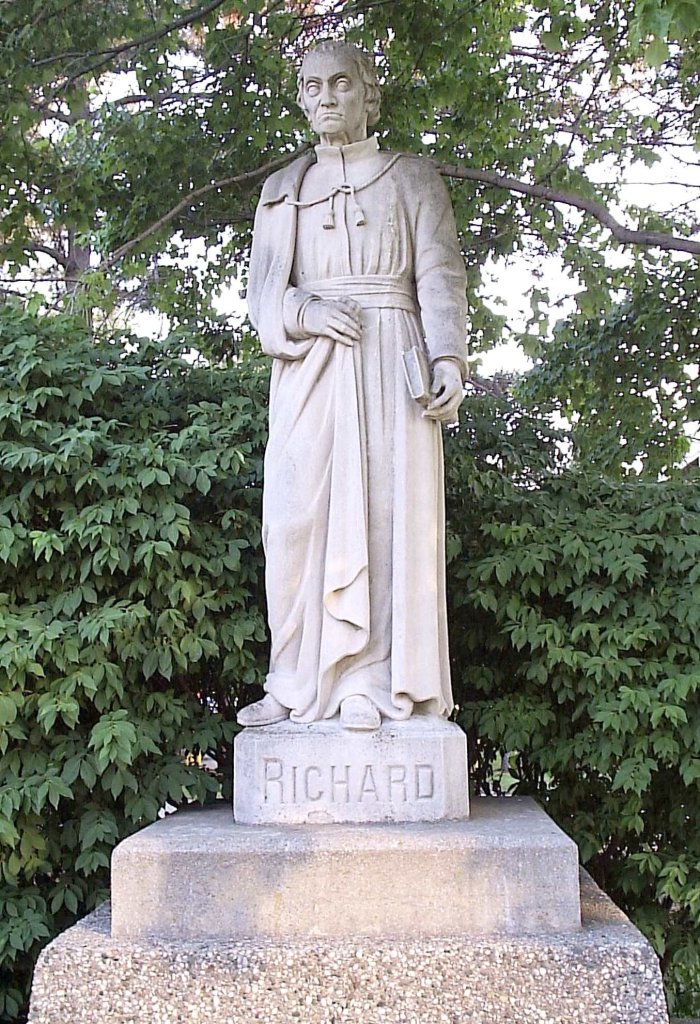
After the war, Gabriel helped to negotiate the Treaty of Fort Meigs between American representatives and chiefs and warriors from several native tribes. As part of the treaty, Gabriel secured the transfer of almost 2,000 acres of native land for the parish of Ste. Anne’s. An equal portion of land was also ceded to help found another of Gabriel’s dream projects. The treaty gave a 1,920-acre tract in Detroit to become the home of a new college. This educational institution, founded by Gabriel, Chief Justice Augustus B. Woodward of the Michigan Supreme Court, and the Presbyterian minister John Montieth, was chartered in 1817 as the Catholepistemiad of Michigania. Four years later, it received a new name: the University of Michigan.
Gabriel served as a professor, vice-president, and trustee of the new university, which focused on a curriculum devoted to sciences, literature, languages, mathematics, natural history, astronomy, medicine, military strategy, history, philosophy, and religion. For the next twenty years, the institution was located in Detroit, before eventually moving to its current home in Ann Arbor. The influence that Gabriel had accrued during his time in Michigan was evident in his role as part of the new university. That soft power also helped him to win election as a nonvoting delegate of the Michigan Territory to the United States House of Representatives in 1823. He became the first Catholic priest to service in Congress, completing a two-year term.
Gabriel maintained a spirit of generosity and service to others for the rest of his life. While ministering to victims of a cholera outbreak in Detroit in the autumn of 1832, he succumbed to the disease himself. He died in Detroit on September 13, 1832, at the age of 64. He was buried in the Church of Ste. Anne, where his tomb remains on display today. One Catholic publication wrote that he “literally wore himself out in the service of his community.”
In 1951, Gabriel’s personal library of more than 200 books was officially presented to the University of Michigan. Though he had a remarkable life focused on pastoral care, it is his dedication to education that has become his greatest legacy. In his book on Catholic education in America, the Rev. J.A. Burns writes that Gabriel “merits a distinguished place among American educators even beyond the recognition that is his due as a champion of distinctly Catholic schools. He was a friend of education in the broadest sense, and his plans comprehended a system of education for the whole people, notwithstanding denominational differences. He was a pioneer in almost every kind of educational work.”
Father Gabriel Richard understood that communities and societies benefit when each and every one of its members has the opportunity to pursue educational opportunities, because an educated populace is a successful populace. Gabriel’s dream for an educational system on the frontier, imagined in Kaskaskia and realized in Detroit, lives on today in the hearts of educators in Randolph County and beyond.
Gabriel Richard was inducted into The Randolph Society in 2025.
 The Randolph Society