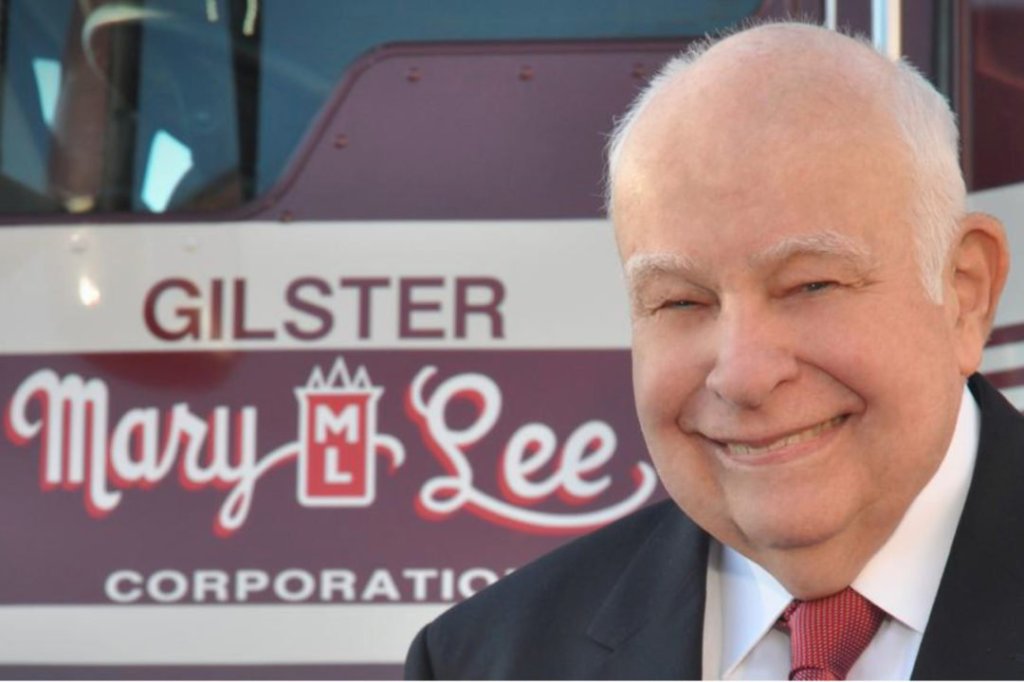
An innovative entrepreneur and community leader, Don Welge took the helm of his family’s business as a young man and transformed it into a local cornerstone, all while devoting time to building bridges within and between the communities he served in Randolph County and beyond.
Donald Edward Welge was born in St. Louis on July 11, 1935. The eldest of three sons of William H. Welge and Rudelle Fritze Welge, Don was the descendant of two entrepreneurial families who had moved from Germany to Chester in the nineteenth century. Don’s grandfather, William G. Welge, was a talented photographer who established a studio and gallery at 981 State Street in Chester at the turn of the twentieth century. Around the same time, Don’s great-grandfather, Henry Gilster, came to Chester from Germany and set up a mercantile business. Henry Gilster’s grocery and dry goods store, located just steps away from the Welge Studio on State Street, continued as a family business for decades after his death.
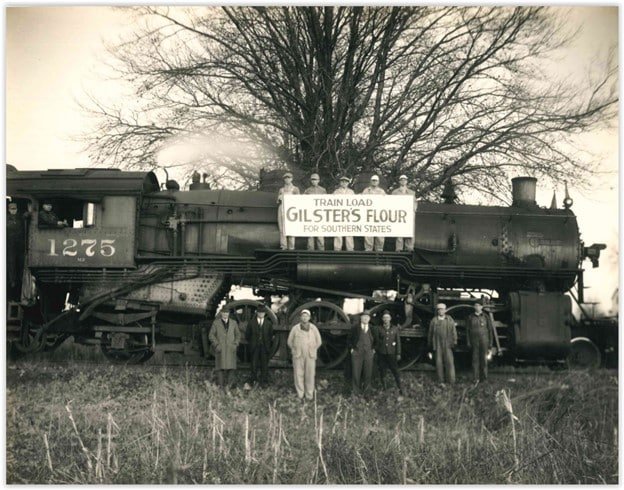
Henry Gilster and his children soon broadened their business interests, becoming owners and operators of several local mills in the 1890s. Henry Gilster bought the Buena Vista Mill in Chester in 1902. By that time, his eldest son, Albert, had become president of the Steeleville Milling Company. Albert’s mill was located on the same site as the original mill established in Steeleville by George Steele in 1825. During Albert’s tenure as owner, the mill thrived, with Rutherford Hahn lending his expertise as the head miller. The market for flour milled in Steeleville extended throughout southern Illinois and through parts of several southern states, including Mississippi and Louisiana.
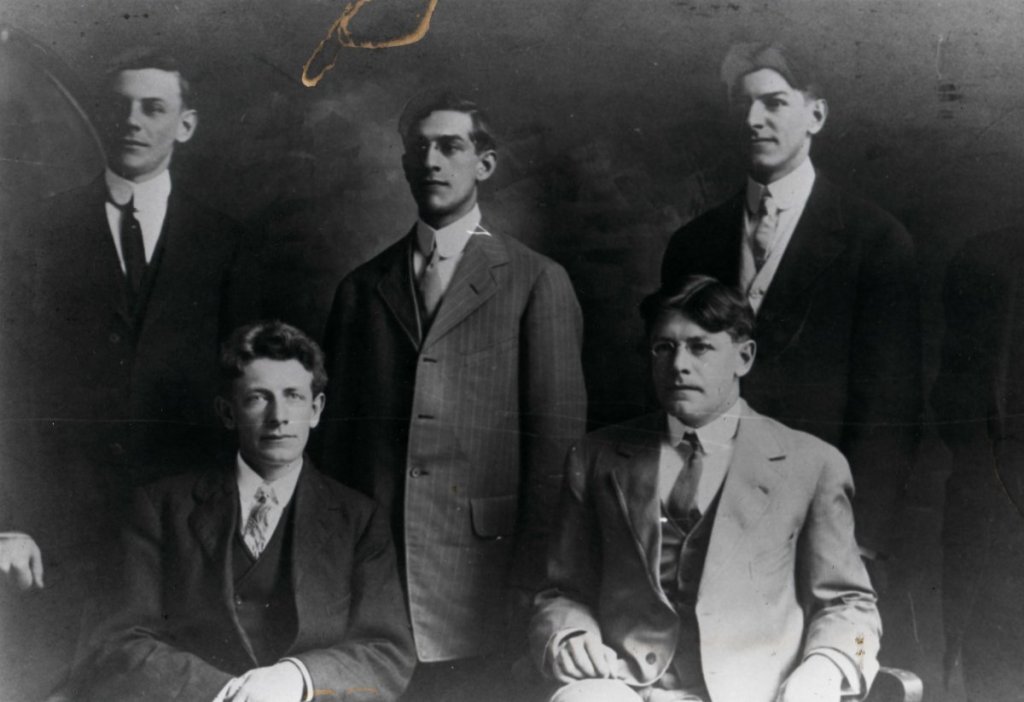
Albert was the eldest of seven siblings, many of whom were involved in various parts of running the family’s business portfolio. Herman, who later ran the Gilster Store in Chester, worked as a secretary for the milling company, and Edward and Adolph were among the numerous commercial salesmen advertising flour products like Gilster’s Best and Featherlite throughout the company’s extensive territory. Eventually, in 1918, the siblings relocated the offices of the milling company from Steeleville to Chester, setting up shop in the rooms above the family store on State Street.
The elder of the Gilster sisters, Clara, married Chester’s local photographer, William Welge, in 1899. Their first son, William Henry Welge, became interested in the business being run by his uncles. After graduating from the University of Illinois with a business degree in 1926, Bill began working as a salesman for Gilster Milling Company. Eventually he too expanded his commercial interests, taking over ownership of another family property, the Buena Vista Mill and Hatchery.
In 1933, Bill married Rudelle Fritze. They moved into the home of her father, a retired local physician on Opdyke Street in Chester. Their first son, Don, was born in 1935, followed by Michael in 1940 and Bruce in 1945. The brothers were raised in Chester, attending local schools and worshipping at St. John’s Lutheran Church.
After graduating from high school, Don decided to attend college at Louisiana State University. The school, located in Gilster Milling Company’s familiar southern sales territory, appealed to Don because of its strong agricultural program. He threw himself into student life, joining the debate team and the army ROTC program, while still working part-time as a salesman and truck driver for Gilster.
After graduating with a degree in agriculture in 1957, Don maintained strong ties to the university as part of its alumni community. In 2022, LSU announced the establishment of the Welge Food Beyond the Farm Certificate Fund, with plans to develop and launch the Food Beyond the Farm certificate program at the university. The initiative now helps to support an online graduate certificate program in agribusiness. For LSU students and Baton Rouge locals, Don’s legacy in the region is also perhaps most cherished for his partnership with Mary Lee Donuts, a popular chain that exclusively uses Gilster-Mary Lee doughnut mixes.
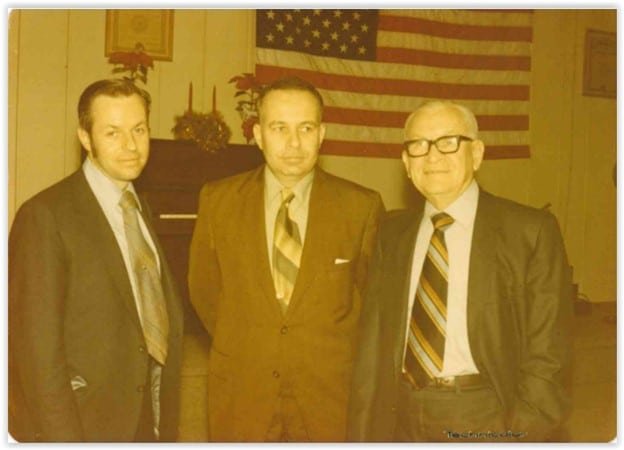
Don headed back to southern Illinois after finishing his studies in Baton Rouge and joined the family at Gilster Milling Company as a flour salesman and supervisor of the company’s trucking division. With traditional flour sales declining, Don’s fresh perspective helped the company to pivot into new, more lucrative opportunities. He recruited Cora Wente, the wife of Gilster’s Steeleville mill supervisor, Earl Wente, to test out recipes for new boxed cake mixes. She set up shop in a laboratory kitchen constructed in a tiny 100-year-old frame house near the mill, baking a dozen cakes a day as samples to test product quality. The company attempted at first to sell the new cake mixes under the Gilster’s Best label, but eventually they found that producing private-label products for other brands was more profitable. Today, the company makes a wide range of these products, everything from macaroni and cheese and potato products to breakfast cereal and microwave popcorn.
Gilster Milling Company president Adolph Gilster, Don’s great-uncle, passed away in 1961, and the family business was handed on to the next generation. Bill Welge was tapped to take over the company that his uncles had shepherded for decades. That year, the family also made the decision to sell a controlling interest in Gilster Milling Company to Martha White Foods of Nashville, with Bill as president and Don as vice president and general manager. Four years later, Bill stepped back, becoming chairman of the board, a role he held until his death in 1985. The job of president was handed over to Don at the age of 30, and his younger brother, Mike, soon joined the company as well.
As Don worked to steer the business toward the future, he also had plans to start a family of his own. In 1962, he married Mary Ann Childers, daughter of the owner of Chester’s steam laundry. They welcomed their first son, Robert, the following year. Their second son, Thomas, completed the family in 1970. He was given the middle name Bruce in honor of Don’s brother, Lieutenant Bruce Welge, who had been killed while serving in Vietnam in January 1969.
The innovations that Don had overseen during the transition from flour milling to private-label food production helped the company continue to thrive in the years that followed. In 1966, a major expansion of the facilities in Steeleville was built to accommodate the growing cake mix plant. But differences of opinion between the family and Martha White leadership led Don to make a major change in 1969. With several other executives, he left Martha White to form the Mary Lee Packaging Corporation, headquartered in nearby Perryville, Missouri. The separation between the Gilster family and their longtime company did not last long. The success of Mary Lee allowed Don and the rest of the family to purchase a controlling interest in the Gilster-Martha White plants in Steeleville and Chester. The new business was renamed Gilster-Mary Lee.
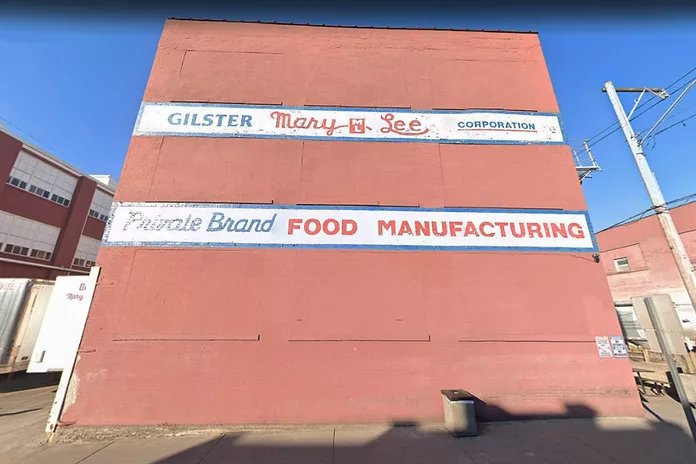
Gilster-Mary Lee has remained a mainstay of Randolph County’s local economy for decades. The company has weathered challenges, including loss of the Buena Vista Mill in a fire in 1980 and the devastating effects of the Flood of 1993. The company’s 25-acre facility in McBride, Missouri, was inundated that July by the rising waters, which left behind an estimated $20 million of damage when they receded.
Through all of the ups and downs, Don managed to steer the company on a steady course. A profile written about Don and Gilster-Mary Lee in the Southern Illinoisan noted, “Over more than half a century, Don Welge helped modernize, diversify and expand the company into the food manufacturing powerhouse that it is today by helping it find its niche in the store-brand business. When he started his career with the company, it employed about 20 people. Today, Gilster-Mary Lee employs more than 3,000 people across four states–Illinois, Missouri, Arkansas and Colorado. Its products are shipped across the U.S. and Canada and into international markets.”
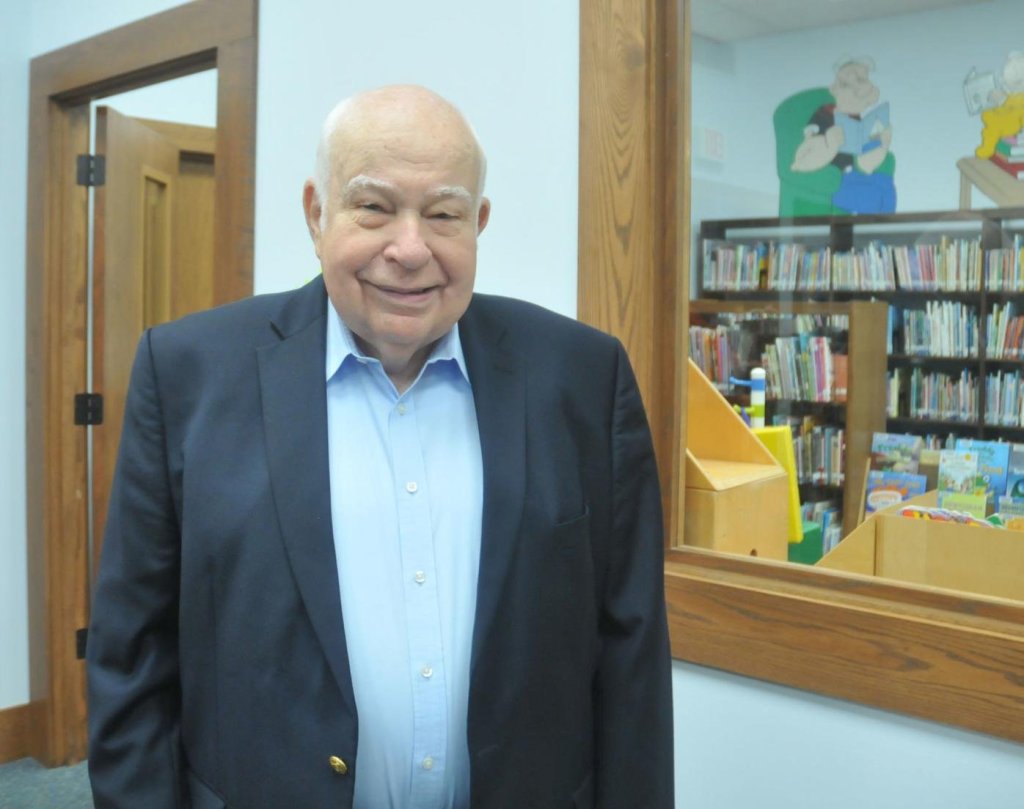
Don’s primary focus was always the company and his family–his sons once joked that he “didn’t have hobbies outside of work”–but he was also deeply involved in the civic fabric of Randolph County. He was a member of the Chamber of Commerce in both Chester and Perryville, served as a Chester alderman, and was appointed to Chester city council’s civic center development committee. He was on the board of St. John’s Lutheran Church in Chester, where the Gilster and Welge family have filled the pews for generations. Like his great-uncle Albert before him, he served as a director of Chester’s Buena Vista Bank. Education was also one of Don’s primary interests. He contributed to advisory boards at his alma mater, Louisiana State University, and at Southern Illinois University’s business college in Carbondale. Don was a strong advocate of scouting, serving on the Okaw Valley Boy Scout Council and supporting local scout troops for more than 40 years.
Commemorating the history of the region, and strengthening the connections between Randolph County in Illinois and Perry County in Missouri, were also major priorities for Don. For many years he served as master of ceremonies at the Fourth of July celebrations on Kaskaskia Island. In 1999, he reflected on the importance of that tradition, remarking, “Many of us feel that this historic spot is a fitting place to celebrate our national birthday. For many of us who attend these old-fashioned patriotic celebrations, it wouldn’t feel like the Fourth of July if we weren’t here.”
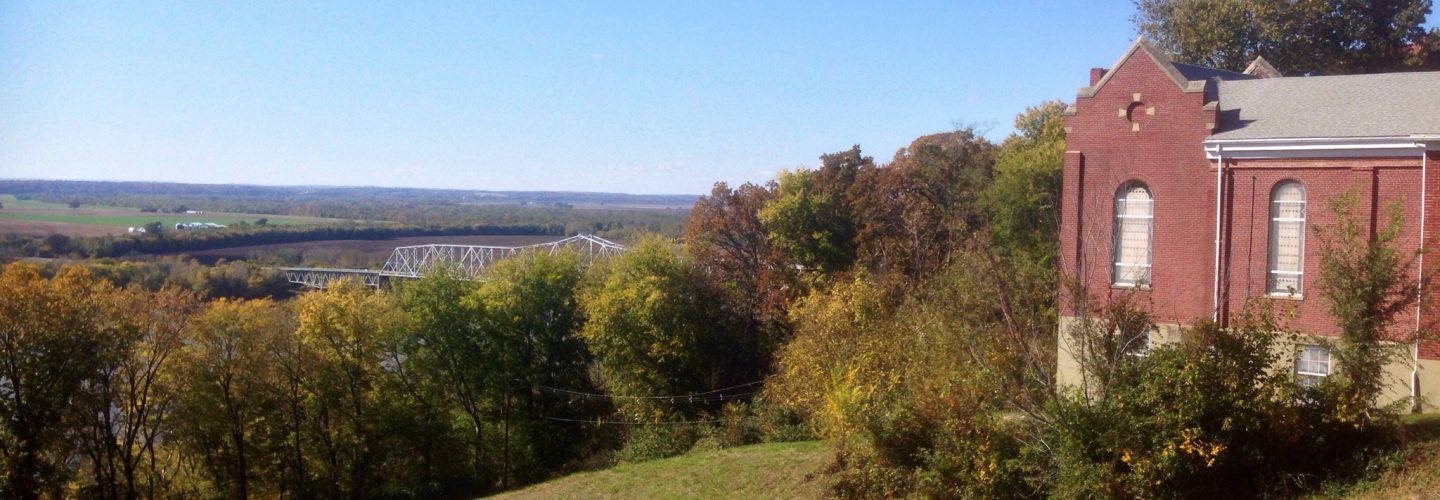
With Gilster-Mary Lee rooted on both sides of the river, Don was also a key figure in the movement to build a new bridge across the Mississippi River between Chester and McBride. In the last years of his life, he was “working as part of a group that has been trying to build bridges, both literally and figuratively, in hopes of pushing forward construction of a new bridge to replace the Chester bridge,” the Southern Illinoisan shared. A replacement for the aging bridge “would allow safer transportation of farming and manufacturing supplies while linking access to Interstates 57 and 55.” The new bridge, which will be completed soon, will officially be named the Don Welge Memorial Bridge in recognition of his contributions to the project and the communities that it connects.
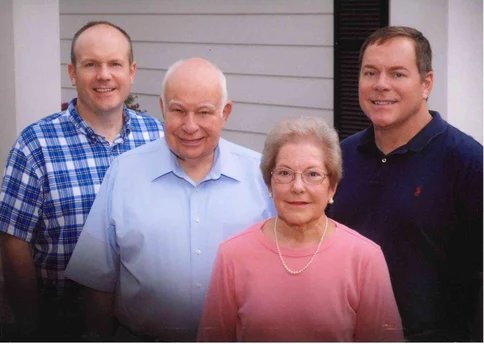
Eventually, Don was joined at Gilster-Mary Lee by his sons, Rob and Tom, bringing in another generation of the family to the business. Tom has reflected on his father’s leadership philosophy, calling him “a down to earth, humble guy” who was “an eternal optimist.” His father, he noted, often “extended second and third chances to employees, and made a point to hire people with disabilities.” Don was known for having an open-door policy at work, allowing “anybody who could make an appointment with him [to] come in and talk about whatever they wanted.”
Don continued to serve as president of Gilster-Mary Lee until 2020. That spring, the company’s offices in Chester were hit hard in the early weeks of the COVID-19 pandemic. Don and his sons, as well as numerous other office employees, contracted the virus. While Tom and Rob were able to recover, Don faced increasingly serious complications. He died at Missouri Baptist Hospital in St. Louis on April 16, 2020. Don was the first person in Randolph County who died as a result of a COVID infection or its complications.
After his father’s passing, Tom Welge told the Southern, “I was fortunate to have him as a father. I was fortunate to have him as my boss.” The tight-knit family values that had led them to success since Henry Gilster’s arrival in America in the nineteenth century have clearly been passed down through the generations. For the Gilsters and the Welges, leadership has been a labor of love, nurturing a drive toward growth and resilience. “You look up entrepreneur, that was [Don],” Tom explained. “He had setbacks in his career. But he always picked himself up and moved forward.”
Though he held the top job at one of Randolph County’s most prominent companies for decades, Don was always interested in promoting the business before himself, preferring to keep a low profile. “It’s just my style of management,” he explained in 1990. “If I’ve accomplished anything, it’s been getting people to work together toward a common goal.” For decades, he did just that, picking up the baton in his family business and embarking on innovations that have kept Gilster-Mary Lee relevant and thriving into the next generation.
Don Welge was inducted into The Randolph Society in 2026.
 The Randolph Society