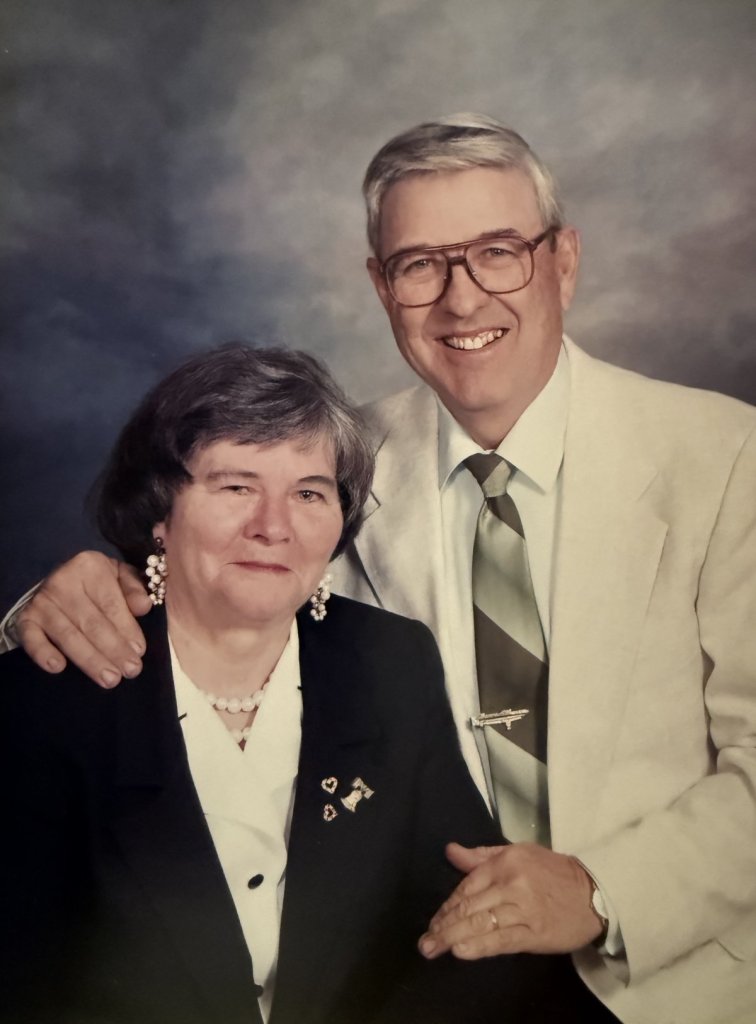
Community leaders with a keen sense of historical importance, Don and Margret Wiley shared their talents as they showcased ways that lessons from the past could continued to be useful in the present day.
Margret Ruth Baue, the eldest daughter of William Baue and Mae Hill Baue, was born in her family’s farmhouse in rural Sparta on November 30, 1927. William and Mae had settled down on farm land between Sparta and Steeleville, in an area where his family had lived for many years. Margret’s father came from a family of nineteenth-century German immigrants, while her mother’s family had a lengthier history in the region. Through her father, Mae was a great-great-granddaughter of John Steele, the Revolutionary War veteran who had given his name to Steeleville in the early 1800s.
Over the years, Margret’s family grew to include several younger brothers. With the three closest to her age, Edward, Robert, and James, she walked daily to the Goddard School, the little one-room schoolhouse that was located on Holloway Road, about a mile away from the Baue family farm. In the small school, Margret nurtured a love for education and a strong work ethic. She watched as her father transitioned from family farming into work as an automobile garage owner before embarking on a long career with Illinois Power. Career flexibility would become important to Margret, as would the need to contribute to her household and her community.
After graduating from Sparta Township High School in 1945, Margret went on to study for a term at Southern Illinois University in Carbondale. Next, she embarked on a series of work adventures. She clerked at a dime store owned by George Griggs in Sparta before signing on at the Brown Shoe Company’s manufacturing facility in Evansville. By the 1950s, she was employed in the offices of the Mallinckrodt Chemical Company in St. Louis, where she worked alongside one of her cousins, Sally Young.
In the spring of 1954, Margret walked down the aisle at First Methodist Church in Sparta, serving as the sole bridal attendant for Sally Young when she married Donald Rednour. At the wedding, the groom’s best man was a young man named Don Wiley.
Donald Clement Wiley was born in Jacksonville, Illinois, on January 18, 1934. He and his twin brother, Ronald James, were the third and fourth sons of Jack Wiley, a traveling salesman-turned-carpenter and locksmith, and his wife, Minnie Shields Wiley. Jack Wiley was part of a family with deep roots in the Randolph County communities of Sparta and Preston, while Minnie hailed from rural Brown County in western Illinois. She was working as a nurse at Passavant Hospital in nearby Jacksonville when she met and married Jack in 1929.
During the early years of their marriage, Jack and Minnie moved regularly with their four sons, living in various corners of Illinois before finally settling down not far from Jack’s family in rural Sparta. Jack focused on carpentry jobs, while Minnie found work in the local comic book factory. Don and his brothers enrolled in school in Sparta, but there were social opportunities in their rural community, too. There were plenty of kids on nearby farms who became friends, including the Baues, who lived just a quarter of a mile away. Both the Wiley and Baue children were active members of the local 4-H Club, and Margret Baue was one of the leaders of the group.
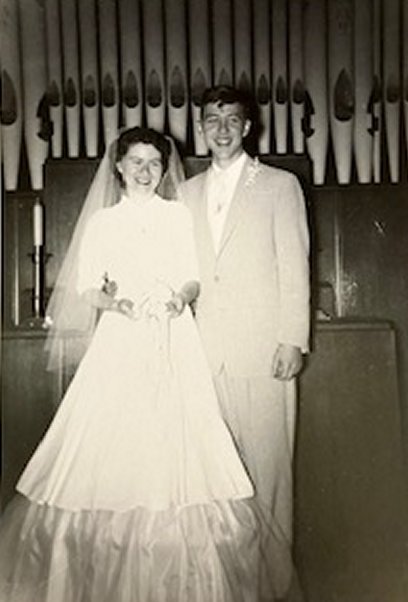
Both the Baue and Wiley families worshiped at Trinity United Presbyterian Church in Sparta. Don and Ronnie were baptized there on March 30, 1947, and over the years Don taught Sunday school classes, eventually becoming a church elder. Eight years after Don’s baptism, another important family celebration was held at the same church. Less than a year after they had been in the bridal party for Donald and Sally Rednour’s wedding, Don Wiley and Margret Baue met at the altar at Trinity to say their own vows. They had remained friends over the years, and eventually their bond had developed into a romance. Their wedding was held at Trinity on January 22, 1955.
From that point on, Don and Margret were partners in life, parenthood, and community. They added two children to their family: a son, Kerry Dale, who was born in May 1956, and a daughter, Laura Lee Ann, who completed the family on Christmas Day in 1958. When Don was drafted into the army, the young family moved around the country for several years, spending time in Texas and in Washington, D.C. There, Don was assigned to an office job at the Pentagon. According to his daughter, he was a diligent worker who always strove to do his best. He developed excellent typing skills during his time in the job, and he would go on to use that skill as a writer and storyteller throughout his life.
Both Margret and Don cherished a love for history, so their time spent together amid the museums and monuments in Washington was particularly enjoyable. When President Dwight D. Eisenhower was inaugurated for the second time in January 1957, they were able to attend the inaugural parade, watching the president wave from an open car in his motorcade.
Soon, they were headed back to Randolph County. In 1958, Don and Margret moved into a newly-built house on Route 4, south of Sparta, not far from the farms where they had been raised. They brought up their children within the strong circle of family members on both sides, and they dreamed up ways to give back to the communities that had nurtured them as children.
Margret, who was particularly skilled in the domestic arts, became a leader in the local Home Extension organization, hosting social events and teaching lessons to other local women. She also served for many years as an election judge at the polls in Sparta. Don honed the carpentry skills he had learned from his father, becoming a skilled craftsman who relished a challenge. He particularly loved handyman work, including tasks like masonry and sheetrock finishing. His daughter remembers, “While he loved finish work, one of his great loves was building and repairing furniture. He was willing to tackle just about any project.” Later in his life, he also became fascinated with mechanical engineering projects, rebuilding gas-powered engines and appliances.
There were plenty of opportunities for the couple to further their love for historical knowledge in Randolph County, too. Margret’s parents were members of the Randolph County Historical Society, and through them Don and Margret also became involved with the organization. They would go on to become some of the most influential members of the society in the twentieth century. Margret loved to read and research, digging through genealogical records to document the stories of both her family and Don’s ancestors and touring local cemeteries and historical sites.
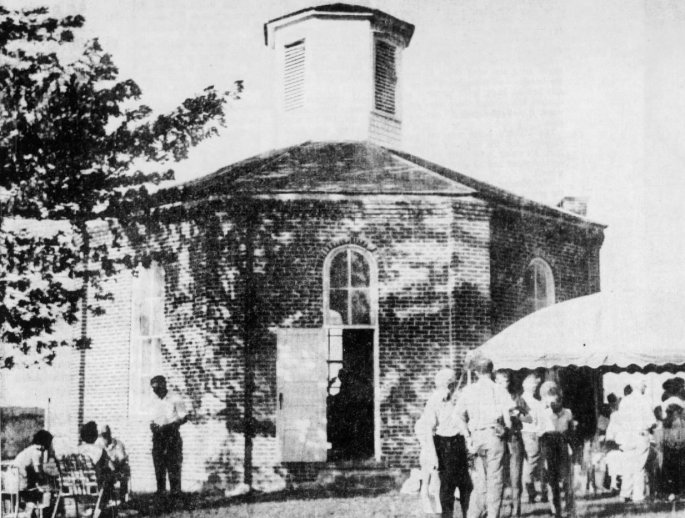
Meanwhile, Don lent his carpentry skills to the historical society, designing and building facilities to host community events like the annual Corn Fest at the Charter Oak School. He also learned techniques that allowed him to take part in the restoration of local historical buildings, including the Creole House in Prairie du Rocher. Margret sometimes joined in, helping him as he worked to refurbish and paint the Charter Oak building over the years.
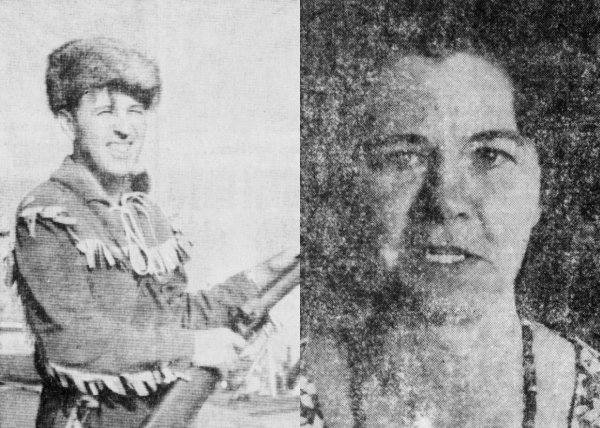
Don, always interested in learning by doing, also became particularly fascinated with historical reenactment. The gateway to his interest developed at the Rendezvous at Fort de Charters, which began in 1970. Don had helped to establish a local shooting club focused on old-fashioned muzzle-loading rifles. He built his own rifles and pistols, and even designed a special smaller version for Margret so she too could join in shooting competitions.
The rifle club was one of the organizations that was instrumental in the founding of the annual Rendezvous gathering. Margret designed and made authentic period costumes, and Don led shooting demonstrations. They also learned skills like hand-dipping candles, tanning leather hides, pressing apples to make cider, and making brooms, all of which they demonstrated at events like the Rendezvous and the Du Quoin State Fair. In the 1970s, Margret told the Southern Illinoisan, “I like the way people used to do. I like the good old days, but they weren’t really good old days. They were hot and dirty, and you really had to work for whatever you got.”
Don would soon demonstrate just how difficult the “good old days” had been. In 1975, with the American bicentennial on the horizon, Don became interested in the path that George Rogers Clark traveled during the Revolutionary War on his secret mission to capture British-held military forts at Kaskaskia and Vincennes, Indiana, in 1778-79. Clark, one of the leaders of the Virginia militia, managed to cross the Ohio River with a company of 175 men in July 1778, marching toward Kaskaskia and surprising the troops stationed there. Clark’s men were able to capture the fort on the night of July 4 without firing a single shot. Although his regiment was able to capture Fort Sackville in Vincennes a month later, the British retook the fort that December.
Clark planned yet another surprise attack, this time in the dead of winter, to take Fort Sackville once more. He and his men left Kaskaskia on February 6, 1779, and marched across the southern reaches of present-day Illinois, trekking through ice and snow along the way. They arrived in Vincennes 17 days later, waterlogged and frozen but ready to fight. After a two-day siege, the British officer in charge of the fort, Henry Hamilton, surrendered to Clark on February 25.
Don decided that he wanted to celebrate the upcoming American anniversary by retracing Clark’s path. He spent hours poring over maps and documents, trying to establish the exact route that Clark and his men took from Kaskaskia to Vincennes in February 1779. He didn’t want to go it alone—just like Clark, he wanted to recruit a group of men to join him on the journey. Drumming up community support was also a key part of the project. Don wrote letters to property owners whose land the group would have to cross on the trek, and he held meetings in towns along the way, offering to share interpretive talks with local residents about the endeavor.
It would have been easy to make the journey in the milder months of the year, but Don was adamant that the experience should be as authentic as possible, which meant making the trek in February. He did a trial run himself of the route in February 1975. Afterward, Don gave an interview to Dennis Montgomery of the Associated Press, noting that some accommodations would have to be made for the modern-day journey to be possible. “We wanted to do it as authentically as we could,” Don explained. “Clark had no tents. We are not going to be able to handle that, especially if it rains. The weather was probably worse than when Clark went that weekend. We couldn’t even get a fire going. We were soaking wet. Now Clark’s men were soaking wet the whole trip too, but they had no choice. Their lives depended on it. Ours don’t and modern man is not quite that tough.”
More changes to the plan had to be made to make the modern march a more realistic possibility. “The trial run gave me an idea of how far modern man can walk,” Don said. “According to Clark’s records, Clark went 30 miles the first day. There is no way we are going to be able to do that. Twenty miles would be the outside, per day. We don’t want to be so authentic that everybody is miserable the whole trip.” Rather than trekking through rough terrain and through private property, Don also decided that the group would travel over roads and highways that most closely aligned with the route the Clark and his men are believed to have taken.
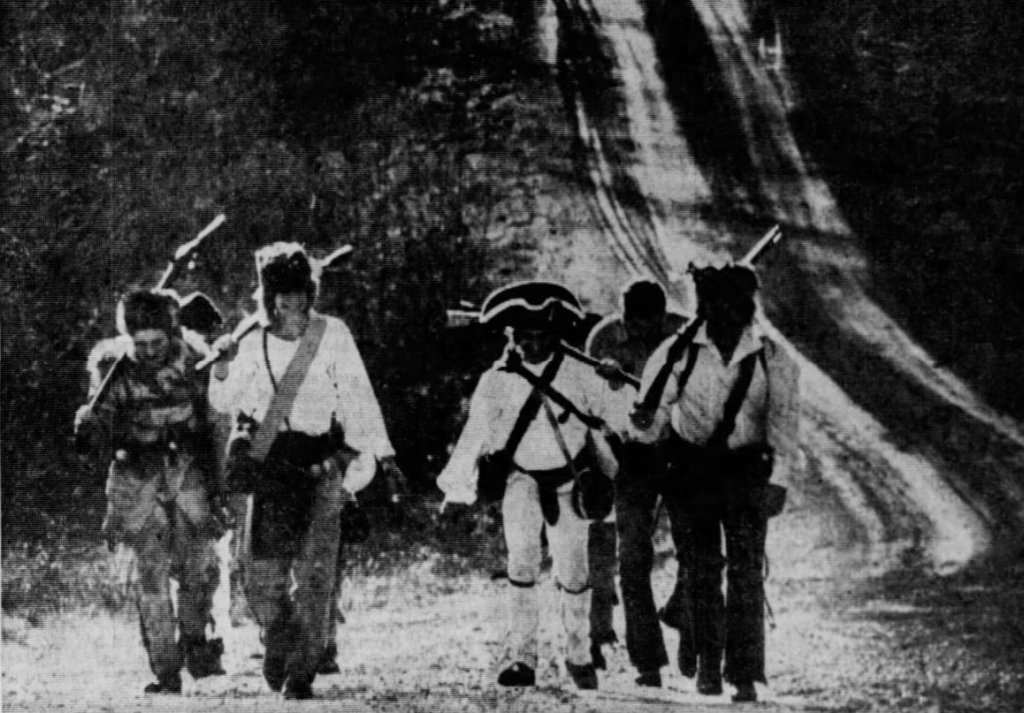
With recalibrations made and preparations accomplished, Don was finally ready to lead a group of 9 historical reenactors as they retraced Clark’s footsteps. The group, calling themselves the Randolph County Long Knives, left the Pierre Menard Home in Kaskaskia on February 10, 1976, to begin their march. The Southern Illinoisan followed the journey closely along the way. “Wearing clothing of the period, and carrying the tools and weapons depended upon by Clark’s men, Wiley’s group will follow the same trail, on foot,” Art Reid reported. “The Randolph County group will try to eat the same foods which were available to Clark. They will use crude shelters, such as lean-tos instead of tents.”
The nearly 200-mile journey was a family affair. Don and Margret’s nineteen-year-old son, Kerry, drove an equipment and supply truck along the route, with Margret riding along to meet the group each day with necessary supplies that they were unable to carry themselves. Hot meals were also provided by many local families on farms and in towns along the way. A few days into the march, Margret told Art Reid that she’d “be happy when it’s over.”
Some of Don’s fellow marchers felt the same way. Though several of the men were able to stick out the entire journey, others found that they were unable to complete the trek. Ted Mueller of Ava had wanted to make the trip with the Long Knives, but when he had business conflicts, he had to be satisfied with only walking the first mile of the trek. After three days on the trail, Daryl Meier of Carbondale had to drop out when he developed severe blisters. Injury was just one problem—boredom was another. One young marcher, Charles Happel of Walsh, discovered a corncob on the side of the road near Nashville, and part of the group amused themselves by kicking it back and forth.
Don’s enthusiasm for the undertaking hadn’t waned by the time the company reached the halfway point of the march. Near Salem, the Long Knives camped with another Illinois historical group, the Clay County Regulators. Members of that organization aided in the effort by setting up advance camps for the Long Knives at several stops along the route. Don, sitting in a camp near the Harvey’s Point Church, told Art Reid that he was moved by the experience: “I think if we were now in Clark’s time we could hear the axes of his men chopping wood for a fire. I feel we are just that close.”
With six days to go, most of the men in the group were still going strong. Reid reported that Don, one of the older marchers at the age of 42, showed no sign of strain, and 33-year-old Richard Muskopf was “setting the daily pace.” Another marcher, Bill Bouas, was dealing with foot problems, but he persevered. The younger marchers, like Dennis Kerasotes and Kenneth Bouas, showed barely any fatigue at all, despite the difficulty of sleeping in camp conditions. Reid noted that each man had his own personal reasons for making the trek, but none were discouraged: “It hasn’t been easy, but not one man will say that it wasn’t worth it.” But there was no denying that they were excited for the trip to come to an end. Kerasotes said, “When we get to Vincennes, I want a shower, a soft warm bed, and a tall glass of Scotch, but not necessarily in that order.”
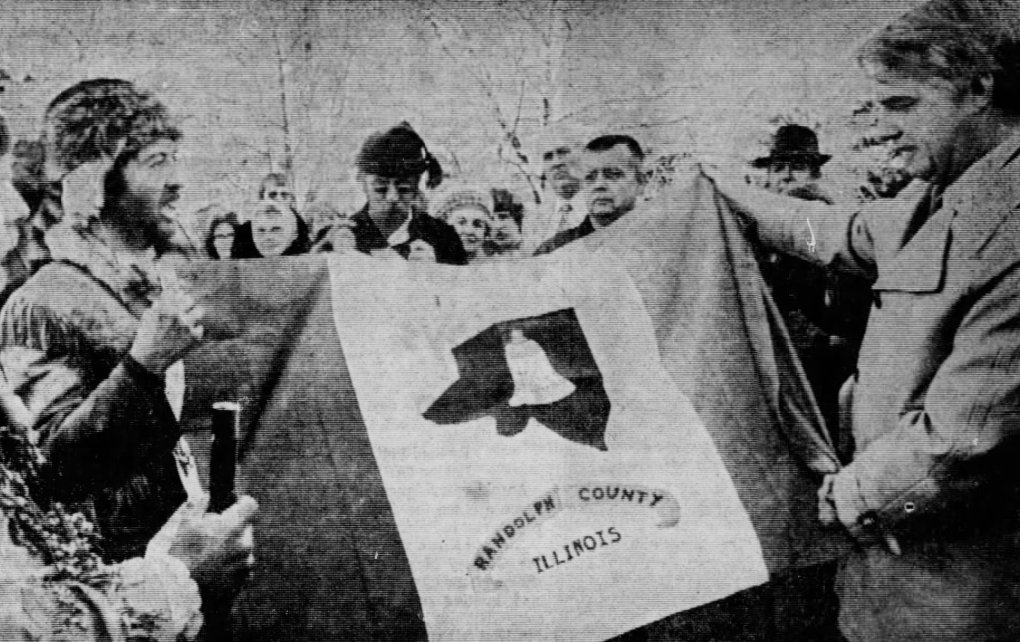
On Monday, February 23, the group finally spotted Vincennes in the distance. After crossing the Wabash River in canoes the previous day, the Long Knives arrived at the George Rogers Clark Memorial in Vincennes after completing their 185-mile journey. Art Reid reported that “sirens wailed, flags waved, and people cheered” as the group arrived at the memorial, where they were greeted by the Mayor of Vincennes and members of the local historical society and bicentennial committee. “You folks might as well surrender,” Don quipped, “because we’ve already got you captured.” He presented the Randolph County flag, which he had helped select after a recent youth design contest, to the mayor as a souvenir of the day.
The Clark reenactment journey was emblematic of Don and Margret’s love for history and their desire to share it with generations to come. “Preserving history and teaching about it was very important to both Don and Margret,” their daughter, Lee Ann, says. Both Margret and Don continued to be active members of the local community and historical societies for the next two decades. They were leaders in square dance clubs, learned antique engine repair together, and worked on building projects—full-scale house renovations for Don, doll house and furniture construction for Margret.
Margret’s participation in her beloved pastimes had to be curtailed when she was diagnosed with Parkinson’s disease. She passed away in Sparta on September 25, 2004, just two months shy of her 77th birthday. Don lived on for seven more years, passing away in St. Louis on October 1, 2011, when he was also 77 years old. The couple left an indelible legacy in Randolph County, demonstrating that lessons from the past can be used to enrich lives in the present. As community leaders and contributors, their efforts continue to echo throughout the county’s historical landscape today.
Don and Margret Wiley were inducted into The Randolph Society in 2025.
 The Randolph Society