George Hoffmann inducted into The Randolph Society

George and Dora Hoffmann, 1902

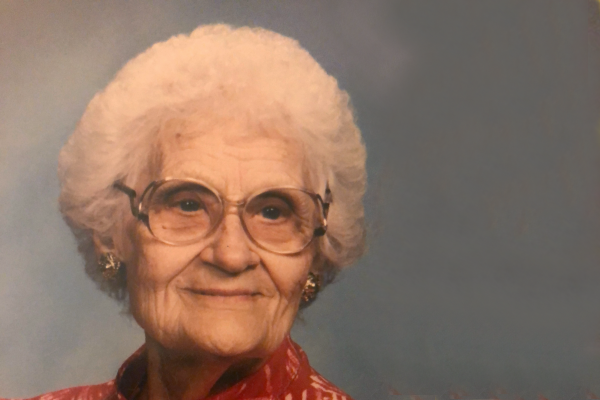
The Randolph Society Foundation Board is pleased to announce that Dr. George Hoffmann, a dedicated physician who devoted his life to caring for the people of Randolph County in their most vulnerable moments, will be inducted into the 2022 class of honorees.

George Hoffmann was born in Maeystown in March 1871. The son of a large German immigrant family, he was educated in Monroe County’s schools, and he learned the mercantile trade while working at his father’s store. Though he initially intended to become a merchant himself, he quickly learned that his real passion was medicine. After beginning his studies to become a pharmacist, George decided that becoming a doctor was a better use of his skills. He graduated from St. Louis College of Physicians and Surgeons with a medical degree in the spring of 1896, establishing his first practice in Campbell Hill.

After the tragic early loss of his first wife, Lena, George married Dora Ebers in Bremen. The couple had four children, settling first in Jackson County before moving to Chester in 1909. There, George established a thriving and innovative medical practice on State Street, while still continuing to regularly pay calls to patients throughout the surrounding rural areas. The challenges of traveling on muddy and often impassable roads would later lead him to advocate for both the adoption of the automobile and for upgrades to local infrastructure. His work to secure improvements on Route 3 between Chester and Waterloo helped the project to reach the attention of the governor. For George, the result was worth the effort. ” I have spent lots of time on this job,” he told one reporter, “but if the road is built in the spring I feel that I am well repaid for the work.”

George never lost the entrepreneurial spirit he had learned from his father. While seeing his patients, he also invested in real estate and became an active member of Chester’s business community. He was elected as president of Buena Vista Bank, while also serving in a similar capacity at the local shoe factory. He also acquired numerous properties throughout the region, including a coal mine in Willisville. The trust he earned from his fellow citizens also allowed him to become an effective advocate for public works projects, including efforts to stem the growing tuberculosis crisis during World War I. He was also passionately dedicated to educating the public about the need to modernize local water systems as a way to avoid outbreaks of typhoid fever.

In 1918, following the death of the head physician at Menard Penitentiary, Governor Lowden appointed George to take over the role. He arrived on the job just as the Spanish Influenza pandemic was beginning to sweep through the county. A horrific flu outbreak at the prison was one of his earliest challenges in his new position. He also continued to tend to patients outside the prison walls. His heroic efforts to treat the Louvall family on Kaskaskia Island during the pandemic—including a harrowing journey across the river and then along miles of muddy island roads to reach them—caught the attention of a Chester Tribune reporter, who wrote that George deserved “great credit for the humanitarianism he displayed” in caring for the ailing and dying members of the family when others were too afraid even to enter their home.

During his lifetime, George was lauded as “one of the finest physicians and surgeons in Randolph County,” as well as “a particularly capable businessman.” He established a family legacy that lasted long after his own time. Two of his sons, Ebers and Omer, followed in his medical footsteps, opening a dental practice and a doctor’s office in Chester. One of his daughters, Marie, also became a beloved member of the community, teaching physical education to children in Chester’s schools for decades.

After a full day of work in his Chester office in January 1934, George died at his home of a heart attack at the age of 62. Citizens from Chester, and patients across the entire region, mourned the doctor who had cared for them and their families for more than three decades. George’s dedicated and extraordinary care for his patients, and his civic-minded advocacy for all of the members of his community, provided an example for those who followed after him—and helped to leave the world a better place for the future. Even today, those of us who drive on solid roads and drink clean water can thank Dr. George Hoffmann for his efforts to make Randolph County a safer place to live.

Click here to read a more detailed biography of Dr. George Hoffmann.

Roscoe Misselhorn inducted into The Randolph Society

Roscoe Misselhorn
Roscoe Misselhorn

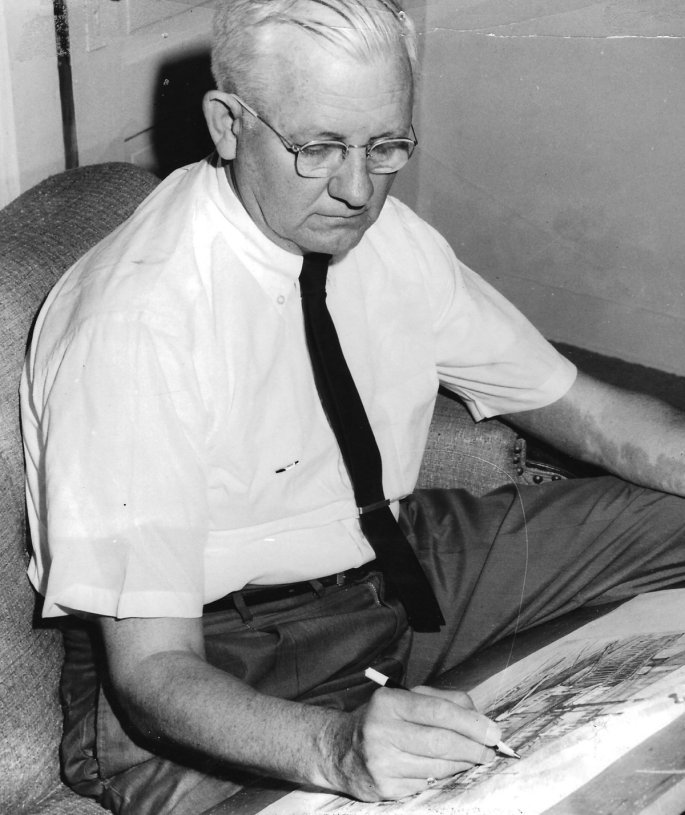
The Randolph Society Foundation Board is pleased to announce that Roscoe Misselhorn, a talented local artist who honed his craft and shared his work in Sparta for more than seven decades, will be inducted into the 2022 class of honorees.

Roscoe Misselhorn was born in Sparta in January 1902. From a young age, Roscoe discovered that he had an interest in and talent for art. Even as a kid, he would later reflect, “more than anything else, I wanted to draw.” He dropped out of school before graduation and went to work in a Sparta department store while also drawing sketches and cartoons for the Sparta Plain-Dealer. His work caught the attention of executives at Meyer-Both, a news syndication company out of Chicago. They hired him to do weekly political cartoons to be printed in papers all over the country, paying him $5 for each cartoon.

In 1926, Roscoe married Ruth Tritt in Sparta. She encouraged him to develop his talent at the School of Fine Arts at Washington University in St. Louis. He studied at the school for two and a half years, discovering the thrill of working as part of a community of artists. He left the university in 1928 to work in advertising, but the school would later award him an honorary bachelor’s degree in art. While he loved St. Louis, he ultimately decided to make Sparta his permanent home. He told the Southern Illinoisan in 1959, “For a home, I prefer a quiet place, where when you meet someone on the street, you probably know him and he knows you.”

Roscoe began a career as a commercial artist, painting signs and murals, and in his down time, he started to develop his own personal artistic style. In 1930, he would produce the first of a series of pencil sketches that would become his trademark. The subject was the covered bridge over Mary’s River, which his grandfather, Wilhelm Misselhorn, had supposedly helped to build. The county’s landscape would provide him with endless inspiration over the next half a century. Rolling hills, historic homes, farms, rivers, bridges—the entire world of Randolph County seemed designed to be captured by Roscoe’s pencil.

The public responded enthusiastically to Roscoe’s work, and eventually he was able to leave his sign painting business behind. He published a series of books featuring drawings he’d done both at home and in St. Louis, including Misselhorn’s Pencil Sketches of St. Louis and Misselhorn’s Pencil Sketches of Missouri. His work was exhibited in museums in St. Louis, and then across the country. One wood engraving, “Ohio River Fish Boat,” was shown at the Carnegie Institute and the Library of Congress. Prints of his work became sought after, and he began producing notepads and postcards with his sketches of landmarks in Randolph County, Carbondale, Cairo, Ste. Genevieve, St. Louis, and New Orleans.

In 1951, Roscoe began teaching adult extension classes in drawing, as well as working with pastels, oils, and watercolors, through SIU Carbondale. Over the next three decades, he assembled work for a proposed book of sketches of Southern Illinois. When the project struggled to find a publisher, his work ultimately found a home in Sparta. Roscoe and Ruth established an art foundation, to which they contributed more than 4,000 pieces of his original artwork, as well as a collection of art books valued at $50,000. The foundation then helped coordinate the restoration of the Gulf, Mobile, & Ohio Railroad Depot on Second Street in Sparta, which was reopened in 1992 as the Misselhorn Art Gallery.

The new foundation and gallery ensured that the legacy that the Misselhorns built would remain accessible to art lovers for generations to come. The Southern Illinoisan praised the city of Sparta for helping to fund the project, writing, “The community of Sparta showed that it cares about its art and its architecture.” The foundation has helped to extend that care by awarding scholarships to young artists, encouraging the continuation of Sparta’s artistic legacy. Roscoe died in 1997, five years after the gallery’s opening, but the museum has continued to support both his work and the work of other artists over the past three decades.

In the years since Roscoe sketched many of those landmarks and landscapes in Illinois and Missouri, many of them have been lost or changed significantly. Today, Roscoe’s work provides us with both a moment of beauty and a window into the past. In 2010, foundation trustee Terry Waldron told the Southern Illinoisan, “The reason I think he’s important, especially for a Midwest artist, was what he chose to draw. The stuff he liked is the stuff that’s not around anymore. The historic value of his work is what’s important.”

Click here to read a more detailed biography of Roscoe Misselhorn.

2022 Nominations are open!

NOMINATIONS ARE OPEN!


The Randolph Society Foundation Board today began the nomination process for its annual awards to honor outstanding historical citizens of Randolph County and their achievements.


“The Randolph Society Foundation Board is seeking to honor the prominent men and women who contributed to Randolph County by living extraordinary lives. Through their deeds and notoriety, they have added to the reputation of Randolph County being one of the ‘Great Counties in Illinois,’” said Dr. Marc Kiehna, founding member of the Randolph Society Foundation. “We encourage everyone that knows of a person of special merit to submit their nomination to the Randolph Society Foundation for consideration.”


Nominations may be made by contacting Dr. Marc Kiehna, the Randolph Society Foundation Board Chairman, by email at mkiehna@randolphco.org, or by mail at the following address:


Dr. Marc Kiehna
Randolph County Courthouse
1 Taylor Street
Chester, IL 62233


Nominations should include a name, picture, and a narrative highlighting why the individual is worthy of being honored.


The nominations are open to everyone and will be accepted through October 31, 2021. Nominees must have passed away at least 5 years ago to be considered. The Foundation Board will review the applicants and select up to 5 nominees. The awards will be announced in March 2022, with a special reception to be held soon after.


The honorees will have a special plaque that tells their story of significant contribution displayed on a prominent wall in the Randolph County Courthouse. The plaques will hang in the designated area of the Courthouse on permanent display and be available to the public for viewing during normal County business hours. The Randolph Society honorees are highlighted on a special website: http://www.randolphsociety.org. In-depth stories of the honorees are included with photos and video footage when available.


The Randolph Society Foundation is sponsored by the Randolph County Historical Society, The Liberty Bell of the West Chapter of the National Society Daughters of the American Revolution, and the Rotary Clubs of Chester, Red Bud, Sparta, and Steeleville. Officers and members of the Randolph Society Board include Dr. Marc Kiehna (Chairman), Justin Jeffers (Treasurer), Lori Hill (Secretary), Emily Lyons, Jane Lucht, Dr. Lauren Kiehna, Cynthia Lawder, Melanie Johnson, and Mike Reed.


The Society is now a 501c3 Foundation and tax-deductible donations are being accepted. Donations can be mailed to:


Justin Jeffers
Treasurer, Randolph Society Foundation
Randolph County Courthouse
1 Taylor Street
Chester, IL 62233

Terry Brelje inducted into The Randolph Society

The Randolph Society Foundation Board is pleased to announce that Dr. Terry Brelje, a renowned clinical psychologist who worked for more than thirty years to modernize and humanize treatment for mental health patients in Randolph County, will be inducted into the 2021 class of honorees.

Terry Brelje was born in Chester in May 1938. His parents, Gerhard Brelje and Virginia Young Brelje, raised Terry and his sister, Linda, in Chester, where Gerhard worked at Paulter’s IGA. Both of the Brelje kids attended school in Chester, where Terry was an active and involved student. After graduating from Chester High School in the spring of 1956, Terry enrolled at Southern Illinois University in Carbondale. As a child, he had dreamed of a career as a diplomat with the state department, and he began working toward a political science degree with that goal in mind. After taking a course in psychology, however, his plans for the future shifted. He graduated with a bachelor’s degree in psychology from the university in 1960, and then returned to complete his master’s degree and his doctorate in clinical psychology, graduating in 1967.

Shortly after Terry finished his degree and married a fellow academic, Martha Brose, he was offered the job of chief psychologist at Chester Mental Health Center, then called the Illinois Security Hospital. The facility, located beside the Menard Correctional Center, is the only maximum-security forensic psychiatric hospital in the state of Illinois. The institution, which was founded in 1891, houses a subset of patients linked to the state corrections system, including those who have been found not guilty by reason of insanity or have been found unfit to stand trial, as well as those requiring more secure housing. Terry was quickly promoted to program director, and soon he became the superintendent of the entire facility.

In the 1960s, when Terry arrived at the hospital, the institution was in dire need of both physical upgrades and changes to its care procedures for patients. The hospital had been run for years by political appointees rather than medical professionals, and the buildings were dated and crumbling. The John Howard Association, a correctional oversight organization based out of Chicago, had written a troubling report on conditions at the hospital. Terry was tasked with bringing both the buildings and the systems of treatment for the patients up to date. Treatment programs deemed archaic and even abusive were abandoned, and rooms were repurposed for more modern therapeutic sessions. More than 20 new staff members were hired, including additional trained counselors and psychologists. Terry told the press that all of the changes were aimed toward achieving one major goal: “We want to make it less repressive, more humane.”

The crowning achievement of Terry’s tenure as head of Chester Mental Health was the construction of a brand-new facility, which replaced dungeon-like buildings that had been used for more than 80 years. The new center, which cost $8 million to complete, featured more private accommodations for patients and upgraded security features to replace outdated, repressive iron bars. More space for educational activities was also included in the new facility, as were better and updated spaces for medical services. Notably, the new facility, located on the humid banks of the Mississippi River, would finally be fully air conditioned. The cleaner, more modern buildings were anticipated to lead to better rates of employee retention as well. Overall, Terry explained, the new complex was “designed with therapy in mind, rather than punishment.” The new facility was officially opened in April 1976.

Terry remained at the helm of the Chester Mental Health Center until 1983. That December, he was appointed Associate Director for Policy and Special Programs for the Illinois Department of Mental Health and Developmental Disabilities. He moved with his wife and sons to Springfield, where he also served on the board of directors of the Gateway Foundation and the Hope School. By the 1980s, he had become a nationally recognized expert in the field of forensic psychiatry, with several books and articles to his name. He had undertaken consulting work for the US Department of Justice and served on a mental health task force during the Reagan administration. In 1988, he was appointed Deputy Director of the Illinois Department of Mental Health.

After his retirement in the early 1990s, Terry continued to maintain a private practice in Springfield. He died at the age of 67 in November 2005. He had devoted his life to improving forensic psychiatric care and extending more modern mental health services and treatment for patients in the state of Illinois. With a focus on therapy and humanity, he worked to create a healthier, kinder environment for patients in state care, providing them with enhanced opportunities to rehabilitate and grow.

Click here to read a more detailed biography of Terry Brelje.

Elizabeth Durfee inducted into The Randolph Society


The Randolph Society Foundation Board is pleased to announce that Elizabeth Durfee, a trailblazing law enforcement officer who challenged the perception of gender norms in Randolph County, will be inducted into the 2021 class of honorees.

Elizabeth Ackermann was born in rural Red Bud in October 1895. The granddaughter of German immigrants, she and her siblings were raised on the family farm and educated in both German and English in local schools. She worked hard to help her parents on the farm, doing chores and ferrying milk to the creamery in town. A talented shot from a young age, she learned early on how to handle a gun safely and accurately. She loved to hunt and fish with her brothers, and she was dedicated to outdoor pursuits like riding, skating, and bicycling.

An early tragedy shaped her life significantly. Her older brother, Herman, died in the influenza pandemic of 1918 while serving in the army.  In her grief, Elizabeth decided to embark on a new life for herself. She left Red Bud for St. Louis, where she quickly found work in an unexpected profession. She became one of the city’s first female streetcar conductors, working on the Jefferson, Cherokee, and Tower Grove lines. The job was sometimes physically demanding, but Elizabeth persevered, working in the city for a decade.

By the 1930s, Elizabeth had returned home to Red Bud. There, she met and married a local widower, Winsor Lee Durfee. He sold farm machinery and automobiles and ran a filling station in town. For decades, he had also served as a constable. His duties serving summonses, collecting court fees, conducting evictions, and repossessing property. Only four years after they married, however, Winsor died suddenly in 1940 at the age of 62. Because she was familiar with the responsibilities he had held as constable, Elizabeth was tapped in the summer of 1940 to serve as his temporary replacement until an election could be held that November.

Without hesitation, 44-year-old Elizabeth pinned the constable’s badge to her dress and stepped into her late husband’s shoes. Very few women in state, let alone the country, served as county constables, but just as she’d done on the streetcars of St. Louis, Elizabeth took on her new responsibilities fearlessly and with determination. She had inherited Winsor’s 1938 coupe and his .38 pistol, and she used both in her new job, which involved facing her fellow citizens at some of their lowest moments. One journalist described her can-do attitude succinctly: “She takes on all assignments and neither expects nor gets help from anyone.”

Through her genuine care for the people of her community and her fair approach to justice, Elizabeth quickly won the appreciation of those with whom she lived and worked. Still, it was a shock to many when she decided to run to keep the job of constable in November 1940—and an even bigger surprise when she easily won the election. She would go on to be elected to the post several more times, holding the job for a remarkable eighteen years. She approached her duties with candor and determination, not backing down from challenges in tough situations. But she also tried very hard to be kind when she could, offering outreach to local citizens who needed it very much. After serving an eviction notice to a local family, she found them secure housing, as well as a loan to help them establish a firm foundation.

Elizabeth worked for a local mailbox manufacturing company and conducted her constable duties on nights and weekends. By the 1950s, the press began to catch wind of Elizabeth’s unusual job. She was featured in multiple major news profiles, which were syndicated across the nation. But the sudden celebrity didn’t change much about Elizabeth’s life. When her constable duties ended in 1958, shortly before the state abolished the role and reassigned constable duties to sheriffs’ departments, Elizabeth maintained an active life. She lived to the remarkable age of 99, passing away in September 1995, just a month before her 100th birthday.

Elizabeth’s long life of self-assured work in areas traditionally not open to women provided a fantastic example to those around her, allowing them to adjust their expectations about traditional gender roles in the workplace. Her commitment to fair, humane law enforcement also offers all of us a model to follow in our interactions with our fellow community members. With determination, fearlessness, and confidence in her own abilities, Elizabeth Durfee blazed a trail for working women that continues to serve as an inspiration today.


Click here to read a more detailed biography of Elizabeth Durfee.

Clemmie Mae Sternberg inducted into The Randolph Society

The Randolph Society Foundation Board is pleased to announce that Clemmie Mae Sternberg, a dedicated volunteer who worked to bring educational opportunities and medical advancements to the people of the area, will be inducted into the 2021 class of honorees.

Clemmie Mae Harmon was born in New Palestine in October 1900. She was the daughter of a pair of immigrant families. Her great-grandfather, Michael Harmon, was an early settler who came to the county in 1811. Her mother’s parents were German immigrants who arrived in the middle of the nineteenth century. Clemmie grew up on a farm with her parents and her siblings, and she learned the value of helping her neighbor from an early age.

After finishing school and working as a telephone operator, Clemmie married William G. Sternberg in March 1921. They raised four children, Charles, Ruth, Glen, and Bertha, on a dairy farm in Schuline. While working to provide educational opportunities for her children, she developed a passion for extending those same benefits to others in her community. She was one of the founding members of the Randolph County Home Bureau, an outreach project sponsored by the University of Illinois Extension.

The extension project, now called the Illinois Association for Home and Community Education, set out to provide continuing home education classes to women throughout the state. The groups gathered in the homes of its members, providing a comfortable and safe place for women to learn about topics like finances and nutrition. They also offered an important social outlet for women in rural areas who were sometimes isolated from their neighbors, reinforcing a sense of community and companionship. Clemmie helped organize the local bureau, which launched in May 1945, and served on its board of directors. She also frequently hosted meetings at her own home.

Attending the monthly home extension meetings gave Clemmie an even clearer understanding of the needs of the women and families of Randolph County. She was inspired to extend her volunteerism, focusing on ways to support and improve the medical care in the area. She joined the Randolph County chapter of the American Cancer Society, becoming its public education chair. Clemmie also became deeply involved with the efforts to establish a community hospital in Sparta. After the closure of the Sutherland Hospital in the early 1950s left Sparta without a major medical facility, Clemmie joined a group of local citizens who aimed to reopen and renovate the building as a community hospital.

Judge Paul Nehrt appointed Clemmie to the new nine-member hospital board in 1954, and she helped to raise both awareness and funds for the hospital within the community. After an extensive renovation project, the new Sparta Community Hospital admitted its first patients in June 1955. Clemmie was one of the proud members of the board of directors who helped introduce the hospital to the community in an open house. She also joined the new Women’s Auxiliary and was instrumental in setting up Red Cross blood drives at the hospital.

Even as she grew older, her drive to be force for good in her community did not wane. She served as a patroness of Sparta’s Delta Theta Tau sorority, and was an active member of the First United Methodist Church of Sparta, where she taught Sunday school classes. In her retirement years, she could be found at the senior centers in Sparta and Evansville. She was also an active member of the Retired Senior Volunteer program for almost two decades. Her family remembers her traveling to local nursing homes to read the newspaper to residents well into her 80s.

Clemmie Mae Harmon Sternberg passed away in September 1991 at the age of 90. During her lifetime, which spanned more than a century of major change and development in Randolph County, Clemmie was dedicated to leaving the world a better place for those who came after her. Her passion for education gave local women a chance to expand their own knowledge bases and develop a strong and dependable community, and her commitment to establishing state-of-the-art medical facilities in the area offered local patients access to greater advances in healthcare. Today, thirty years after her death, residents of Randolph County are still benefiting from the work she did to improve the lives of citizens at home and within the larger community.


Click here to read a more detailed biography of Clemmie Mae Sternberg.

Ned Carlton inducted into the Randolph Society

The Randolph Society Foundation Board is pleased to announce that Ned Carlton, a dedicated educator who helped usher the county’s school systems into a more modern era, will be inducted into the 2021 class of honorees.

Ned Farris Carlton was born in Vienna, Illinois, in 1906. Along with his brothers, he grew up on his family’s Johnson County farm, until a move to Coulterville changed his life and his future career. In Randolph County, his father began working at a Coulterville bank, but he also occasionally taught in local schools. Ned was inspired by his father’s educational work, and after enrolling at SINU in Carbondale, he decided to major in education himself.

Ned’s first teaching job was back home in Coulterville. There, he met a fellow teacher named Marguerite Wilson, whom he would marry in 1930. Dedicated to education and family, the couple raised two children as Ned took on several successive teaching positions in the county. He spent several years teaching on Kaskaskia Island, and in 1933, took on a new position in the Steeleville district, where he worked as both a teacher and a coach. In 1938, he decided to run for the county’s top educational job: Randolph County Superintendent of Schools. He won the election and began work as county superintendent in August 1939. He would ultimately run for the office, and win, six consecutive times.

The county schools that Ned were tasked with leading looked very different from the educational system that exists in Randolph County today. One-room schoolhouses still dotted the countryside, and the county contained more than 100 individual school districts. Some schools still taught children primarily in French and German, and in some cases, a school was only attended by three or four pupils. “When I started,” Ned later reflected, “I couldn’t even find half of the county schools.” Ned knew that these small schools wouldn’t be able to provide the children of Randolph County with the best educational experience, and during his tenure as county superintendent, he worked toward the goal of consolidating the tiny districts into larger schools with more students and more resources. His friendly manner, and his ability to remember the names of almost everyone he met, helped him earn the respect of the people of the county, even as they sometimes resisted the big changes he wanted to implement. Over the course of his tenure in office, small country schools were transformed into larger unit districts, with four-year high schools, consistent curricula, and wider-ranging opportunities for students.

Challenges at the county superintendent’s offices were met equally by challenges in Ned’s personal life. The early death of his wife, who was also an assistant in his office, was a major blow. He also suffered from heart problems from a young age, which caused him some set-backs but also compelled him to get involved with fundraising and volunteerism. He was very involved in heart-related fundraising work in Randolph County, serving as treasurer of the county’s Heart Fund Drive, and he became a founding member of the Randolph County Heart Unit. He also volunteered with numerous additional organizations, including the Boy Scouts, the Optimist Club, and the Randolph County Tourist and Recreation Association. Social to the core, Ned also joined the Masons, the Shriners, and the Elks Club. He was also a committed volunteer with the Randolph County Red Cross.

As county superintendent, Ned focused on both the current education of the area’s students and their future prospects, setting up Career Day programs and emphasizing the need for vocational education. He retired from the office in 1963, after almost a quarter century at the helm at Randolph County’s schools. An avid hunter and fisher, he spent his retirement years continuing to run his boat sales and service shop, Carlton Boat & Motor, near the Mississippi in Chester. He was even able to aid in water rescues on the river. But he couldn’t leave education behind completely: he also worked as a substitute teacher and served as director of Randolph County Head Start.

Affable and friendly, yet driven and committed, Ned managed to nudge Randolph County’s educational system into the future. One of his colleagues, Hazel Montroy, remembered him noting, “Never take one’s self too seriously. Be adaptable.” He lived that adage faithfully until the end of his life. After suffering from increasing problems with his heart in the last months of his life, Ned died in Chester on July 16, 1972, at the age of 66. He was remembered for his kindness, his curiosity, and his never-ending love of learning. “Everyone who met Ned Carlton knew that they had lost a friend when he passed on,” recalled one of these friends, Chuck Trent. “As long as the Mississippi rolls past Chester,” he added, “Ned Carlton will live. That’s about all you can say about Ned Carlton. He lived for others, and others have lived better because of him.”

Click here to read a more detailed biography of Ned Carlton.

The Black Civil War Soldiers of Randolph County inducted into the Randolph Society

The Randolph Society Foundation Board is pleased to announce that the Black Civil War Soldiers of Randolph County will be inducted into the 2021 class of honorees.

We know the names of eleven Black men from Randolph County who served in the Union Army in the Civil War, though it is possible that more volunteered from the area as well. Five of them—Jean-Baptiste Bisson, Isidore Cyntha, Frederic Joseph, Pierre Joseph, and John Therese—were born and raised in Prairie du Rocher. The remaining six were all residents of Sparta: Levi Block, Henry Coles, Joseph Griffin, Levi LaFleur, Joseph Morrison, and Joseph Van Buren Rowlett. They were all members of established communities of African-American residents in the county, and many of them were related by blood or by marriage. All would share the bond they formed while serving in the military for the rest of their lives. The first regiment of Black soldiers in Illinois was not formed until 1863, after the Emancipation Proclamation. All eleven of Randolph County’s Black soldiers enlisted in the army in February 1865.

Though Illinois had entered the union as a free state in 1818, historian Carl J. Ekberg notes that “black servitude of one kind or another, outright slavery or extended indentureship, persisted well after Illinois became a state.” All of the Black soldiers from the county were born before 1848, when a new state constitution finally banned slavery for good, and at least some of them were enslaved when they were born. They grew up at a time when African-American residents of the state were subject to a series of laws, called the Black Codes, that cruelly and systematically restricted the freedoms of Black residents of Illinois. Though they faced immense prejudice within their home state, and though Black soldiers were known to have been targeted with particularly brutal violence by Confederate soldiers, these eleven men were still willing to risk their lives and their livelihoods in service to their country. Their decisions to enlist, even knowing that they might face exceptional danger simply because of the color of their skin, were examples of remarkable bravery.

The eleven men, who were mustered into companies of the 29th US Colored Infantry Regiment, arrived at the battlefront in Virginia in March 1865. They were part of the Union Army’s final defeat of the Confederate forces, participating in small battles and skirmishes as the Union closed in on Lee’s army. On March 30, 1865, one of the soldiers from Randolph County, Jean-Baptiste Bisson, gave his life for his country. He went missing in action in heavy rain near Hatcher’s Run, and he was later declared dead. The remaining Randolph County soldiers survived the final weeks of the war, and some were in Appomattox on the day of the Confederate surrender.

While many soldiers were able to return home after peace had been established, the Black soldiers from Randolph County were given an additional mission. In May 1865, they sailed from Virginia aboard crowded, cramped steamships to the coast of Texas. There, they were tasked with restoring order to the state. The soldiers from Randolph County arrived in Galveston, where, on June 19, 1865, they may have personally witnessed a momentous event: the reading of General Order No. 3 by General Granger, which notified the enslaved people of Texas that they had been freed by the Emancipation Proclamation. The event, which took place on June 19, 1865, is now known as “Juneteenth.”

The regiment was stationed on the Rio Grande for several months before they were issued their orders to return home. The soldiers from Randolph County were mustered out at Brownsville on November 6, 1865. They traveled home to Illinois, boarding riverboats for the journey up the Mississippi, and received their final paychecks at Camp Butler near Springfield. All ten of the surviving veterans returned to Prairie du Rocher and Sparta, and with one exception, it appears that all of them lived out the rest of their lives in Randolph County, raising families, running farms, and remaining vital members of their communities, even in the face of racial prejudice that persisted, and has continued to persist, long after emancipation.

The service of the Black Union soldiers from Illinois was not publicly celebrated or recognized during their lifetimes. No veterans’ organizations or reunions brought them together to share and remember their time in service to their nation. Even after risking their lives for their country, they continued to experience segregation and prejudice at home. A national memorial to the service of Black men who fought in the war was finally dedicated in Washington, D.C., in 1998. It would be a fitting tribute to recognize these local veterans, one of whom gave his life for his nation, with a memorial in their home county as well.

Click here to read a more detailed biography of the Black Civil War Soldiers of Randolph County.

Irvin Peithmann and Ruth Gilster inducted into The Randolph Society

Irvin Peithmann and Ruth Robinson Gilster

The Randolph Society Foundation Board is pleased to announce that Irvin Peithmann and Ruth Robinson Gilster, preservationists who were dedicated to keeping the history of Randolph County alive, will be inducted into the 2020 class of honorees.

Irvin Peithmann was born in Washington County, Illinois, in 1904. From an early age, he was fascinated with the Native American stories told by his father, who had worked with the Dawes Commission. Irvin left high school before graduating, marrying Leona Hendricks and working as a farmer as they raised two young sons. During the Great Depression, he found himself out of work. He was hired to work on the farm at Southern Illinois University, a job that gave him a chance to use his farming knowledge and the opportunity to hone his amateur archaeology skills. He became one of the most recognizable archaeological figures in Southern Illinois, working with museum curator John W. Allen on a variety of excavations.

After being named curator of SIU’s archaeological collections in 1949, Irvin made one of his most important discoveries: the Modoc Rock Shelter. The rural Randolph County site contained evidence of prehistoric human habitation during the archaic period, around 9,000 years ago. The rock shelter was added to the National Register of Historic Places in 1961. Irvin wrote extensively about indigenous peoples, both prehistoric and contemporary. He produced several works of Native American history, including an account of life with the Seminole tribe. While researching the book, he lived among the Seminole people in Florida. Irvin’s innovative and accessible approach to history made him popular as a lecturer, especially with local history groups.

One of the most prominent local historians who worked with Irvin was Ruth Robinson Gilster. Born in 1915 in Franklin County, Illinois, she came to Chester in the 1930s after her father was named deputy warden at Menard Penitentiary. She married John Sprigg Gilster, the son of several prominent local families, and raised four children in Chester. She immersed herself into Illinois’s historical preservation community, serving on numerous boards and committees, including terms as president of the Randolph County Historical Society and vice-president of the Illinois State Historical Society. Her work was recognized nationally in 1976 with an appointment to the Presidential Bicentennial Commission. In the 1970s she also became the first woman to be elected to the Randolph County Board of Commissioners, twice serving as the board’s chairperson.

Ruth and Irvin shared a common interest in reclaiming historical sites that had been lost to time. Ruth’s obituary notes that “she walked almost every field in Randolph County … often working with Native American expert Irv Peithmann. A collection of the Native American artifacts they found was donated to state museums.” In a 1971 interview, Irvin told the Southern Illinoisan that he credited “the support, assistance and knowledge of Mrs. Ruth Gilster of Chester for much of his success.” Their interests especially converged in Prairie du Rocher, where both were fascinated by the history of Fort de Chartres. Irvin discovered several important archaeological sites near the fort, and Ruth worked with the historical society to preserve local landmarks like the restored fort and the Creole House. Both strongly believed that Randolph County’s colonial sites were special treasures. “No one understands the importance of this area down here,” Irvin said in 1978. “If we don’t make this area the Williamsburg of the West, we ought to have our heads examined.”

After his retirement from SIU in the 1970s, Irvin and Leona bought the former Alice Cole home in Chester, while Ruth lived out the rest of her life nearby in the Gilster home on Buena Vista Street. After suffering from a lengthy illness, Irvin died in Chester in May 1981, while Ruth lived almost three decades longer, passing away in Chester in December 2008. Today, both Irvin and Ruth are remembered fondly for the work they did to keep the historical memories of Randolph County alive. Ruth paved the way for numerous women who have won elected offices in Randolph County, and her work with the local historical society still forms a cornerstone for efforts continuing today. Irvin’s legacy continues to influence local archaeologists and historians as well. His personal artifact collection and his papers are both now held at SIU, giving scholars today a unique opportunity to analyze and build upon the research he started more than half a century ago. Ruth and Irvin, both larger-than-life figures who left deep footprints in the soil of Randolph County, have handed present-day citizens of the area both a gift and a challenge, encouraging us to continue to shine a light on the past as a way to better understand the present.

Click here to read a more detailed biography of Irvin Peithmann and Ruth Gilster.

Thomas Mather inducted into The Randolph Society

Thomas Mather

The Randolph Society Foundation Board is pleased to announce that Thomas Mather, a celebrated business owner and statesman with a keen sense of social responsibility, will be inducted into the 2020 class of honorees.

Thomas Mather, a descendant of the famed New England family of ministers and scholars, was born in Connecticut in 1795. As a young man he moved to New York to embark on a mercantile career, partnering with a Manhattan-based merchant who had property interests in Illinois. Inspired, Thomas moved to Kaskaskia in 1818. The new state capital had a robust and growing economy, as well as a prized location with easy river access for shipping goods. For a young merchant like Thomas, the territory offered exceptional promise. He joined a mercantile community that already included William Morrison’s bustling dry goods firm and Pierre Menard’s fur trading enterprise. With three fellow eastern transplants, Stacy Opdyke, Edmund Roberts, and James Lea Lamb, Thomas established a new mercantile business, Mather, Lamb, & Co. The firm not only supplied goods locally but also sent merchandise as far as New Orleans.

Thomas was also drawn to another prominent aspect of life in Kaskaskia: politics. In 1820, he was elected to represent Randolph County in the Illinois General Assembly. He would go on to serve multiple terms as both a state representative and state senator, including a term as speaker of the house. In 1822, pro-slavery advocates attempted to call a constitutional convention, planning to fully legalize slavery in Illinois. Thomas was firmly allied with Governor Coles and the abolitionist faction that opposed a convention. He supported anti-slavery publications like the Edwardsville Spectator both publicly and financially, and he was a key leader for his cause in the General Assembly. In 1824, Illinois voters rejected a call for a constitutional convention, ultimately paving the way for the end of both slavery and indentured servitude in the state.

In 1825, Thomas resigned his seat in the state legislature to take on a new challenge. He was appointed by the Adams administration as one of three commissioners tasked with making an official survey of the Santa Fe Trail, a trading route that stretched across the western United States to Mexico. The commission journeyed through Missouri and Kansas, platting and surveying the road itself as well as making treaties with native tribes, like the Osage and the Kansas, whose lands were crossed by the trail. Thomas kept a detailed journal during the mission; the entries are full of wonder at the natural world he saw, including animals like bison, wild horses, prairie dogs, and wolves, tall grasses and sand hills, beautiful rivers and springs, and violent prairie thunderstorms.

After the survey was complete, Thomas returned home to Kaskaskia, where he married Hannah Gibson Lamb, the sister of one of his business partners. The mercantile firm thrived, opening a store in the new settlement of Steeleville and expanding to a river landing south of Kaskaskia. Thomas and his partners joined with Samuel Smith to purchase land along the Mississippi riverfront. Eventually Smith’s wife, Jane, named the new settlement after her English hometown: Chester. Along with a new store, Thomas’s firm constructed a warehouse at the corner of Wall and Water Streets. The building, which has since been expanded, now houses the St. Nicholas Landmark. Chester was important to Thomas throughout his life. In 1839, he donated land for the construction of a local school, and in the 1850s, he was part of the group that helped support the building of a new court house.

In 1835, Thomas and Hannah decided to leave Randolph County, moving to the up-and-coming city of Springfield. There, he diversified his business interests. He was named president of the newly-established State Bank of Illinois and invested in railroads. He also became a trustee of Illinois College. The Mathers’ circle of friends grew to include Abraham Lincoln and his wife, Mary Todd Lincoln; they worshiped alongside the future president and first lady at First Presbyterian Church in Springfield. Their home also became a social center, hosting dignitaries like social reformer Dorothea Dix amid the busy group of nieces and nephews that lived in the house.

Thomas died in 1853 during a business trip to Philadelphia. He was remembered for his impressive accomplishments in the field of business, his benefactions to his church and educational institutions, his love for his family, his strong abolitionist convictions, and his service to his government. After his death, the Mather property in Springfield was sold, initially as a possible burial site for President Lincoln. The land that had belonged to Thomas Mather, who spent years of his life working on behalf of the people of Illinois in their state government, ultimately became that government’s permanent home: the site of the sixth and current Illinois State Capitol Building.

Click here to read a more detailed biography of Thomas Mather.