The Randolph Society Foundation Board has begun the nomination process for its annual awards to honor outstanding historical citizens of Randolph County and their achievements.
“The Randolph Society Foundation Board is seeking to honor the prominent men and women who contributed to Randolph County by living extraordinary lives,” said Dr. Marc Kiehna, founding member of the Randolph Society Foundation. “We encourage everyone that knows of a person of special merit to submit their nomination to the Randolph Society Foundation for consideration.”
Nominations may be made by contacting Dr. Marc Kiehna, the Randolph Society Foundation Board Chairman, by email at mkiehna@randolphcountyil.gov, or by mail at the following address:
Dr. Marc Kiehna Randolph County Courthouse 1 Taylor Street Chester, IL 62233
Nominations should include a name, picture, and a narrative highlighting why the individual is worthy of being honored. Examples of previous honorees can be found on the Randolph Society website.
The nominations are open to everyone and will be accepted through November 13, 2025. Nominees must have passed away at least 5 years ago to be considered. The Foundation Board will review the applicants and select up to 5 nominees. The awards will be announced in the spring of 2026, with a special reception to be held soon after.
The honorees will have a special plaque that tells their story of significant contribution displayed on a prominent wall in the Randolph County Courthouse. The plaques will hang in the designated area of the Courthouse on permanent display and be available to the public for viewing during normal County business hours. The Randolph Society honorees are highlighted on a special website: randolphsociety.org.
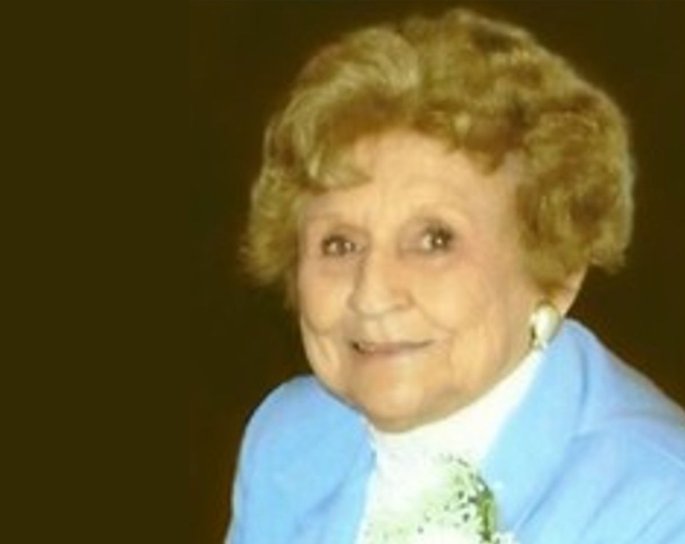
The Randolph Society Foundation Board is pleased to announce that Don and Margret Wiley, historical preservationists and educators, will be inducted into the 2025 class of honorees.
Margret Baue Wiley was born at her parents’ farmhouse in rural Sparta in 1927. Her family had deep roots in Randolph County, and that family history was fascinating to Margret from an early age. With her younger brothers, she attended the Goddard School, a one-room schoolhouse located about a mile away from the family farm. She developed a love for learning, as well as a passion for the traditional skills and crafts that she picked up while growing up on the farm. She and her brothers often played with children who lived on nearby farms, including the boys of the Wiley family.
One of those neighbor boys, Donald Wiley, was born in Jacksonville, Illinois, in 1934. With his parents and brothers, including his twin, Ronald, Don moved often while his father worked as a traveling salesman. Eventually, though, the Wileys moved back to his father’s native Sparta, settling just a quarter mile from the Baue farm. Both the Baue children and the Wiley twins were active members of the local 4-H Club, and all of them attended Sparta Township High School as they grew into teenagers.
After graduation, Margret spent a term studying at SIU Carbondale before entering the working world. She worked at the Brown Shoe Company’s manufacturing facility in Evansville before taking an office job at the Mallinckrodt Chemical Company in St. Louis. Meanwhile, Don also graduated from Sparta High and attended a few classes in Carbondale before starting work as a carpenter.
Eventually, Don and Margret’s friendship developed into romance. They were married at Trinity United Presbyterian Church in Sparta, where both families worshiped, on January 22, 1955. Soon after, Don was drafted into the army, and the young couple moved first to Texas and then to Washington, D.C. There, Don had an office job at the Pentagon, and as both he and Margret were history lovers, they relished the chance to take in the monuments and museums during their time in the nation’s capital.
In 1958, the couple settled down in a home south of Sparta, where they raised their children, Kerry and Lee Ann. Don started his own carpentry business, taking on handyman work and building and repairing furniture. Margret joined the local Home Extension organization and served as an election judge in Sparta. Both of them also lent their talents to numerous local clubs and societies, including the Randolph County Historical Society.
Margret loved reading and researching about history, and Don loved experiencing the past through reenactments. Together, they helped to establish an antique rifle shooting club, a pursuit that would become the cornerstone of the Rendezvous held annually at Fort de Chartres. They were very involved in the annual Corn Fest fundraiser at the nearby Charter Oak School House, providing historical demonstrations like broom making and candle dipping.
In 1976, Don organized a group to retrace the path traveled by George Rogers Clark when he captured forts in both Kaskaskia and Vincennes during the Revolutionary War. He and his fellow Long Knives members trekked on foot as they followed Clark’s path on the 185-mile journey, which was timed to coordinate with the national bicentennial celebrations. Margret and Kerry provided crucial support during the journey, which took more than a week.
The Clark reenactment trip was emblematic of Don and Margret’s love for history and their desire to share it with generations to come. Both Margret and Don continued to be active members of their community until their passings in 2004 and 2011. Their efforts continue to echo through the county’s historical landscape today.
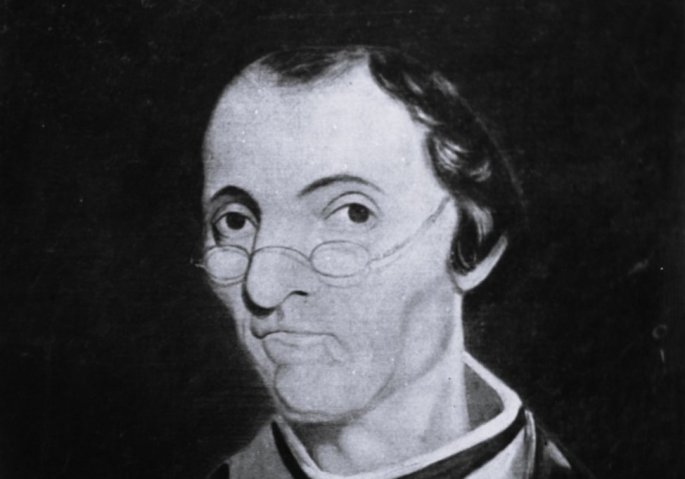
The Randolph Society Foundation Board is pleased to announce that Father Gabriel Richard, a priest, educator, and public servant, will be inducted into the 2025 class of honorees.
Gabriel Richard was born in France in October 1767. He was one of six children born into a family with ties to the nation’s powerful Catholic leaders. When he was just eleven, Gabriel enrolled as a student at a local college, where he distinguished himself as a talented scholar. As he matured, he decided to enter the Sulpician seminary in Angers. There, he developed a life-long love for education. He was ordained as a priest in October 1790 at age of 23.
After his ordination, Gabriel moved to the suburbs of Paris to teach at a seminary founded by Father DuBourg, who would later become the founder of Saint Louis University. Soon, though, political upheaval in France put Gabriel’s career and life in jeopardy. After the revolution, the new government seized church property and abolished laws that required citizens to tithe. They also compelled all priests to take an oath of fidelity to the state.
Gabriel and many of his Sulpician superiors decided not to take the oath. To escape the violence that followed, Gabriel emigrated to America. He sailed for Baltimore, where he arrived in June 1792. After a brief career teaching in a seminary there, Bishop John Carroll assigned him to serve as a missionary to the French settlements in southern Illinois, including Kaskaskia and Prairie du Rocher.
When Gabriel arrived in Kaskaskia, he found a parish in disarray. One of his biographers notes that there were “about eight hundred Catholics” in the village, “for the most part French Canadians, who had been nearly a generation without any priest to administer to their spiritual needs.” For the next five years, Gabriel provided guidance to parishioners in Kaskaskia, Prairie du Rocher, Cahokia, Ste. Genevieve, and New Madrid. He performed baptisms, marriages, and funeral services for hundreds of local residents during his time in Illinois.
While serving as a priest in Kaskaskia, Gabriel longed to return to the classroom. He dreamed and planned for the educational future of the area, collecting funds toward the creation of a school. He even took steps himself to secure a large tract of land near Kaskaskia to serve as a site for a future building. But, despite his best efforts, the project did not materialize.
In 1798, Gabriel’s service at Kaskaskia ended. He was sent by the diocese to Detroit to serve in a parish that extended across present-day Michigan into parts of Wisconsin and Indiana. There, he was able to realize some of the educational dreams he had planned in Illinois. He opened a pair of primary schools for girls and boys, as well as a seminary for young men, an academy for young women, and a school for native children. In 1817, he was one of the founders of the Catholepistemiad of Michigania, an institution that would be known later as the University of Michigan. He served as a professor, a vice president, and a trustee of the new university.
Gabriel’s service to his community extended even further when he was elected as a nonvoting delegate representing the Michigan Territory in the United States House of Representatives, becoming the first Catholic priest to serve in Congress. He continued to serve the people of Detroit after his term ended. He passed away in 1832 after contracting cholera while ministering to patients during an outbreak of the disease.
Father Gabriel Richard was a pioneer who understood that a society benefits when each of its members has the chance to secure an education. His dream for schools on the frontier, imagined in Kaskaskia and realized in Detroit, lives on today in the hearts of educators in Randolph County and beyond.
The Randolph Society Foundation Board is pleased to announce that the members of Randolph County’s Burlington Way Committee, pioneers in the field of automobile travel, will be inducted into the 2025 class of honorees.
At the turn of the 20th century, Randolph County’s citizens relied solely on horses, wagons, and trains for transportation along the county’s dirt and rock roads. But by 1901, automobiles began appearing on the streets of local towns. The first automobile dealership in the county was opened by the Herschbach Bros. of Chester in 1908, and buyers flocked to purchase the exciting new machines. Farmers, doctors, and mail carriers in particular found early reasons to buy automobiles, and town and county officials soon saw the need to adapt both laws and infrastructure to accommodate the new mode of travel.
The lack of paved roads caused particular difficulty, with weather problems frequently making heavily-traveled roads virtually impassable. By 1916, after the Good Roads Act provided new sources of federal funding for highways, the Illinois State Highway Agency also began the construction of nearly 5,000 miles of hard road highways across the state.
Various committees worked to decide routes that these new roads would take, and local communities lobbied to have the roads pass through their towns. Having a state highway nearby would be a boost to local motorists as well as the economy. But rural areas like Randolph County were often afterthoughts on the new maps. When the Chicago Tribune published a map of the state’s marked highways in 1916, Randolph County was one of the only ones not serviced by one of the new hard roads.
A group of local businessmen stepped in to try to remedy that oversight. One highway project in particular, the Burlington Way, was looking to extend from St. Paul, Minnesota, south to the Gulf of Mexico. An established section of the road stopped in Marissa, and the Randolph County committee lobbied to have the next part of the highway travel through Sparta, Steeleville, and Percy on its way south to Murphysboro.
The county’s Burlington Way Committee was comprised of Charles Baue, a Steeleville farmer and mechanical engineer; Alfred A. Brown, a Sparta banker and merchant; William J. Hood, owner of a Sparta dry goods store; Louis Hood, owner of a Sparta clothing store; John B. Hoef, the founder of Steeleville’s Randolph County Monument Works; Henry Walter, a grocery store manager and food administrator from Steeleville; George Lickiss, the proprietor of a Percy grocery store; Albert Gilster, owner of the Steeleville flour mill; Rutherford Hahn, the vice president of Gilster’s mill; Norris Lessley, the president of Sparta State Bank; J. Hammond Webster, publisher of the Steeleville Ledger and owner of an auto garage; Robert Moffat, an owner of Sparta’s Moffat Coal Company; and Thomas Jeremiah, the general superintendent of the Willis Coal Company.
The committee successfully lobbied to have the Burlington Highway routed through Randolph County, though two decades later the route of the road, now Illinois 13, was changed. Their efforts are commemorated by a granite marker located on present-day Illinois 4 between Sparta and Steeleville. As the first committee dedicated to bringing a major highway through the county, they also inspired further movements to establish good roads in the region, pioneering projects that are still in use today.
Today, the issue of “good roads” continues to be at the top of the list for many in the area who want to steer attention toward the maintenance of existing roads and the expansion of highway connections between Randolph County and its neighbors. A century ago, when roads made for automobiles were in their infancy, we can thank the men of the Burlington Way Committee for championing the cause. Their public service is a reminder of the importance of community advocacy, both then and now.
The territorial and state capital building in Kaskaskia, ca. 1880 (Abraham Lincoln Presidential Library)
The Randolph Society Foundation Board is pleased to announce that Dr. George Fisher, a pioneering physician, public servant, and entrepreneur, will be inducted into the 2025 class of honorees.
George Fisher, the son of a blacksmith, was born in Virginia in the years just before the Revolutionary War. After reaching his majority, George received his inheritance. That money may have helped to fund his medical studies, which, according to family tradition, may have taken him to Germany for a period of time. Back in America, he settled down to begin his career as a physician and start a family of his own. He welcomed several children with his first wife in Virginia, and later, he married again in Illinois and expanded his family once more.
By the middle of the 1790s, with expansion pushing westward, George decided to move to the frontier. He arrived with his family in Kaskaskia in 1798 and quickly became a prominent member of the community. Professional medical care was a valuable commodity, and George began to serve as one of the first providers in the region.
George’s expertise and popularity led him toward other enterprises in Kaskaskia, too. When the Indiana Territory was officially organized in 1800, Governor William Henry Harrison appointed George to serve as sheriff of Randolph County. The influence that George gained, both through his political appointment and his medical knowledge, led him to develop additional business interests in the area. He was granted business licenses to operate a ferry across the Mississippi and a tavern and inn in Kaskaskia not long after settling in the area.
As George’s connections in Kaskaskia grew stronger, he was tasked with more and more responsibility within the territorial government. In 1803, he was named as a Randolph County commissioner, a role he held until 1809. When elections were held for the First General Assembly of the Indiana Territory in 1805, George was chosen as the sole representative for Randolph County in the House of Representatives. He served in the position until 1808, when he was appointed to the Legislative Council. When the territory was divided, he was again elected to serve in the territorial legislature representing Randolph County.
In 1808, George decided to move his family to a farm near present-day Modoc. The area, which grew as others also established homes and farms in the vicinity, became known as “Dr. Fisher’s Settlement.” Though he had largely retired as a practicing physician, George had to turn back to his medical roots when an outbreak of smallpox began surging through the surrounding population. George set up a makeshift hospital on his farm. While other nearby settlements put up guards and barriers to keep out infected strangers, George decided not to turn away any person who needed help.
George’s medical skills were required by his community once more in 1812. He served as a surgeon in the Illinois militia, under the command of Colonel Hamnet Ferguson and Major Benjamin Stephenson (then sheriff of Randolph County), during the War of 1812. Near the end of his life, George continued to be an influential figure in the shaping of the new state of Illinois. He was elected to serve as a member of the constitutional convention that framed the first constitution for the new state in 1818. He also ran for a seat in the new state senate, but was defeated—the first time he had suffered an election loss since moving to Kaskaskia two decades earlier.
George settled down firmly into the life of a farmer on his settlement in Modoc, and there, in 1820, he passed away. His farm is now marked by a historical plaque celebrating his achievements. Despite the uncertainties of life on the frontier, George fearlessly ventured out to care for patients in need. His example of public service, both on the county and state levels, stands as a challenge to all of us today, encouraging us to play a greater role in our own communities.
The Randolph Society Foundation Board is pleased to announce that Jessie Lee Huffstutler, an influential musician, educator, and historian, will be inducted into the 2025 class of honorees.
Born in Chester in 1888, Jessie Lee Gant was the fourth child of Darius and Rachel Gant. She was only five years old when her father unexpectedly passed away, leaving behind a widow with four young children.
Jessie discovered early on that she had a talent for music. She began playing and singing in the choir at Chester’s First Methodist Church when she was just twelve. She was so skilled that she was hired to play piano accompaniment for silent films at the Chester Opera House. She improvised musical scores for the movies alongside her friend Elzie Segar, who played the drums. He would later use memories from their teenage days in his famous Popeye cartoons.
Jessie’s musical talents developed throughout her school years, and by the time she graduated from Chester High School in 1905, she could play multiple instruments. Her prowess caught the attention of the staff at Southern Illinois Penitentiary, who hired soon after graduation to serve as the prison’s organist. She recalled having “mixed emotions” when playing at the prison early on, but her efforts earned her the respect of the men behind bars. “From the applause I received, I knew they were now my friends and from that time, I was ‘Miss Jessie’ to them,” she later recalled.
While working as the prison’s musical director, Jessie decided to start a family of her own. She married Fred “Dick” Huffstutler in 1911, and their only child, Fred Jr., was born later that year. The family settled in Chester, where Dick worked as a signal master with the railroad, and Jessie continued to earn an income through her musical work at the prison.
Sadly, Jessie’s early married life was touched by tragedy. In the span of a decade, she lost her mother and two of her brothers. In 1924, she also had to say farewell to her husband, who died after suffering from appendicitis and typhoid fever. As a widow in her 30s, Jessie was left behind to raise her son alone. She continued to work at Menard and also began giving private voice and piano lessons to earn extra money.
When Fred graduated from high school in 1929 and enrolled at McKendree College, Jessie decided to pursue a course of higher education as well. She was hired as a house mother for one of the men’s dormitories at the college. Both mother and son finished their studies in 1933, with Fred earning a bachelor’s degree and Jessie receiving a certificate in music education.
For her next chapter, Jessie taught in public schools in Florida before returning to Illinois and teaching for many years in Du Quoin. After her retirement, she moved back to Chester, where she took on an active role in numerous local organizations, including professional women’s clubs and the retired teachers’ association. In 1960, she was recognized by the First Methodist Church in Chester for 60 years of service to the congregation.
Over the decade that followed, Jessie took time to write down her extensive memories of her long life in Chester, which were published as columns in the local newspaper. In 1976, the columns were gathered together and published as a book. I Remember—Early Memories of Chester, Illinois is a unique, valuable historical resource. The book was also a success, selling more than 1,000 copies. Jessie passed away in Chester in 1980 at the age of 92. She was survived not only by her family—a daughter-in-law, two grandchildren, and a great-grandchild—but also by the students she mentored and encouraged in the classroom and the music room over the decades. Her desire to share her talents and knowledge with others continue stands as an example of dedication and service today.
The Randolph Society Foundation Board today began the nomination process for its annual awards to honor outstanding historical citizens of Randolph County and their achievements.
“The Randolph Society Foundation Board is seeking to honor the prominent men and women who contributed to Randolph County by living extraordinary lives. Through their deeds and notoriety, they have added to the reputation of Randolph County being one of the ‘Great Counties in Illinois,’” said Dr. Marc Kiehna, founding member of the Randolph Society Foundation. “We encourage everyone that knows of a person of special merit to submit their nomination to the Randolph Society Foundation for consideration.”
Nominations may be made by contacting Dr. Marc Kiehna, the Randolph Society Foundation Board Chairman, by email at mkiehna@randolphcountyil.gov, or by mail at the following address:
Dr. Marc Kiehna Randolph County Courthouse 1 Taylor Street Chester, IL 62233
Nominations should include a name, picture, and a narrative highlighting why the individual is worthy of being honored. Examples of previous honorees can be found on the Randolph Society website.
The nominations are open to everyone and will be accepted through November 1, 2024. Nominees must have passed away at least 5 years ago to be considered. The Foundation Board will review the applicants and select up to 5 nominees. The awards will be announced in the spring of 2025, with a special reception to be held soon after.
The honorees will have a special plaque that tells their story of significant contribution displayed on a prominent wall in the Randolph County Courthouse. The plaques will hang in the designated area of the Courthouse on permanent display and be available to the public for viewing during normal County business hours. The Randolph Society honorees are highlighted on a special website: randolphsociety.org. In-depth stories of the honorees are included with photos and video footage when available.
The Randolph Society Foundation is sponsored by the Randolph County Historical Society, The Liberty Bell of the West Chapter of the National Society Daughters of the American Revolution, and the Rotary Clubs of Chester, Red Bud, Sparta, and Steeleville. Officers and members of the Randolph Society Board include Dr. Marc Kiehna (Chairperson), Justin Jeffers (Treasurer), Melanie Johnson (Secretary), Emily Lyons, Jane Lucht, Dr. Lauren Kiehna, Cynthia Lawder, Lori Hill, and Mike Reed.
The Society is now a 501c3 Foundation and tax-deductible donations are being accepted. Donations can be mailed to:
Justin Jeffers Treasurer, Randolph Society Foundation Randolph County Courthouse 1 Taylor Street Chester, IL 62233
The Randolph Society Foundation Board is pleased to announce that George and Robert Mitchell, twin brothers from Sparta who had remarkable baseball careers in the Negro Leagues, will be inducted into the 2024 class of honorees.
George and Robert Mitchell, twin sons of Charles and Hattie Mitchell, were born in Sparta on March 31, 1900. Charles and Hattie were part of the first generation of African-Americans born after the Civil War, and they settled with their growing family in the established community of Black men and women living in Sparta at the turn of the twentieth century. Charles started his own barber shop, and Hattie cleaned houses for other families. Their hard work and dedication helped them to buy a home for their family on North Miller Street, where they raised their twin sons and two younger daughters.
After high school, both George and Robert Mitchell began working alongside numerous other local residents at the Moffat Coal Company’s mine south of Eden. Tall and slender, the brothers also used their strength on the community’s playing fields. They joined the Sparta Stars, a segregated baseball team, in the late 1910s. Robert was a catcher and outfielder, while George was a pitcher and first baseman. The Mitchells played on an all-Black team, but baseball in Randolph County was not a fully segregated activity, and the Stars frequently competed against teams made up of white players from neighboring communities. In the summer of 1922, they played against Baldwin in the county championship game, which was called a tie in the tenth inning.
The next summer, Robert made the leap to the next level. He signed to play with the Birmingham Black Barons, a Negro Southern League team in Alabama. The Black Barons played at Rickwood Field, now the oldest professional baseball stadium in America. Twenty-three-year-old Robert played one season with the team, spending most of his time in right field. In 1924, he and George were both added to the roster of the St. Louis Stars. The Mitchell Brothers formed a unique twin-brother battery, with George working as a relief pitcher and Robert as catcher, playing alongside greats like future Hall of Famer Cool Papa Bell. Robert left professional baseball in 1924, but George embarked on a career that would last for a quarter of a century. He played with six different Negro League teams over the next decade, including the Kansas City Monarchs and the Detroit Stars. At the end of each season, he returned to Sparta, where he continued to work in the mines each winter.
The Depression era spelled an end to George’s playing career, but in 1938, he was hired to become the new manager of the Stars franchise. He would serve as manager and owner of different iterations of the team for the next decade. Passionate about the game, and devoted to mentoring young players, George navigated the difficult financial and logistical waters of managing a Negro Leagues franchise, at a time when securing monetary backing and finding suitable places for the team to play were growing challenges. But George prospered, so much so that he was chosen as one of the managers for the Negro American League’s all-star game at Comiskey Park in Chicago in 1939. His team won the game in front of a crowd of 40,000 spectators.
The 1940s posed even more challenges for George and the Stars. Many Black athletes were called up to serve in World War II, and the Stars joined in the war effort by going on a barnstorming tour to sell war bonds in 1943. When baseball was integrated in 1945, George continued managing Black teams for a few more years before returning to Sparta, where he died in 1953. Robert, who had lived and worked in St. Louis since the 1920s, passed away two decades later in 1971.
The legacy of the Mitchell Brothers teaches us to appreciate the tenacity and drive of men who worked, against all odds, to organize opportunities for Black players when few were available. Robert and George bravely stepped forward from their tight-knit community into the challenging world of national baseball at a time of legalized segregation. And George, after his own playing career was finished, worked tirelessly to provide young players with opportunities to develop and showcase their talent. The Mitchell Brothers are an important piece of the history of the great American pastime, one that deserves a more prominent place in our understanding of the game of baseball today.
The Randolph Society Foundation Board is pleased to announce that Father Boniface Wittenbrink, a dedicated servant who spent decades working to improve the lives of visually-impaired people, will be inducted into the 2024 class of honorees.
Boniface Leo Wittenbrink was born in Evansville in June 1914, the eighth of nine children of Max and Catherine Pautler Wittenbrink. The family was raised as part of the local community centered on St. Boniface Catholic Church. For Boniface, the church felt like a second home, and he was drawn early on to a religious calling. He embarked on the first steps toward fulfilling that vision in 1929, when he enrolled as a student at St. Henry’s Preparatory Seminary in Belleville.
After graduating from the seminary, Boniface continued his religious training in Texas before traveling to Italy in 1936 to prepare to enter the priesthood. He studied philosophy and theology at the International Scholasticate of Studies of the Oblates of Mary Immaculate and Gregorian University in Rome. While he was there, he witnessed the terrifying slide toward war in Europe, as well as the death of Pope Pius XI and the coronation of his successor, Pope Pius XII. His studies were interrupted when he was ordered to return to America in 1940, just before Italy entered World War II.
Boniface was ordained by Bishop Henry Althoff on September 20, 1941, at his home church, St. Boniface in Evansville. “Father Boni,” as he would come to be known, continued to focus on education in his early years as a priest. He did advanced theological work at the University of Chicago and earned a master’s degree at the Catholic University of America in Washington, D.C. in 1947. He also returned to St. Henry’s in Belleville as a faculty member before going on to become the registrar at Our Lady of the Ozarks College. His career as a Catholic educator would eventually take him to Minnesota and California.
The lessons he learned as a teacher and mentor prepared him well for another prominent role in his life. He was tapped to serve as the leader of religious retreats across the country, guiding attendees through weekends of prayer, meditation, and reading. In 1952, he became the director of King’s House, a new retreat center in Buffalo, Minnesota. His facility with words and his ease with people led him next to Washington, D.C., where he was tapped to serve as the permanent secretary for the Conference of Major Superiors of Men in the 1960s.
While on a retreat at the Shrine of Our Lady of the Snows in Belleville in the early 1970s, Boniface was asked to take part in a new initiative: a “Talking Book” radio project that would provide up-to-date audio content for visually-impaired listeners throughout the St. Louis area. The nondenominational radio station programming would seek volunteers to read daily newspaper and magazine articles, providing blind people with more updated news and information than they could gather from many available sources. Volunteers would also read books, and the station would eventually feature live talk shows geared toward visually-impaired audiences, as well as sports coverage and other topics of interest.
Though he had no previous experience working with blind persons, Boniface accepted the job and capably shepherded the project toward success. He used his talents as a fundraiser to help raise money to support the project, and after the Talking Book, now called MindsEye, was launched, he reached out to help others start similar initiatives around the country. For four decades, Boniface was a key part of the success of the project, which continues to reach listeners today. He was recognized with numerous awards for his contributions, and when he lost his own sight late in life, he was able to join the ranks of MindsEye listeners himself.
Boniface passed away in Belleville in June 2017, just before his 103rd birthday. He was remembered as a person dedicated to making the lives of others better–not just spiritually but also through education and community connections. After his death, one friend and colleague noted that “our world is a better place” because Boniface existed in it, challenging us all to look for ways to use our own talents to better our communities.
The Randolph Society Foundation Board is pleased to announce that Samuel Burns Hood, a dedicated educator who served his community and his country valiantly, will be inducted into the 2024 class of honorees.
Samuel Burns Hood was born on May 15, 1834, in Chester, South Carolina. His parents both came from Irish immigrant families, and they were a part of a strong Presbyterian community. In 1845, when Samuel was eleven, he made the journey with his parents and his siblings to Randolph County, Illinois, where they settled on a farm outside of Sparta.
Samuel was educated alongside his eight surviving siblings, and early on, he showed a keen curiosity and a hunger for learning. He and his older brother, Alexander, were taken on as pupils at Union Academy, a Presbyterian prep school in Sparta that sought to extend educational opportunities to students who wanted to become teachers or take college courses. Samuel wanted to do both. He studied literature and law at the University of Michigan before returning to Sparta to become a teacher.
His blossoming educational career was interrupted by war. In June 1861, he enlisted as a sergeant with the 22nd Illinois Infantry, joining a company filled with other young men from Randolph County. Samuel took part in battles from Missouri to Tennessee in the first year of the war. He was quickly promoted through the ranks and appointed to serve as quartermaster, a role he filled so efficiently that he earned special commendations.
Samuel was captured by the Confederates during the Battle of Stones River and held prisoner for several weeks, during which he feared strongly for his own life. After he was released in a prisoner exchange, he returned to his regiment. He was subsequently wounded in both the Battle of Chickamauga and the storming of Missionary Ridge. His valor was recognized with a promotion to captain. He was mustered out after three years of service in 1864, and he remained an active part of veterans’ organizations like the G.A.R. for the rest of his life.
On his return to Sparta, Samuel married Margaret Frazier, with whom he raised a family of seven children on St. Louis Street. He spent the next forty years of his life working as a teacher and administrator in Sparta’s schools. He was elected twice as Randolph County’s Superintendent of Schools in the 1880s and was nominated as a candidate for Illinois Superintendent of Schools in 1894. He was also an advocate for the establishment of a teaching college in the area, which would later become Southern Illinois University in Carbondale.
The crowning achievement of Samuel’s tenure as an educator in Sparta was the opening of the community’s high school. Though some in the community initially opposed the high school, largely because of tax issues, Samuel and his colleagues successfully established a thriving secondary school in the community. Students could take courses there in the arts and sciences, languages, mathematics, government, and rhetoric. Later, the offerings were expanded to include a range of business courses as well. Samuel also donated his personal collections to a museum within the high school building.
Samuel passed away in Sparta on February 4, 1914, and the entire community deeply mourned the loss of one of its most prominent and active citizens. Fittingly, when a new building for the high school was constructed in 1916, it was located on land once owned by the family, and the street in front of the school was named Hood Avenue in Samuel’s honor. The Hood Memorial Fountain, now part of the school’s landscaping, was also dedicated in Samuel’s memory in May 1919. After his death, Samuel was remembered as the “father of Sparta schools,” a dedicated teacher who helped to lay a strong foundation for the educational success of generations of learners who followed.