Boniface Wittenbrink inducted into The Randolph Society

Father Boniface Wittenbrink

The Randolph Society Foundation Board is pleased to announce that Father Boniface Wittenbrink, a dedicated servant who spent decades working to improve the lives of visually-impaired people, will be inducted into the 2024 class of honorees.

Boniface Leo Wittenbrink was born in Evansville in June 1914, the eighth of nine children of Max and Catherine Pautler Wittenbrink. The family was raised as part of the local community centered on St. Boniface Catholic Church. For Boniface, the church felt like a second home, and he was drawn early on to a religious calling. He embarked on the first steps toward fulfilling that vision in 1929, when he enrolled as a student at St. Henry’s Preparatory Seminary in Belleville.

After graduating from the seminary, Boniface continued his religious training in Texas before traveling to Italy in 1936 to prepare to enter the priesthood. He studied philosophy and theology at the International Scholasticate of Studies of the Oblates of Mary Immaculate and Gregorian University in Rome. While he was there, he witnessed the terrifying slide toward war in Europe, as well as the death of Pope Pius XI and the coronation of his successor, Pope Pius XII. His studies were interrupted when he was ordered to return to America in 1940, just before Italy entered World War II.

Boniface was ordained by Bishop Henry Althoff on September 20, 1941, at his home church, St. Boniface in Evansville. “Father Boni,” as he would come to be known, continued to focus on education in his early years as a priest. He did advanced theological work at the University of Chicago and earned a master’s degree at the Catholic University of America in Washington, D.C. in 1947. He also returned to St. Henry’s in Belleville as a faculty member before going on to become the registrar at Our Lady of the Ozarks College. His career as a Catholic educator would eventually take him to Minnesota and California.

The lessons he learned as a teacher and mentor prepared him well for another prominent role in his life. He was tapped to serve as the leader of religious retreats across the country, guiding attendees through weekends of prayer, meditation, and reading. In 1952, he became the director of King’s House, a new retreat center in Buffalo, Minnesota. His facility with words and his ease with people led him next to Washington, D.C., where he was tapped to serve as the permanent secretary for the Conference of Major Superiors of Men in the 1960s.

While on a retreat at the Shrine of Our Lady of the Snows in Belleville in the early 1970s, Boniface was asked to take part in a new initiative: a “Talking Book” radio project that would provide up-to-date audio content for visually-impaired listeners throughout the St. Louis area. The nondenominational radio station programming would seek volunteers to read daily newspaper and magazine articles, providing blind people with more updated news and information than they could gather from many available sources. Volunteers would also read books, and the station would eventually feature live talk shows geared toward visually-impaired audiences, as well as sports coverage and other topics of interest.

Though he had no previous experience working with blind persons, Boniface accepted the job and capably shepherded the project toward success. He used his talents as a fundraiser to help raise money to support the project, and after the Talking Book, now called MindsEye, was launched, he reached out to help others start similar initiatives around the country. For four decades, Boniface was a key part of the success of the project, which continues to reach listeners today. He was recognized with numerous awards for his contributions, and when he lost his own sight late in life, he was able to join the ranks of MindsEye listeners himself.

Boniface passed away in Belleville in June 2017, just before his 103rd birthday. He was remembered as a person dedicated to making the lives of others better–not just spiritually but also through education and community connections. After his death, one friend and colleague noted that “our world is a better place” because Boniface existed in it, challenging us all to look for ways to use our own talents to better our communities.

Click here to read a more detailed biography of Father Boniface Wittenbrink.

Samuel Burns Hood inducted into The Randolph Society

Samuel Burns Hood

The Randolph Society Foundation Board is pleased to announce that Samuel Burns Hood, a dedicated educator who served his community and his country valiantly, will be inducted into the 2024 class of honorees.

Samuel Burns Hood was born on May 15, 1834, in Chester, South Carolina. His parents both came from Irish immigrant families, and they were a part of a strong Presbyterian community. In 1845, when Samuel was eleven, he made the journey with his parents and his siblings to Randolph County, Illinois, where they settled on a farm outside of Sparta.

Samuel was educated alongside his eight surviving siblings, and early on, he showed a keen curiosity and a hunger for learning. He and his older brother, Alexander, were taken on as pupils at Union Academy, a Presbyterian prep school in Sparta that sought to extend educational opportunities to students who wanted to become teachers or take college courses. Samuel wanted to do both. He studied literature and law at the University of Michigan before returning to Sparta to become a teacher.

His blossoming educational career was interrupted by war. In June 1861, he enlisted as a sergeant with the 22nd Illinois Infantry, joining a company filled with other young men from Randolph County. Samuel took part in battles from Missouri to Tennessee in the first year of the war. He was quickly promoted through the ranks and appointed to serve as quartermaster, a role he filled so efficiently that he earned special commendations.

Samuel was captured by the Confederates during the Battle of Stones River and held prisoner for several weeks, during which he feared strongly for his own life. After he was released in a prisoner exchange, he returned to his regiment. He was subsequently wounded in both the Battle of Chickamauga and the storming of Missionary Ridge. His valor was recognized with a promotion to captain. He was mustered out after three years of service in 1864, and he remained an active part of veterans’ organizations like the G.A.R. for the rest of his life.

On his return to Sparta, Samuel married Margaret Frazier, with whom he raised a family of seven children on St. Louis Street. He spent the next forty years of his life working as a teacher and administrator in Sparta’s schools. He was elected twice as Randolph County’s Superintendent of Schools in the 1880s and was nominated as a candidate for Illinois Superintendent of Schools in 1894. He was also an advocate for the establishment of a teaching college in the area, which would later become Southern Illinois University in Carbondale.

The crowning achievement of Samuel’s tenure as an educator in Sparta was the opening of the community’s high school. Though some in the community initially opposed the high school, largely because of tax issues, Samuel and his colleagues successfully established a thriving secondary school in the community. Students could take courses there in the arts and sciences, languages, mathematics, government, and rhetoric. Later, the offerings were expanded to include a range of business courses as well. Samuel also donated his personal collections to a museum within the high school building.

Samuel passed away in Sparta on February 4, 1914, and the entire community deeply mourned the loss of one of its most prominent and active citizens. Fittingly, when a new building for the high school was constructed in 1916, it was located on land once owned by the family, and the street in front of the school was named Hood Avenue in Samuel’s honor. The Hood Memorial Fountain, now part of the school’s landscaping, was also dedicated in Samuel’s memory in May 1919. After his death, Samuel was remembered as the “father of Sparta schools,” a dedicated teacher who helped to lay a strong foundation for the educational success of generations of learners who followed.

Click here to read a more detailed biography of Samuel Burns Hood.

Alberta Raffl Pfeiffer inducted into The Randolph Society

Alberta Raffl Pfeiffer

The Randolph Society Foundation Board is pleased to announce that Alberta Raffl Pfeiffer, a pioneering architect who opened doors for women in her field, will be inducted into the 2024 class of honorees.

Alberta Raffl was born in Red Bud on September 17, 1899. She was the second of five children of Albert and Johanna Rau Raffl. She grew up with her brothers and sisters on Market Street, in a family that cherished the Austrian and Swiss traditions kept up by her grandparents. The tight-knit family also ran a business together: a cigar factory, established by her grandfather, that endured in Red Bud for more than half a century.

Education was important to the Raffl family, and Alberta’s parents sent all five of their children to college. She enrolled at the University of Illinois in 1919, just after the end of World War I. Since childhood she had nourished the dream of becoming an architect. Her innate design talents brought her major success at the university level, though she faced numerous obstacles as one of the only women in her program. Nevertheless, she graduated at the top of her class in 1923. That spring, she became the first woman to be awarded a medal of excellence by the American Institute of Architects, an honor that recognized the outstanding body of work completed by a remarkable student in each of the major architecture programs in the nation.

Alberta taught briefly at Illinois after her graduation, and soon her expertise was highly sought after by prominent architectural firms. She worked as a draftsman for Tallmadge & Watson in Chicago, and in 1925, she was hired as the first female architect on staff at Harrie T. Lindeberg in New York. The firm specialized in work for wealthy clients, and Alberta contributed to homes for members of numerous prominent families, including the Astors and the Vanderbilts. Her camaraderie with her fellow draftsman helped to pave the way for more female architects to be hired by the firm.

In 1930, Alberta married a fellow architect and University of Illinois alumnus, Homer F. Pfeiffer. They moved to Connecticut, where he taught at Yale University and they established their own private architecture firm out of their colonial farmhouse in Hadlyme. Alberta thrived in her new home. The historic homes in the district were the perfect companions for her simple, elegant architectural style, and over the next four decades, she worked on more than 200 homes in the area.

Alberta also strongly believed in supporting her community. It wasn’t enough for her to construct beautiful buildings–she also felt compelled to make life easier and more comfortable for the people who lived within their walls. She served on the local school board and planning and zoning committees, and in the late 1960s, she became a justice of the peace. Her philanthropic work was also focused on mental health causes. She was a member of the board of the Connecticut Valley Mental Health Association for 25 years, and she was an active volunteer at the local Norwich State Hospital. There, she organized drives to provide cakes for birthday celebrations for patients and collected donations for Christmas gifts for them during the holiday season. In her later years, she was one of the driving forces behind the creation of a telephone reassurance line for seniors living alone in her community.

A talented artist, Alberta was also devoted to the local arts and crafts scene. She taught sewing and jewelry making classes, and in the 1930s she became the founder and editor of the Connecticut Craftsman, a magazine that she ran out of her home office. She was a member of the Society of Connecticut Craftsman and a lifetime member of the Connecticut Society of Architects.

Alberta passed away in Connecticut in August 1994, just a few weeks before her 95th birthday. A trailblazer who paved the way for countless women in architecture, Alberta once reflected on her remarkable life with typical modesty. “I’ve had quite a few things happen to me,” she mused. “Since I have done what I really wanted to do and enjoyed most of it, I’ve been very fortunate.” The people in the communities on which Alberta left her mark may have been the truly fortunate ones.

Click here to read a more detailed biography of Alberta Raffl Pfeiffer.

John Wittenborn inducted into The Randolph Society

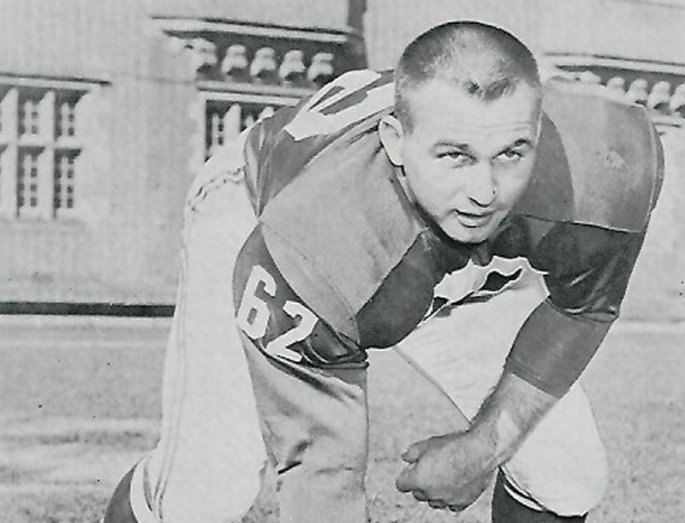
John Wittenborn, offensive lineman for the Philadelphia Eagles

The Randolph Society Foundation Board is pleased to announce that John Wittenborn, a talented athlete who became a devoted coach and mentor, will be inducted into the 2024 class of honorees.

John Otis Wittenborn was born in Sparta on March 1, 1936. He was the fifth child of Raymond Wittenborn and Mabel Steffens Wittenborn, who both came from established Randolph County families. John was raised with six brothers and sisters on the family’s dairy farm near Sparta. Though he initially expected to follow in his father’s footsteps as a farmer, his innate athletic talent led him down a different path.

John began his stellar sports career at Sparta High School, playing football and basketball and running track. He was named to the All-Conference football team twice, and after graduating in 1955, he was recruited to play college football. John decided to continue both his education and his athletic career at Southeast Missouri State University in Cape Girardeau. During his four years on the team, he displayed excellence as both a tackle and a kicker. Despite injuries, he was a key part of several conference championship teams and was named an honorary co-captain in his senior season. In 2003, SEMO inducted him into their Athletic Hall of Fame.

Just weeks after the end of the 1957 college season, John was drafted by the San Francisco 49ers, part of an outstanding draft class that also included names like Alex Karras, Jim Taylor, and John Madden. Even as a rookie, his coaches in San Francisco identified him as a stand-out on the offensive line. The 6’1”, 230 lb. right guard played for several seasons with the 49ers, developing into a versatile player who could contribute in multiple roles.

In the middle of the 1960 season, John was traded to the Philadelphia Eagles. He arrived on the team in the midst of their remarkable championship-winning season. After losing only one game during the regular season, the Eagles defeated Vince Lombardi’s Green Bay Packers in the NFL championship game on the day after Christmas. More than 67,000 fans watched as John blocked on the offensive line during the contest, bringing home a victory and a significant player’s share bonus check.

John remained on the Eagles roster for two more seasons. He was acquired by the St. Louis Cardinals football team in 1963 but was sidelined by an injury. At the age of 28, John considered retirement. But a new opportunity appeared in the form of a contract with the Houston Oilers in 1964. During his tenure with Houston, he further developed his kicking skills. He was named as the team’s starting kicker in 1967, a role he held until yet another injury ended his career. He officially retired from professional football in January 1969.

Retirement opened a new door for John, who was hired as the football coach at Murphysboro High School later that year. He discovered a passion for mentorship, and the football program flourished under his leadership for several seasons. His success caught the eye of one of his former Oilers coaches, who hired him as an assistant coach at the University of Tulsa in 1973. He spent the next two decades in Oklahoma, coaching for several years at Tulsa before returning to high school coaching in nearby Mannford.

In the 1990s, John made the decision to move back to southern Illinois, where he could live the quiet rural life he preferred. Soon enough, though, his football career came full circle. In 2001, after a season coaching at Trico, he was tapped to serve as the head football coach at Sparta High School. At the age of 65, he had officially returned to the place where his career began. The school retired his football jersey in 2011.

John passed away in March 2016 at the age of 80. He was survived by his wife, Sharron, and his children, stepchildren, and grandchildren. He was also fondly remembered by the many athletes he played with, coached with, and mentored. NFL kicker Steve Cox, a Tulsa alum, remembered that John was not only a great coach but also “simply a great guy, any way you look at it.”

Click here to read a more detailed biography of John Wittenborn.